
Well Pump Resources
Water Pressure and Flow
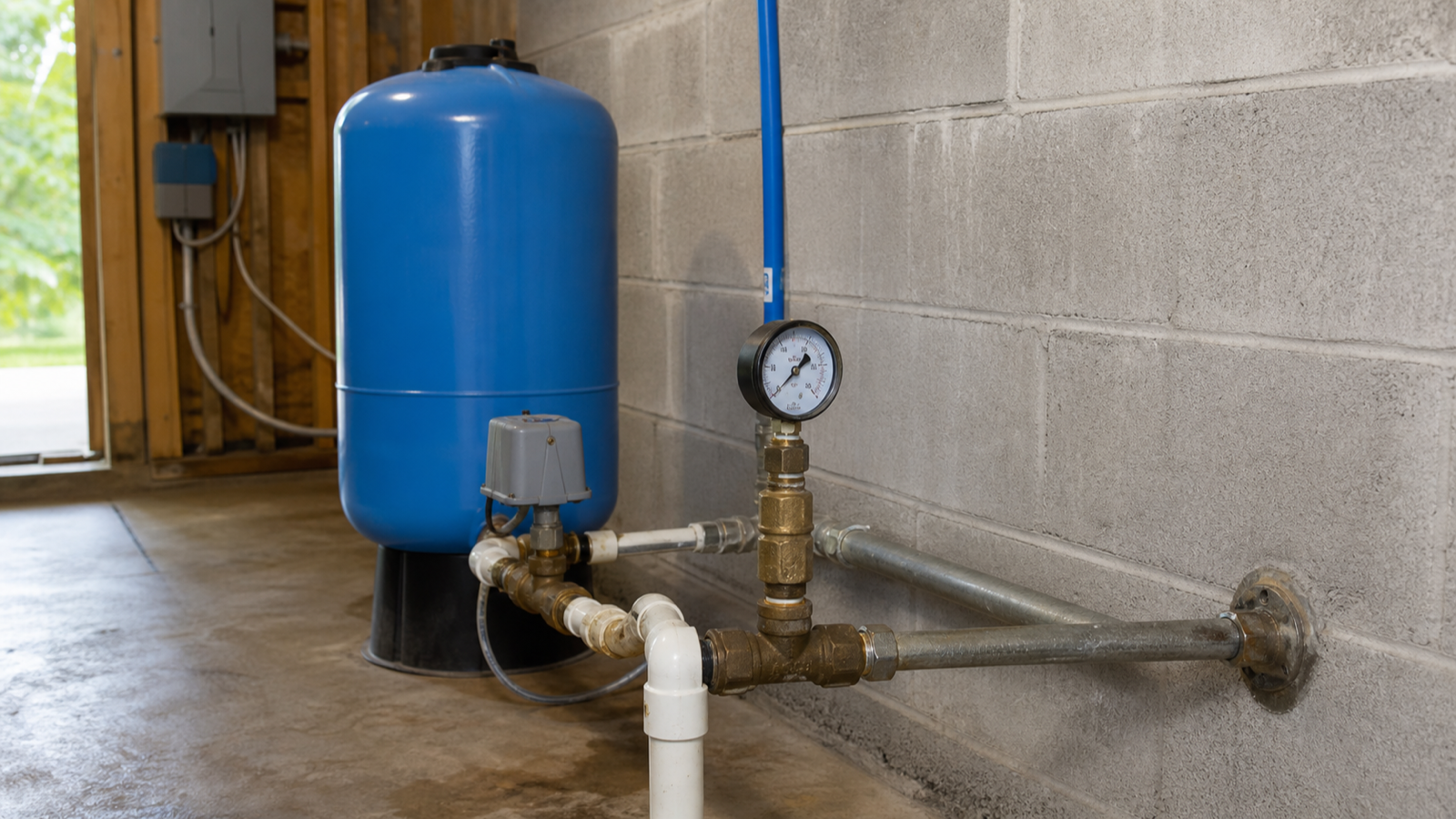
Low or inconsistent water pressure can originate in several parts of a private-well system. The pump, pressure tank, pressure switch, piping, filters, well yield and the amount of water being used at one time may all influence what occupants experience inside the home.
Use these resources to understand the difference between pressure, flow and available water before requesting a system evaluation. No single adjustment or component is guaranteed to solve every pressure problem — the cause has to be identified first.
What Shapes This Topic
- Pressure and flow are different things — strong pressure can still come with limited flow
- The pressure tank and switch define the pressure range the household feels
- Filters and treatment equipment add pressure drop as they load up
- Well yield limits how much water is available during sustained use
- Simultaneous demand — laundry, showers, irrigation — reveals system limits
Private-well systems and property conditions vary — these resources are general information to help you prepare for professional service, not a diagnosis of your system.
Planned Pressure & Flow Guides
These guides are being developed for this section. Titles may be refined before publication.
Related Pressure Services
When reading turns into needing help, these pages cover the related services and how to request them:
Upper Cumberland Well Pump is an independent referral service that helps connect property owners with local water-well and pump-service providers. Upper Cumberland Well Pump does not directly perform regulated well drilling, pump installation, pump repair or water-treatment work unless expressly stated. Provider licensing, qualifications, insurance, availability, pricing, scheduling and service terms must be confirmed directly with the provider.
Need Help With a Well Pump Problem?
Send the property location, a description of the problem, any recent changes in pressure or water flow, the location of the well head and several clear photographs of the visible system components for an initial service review.