
Water Pressure and Flow
How to Read Basic Well-System Pressure Symptoms
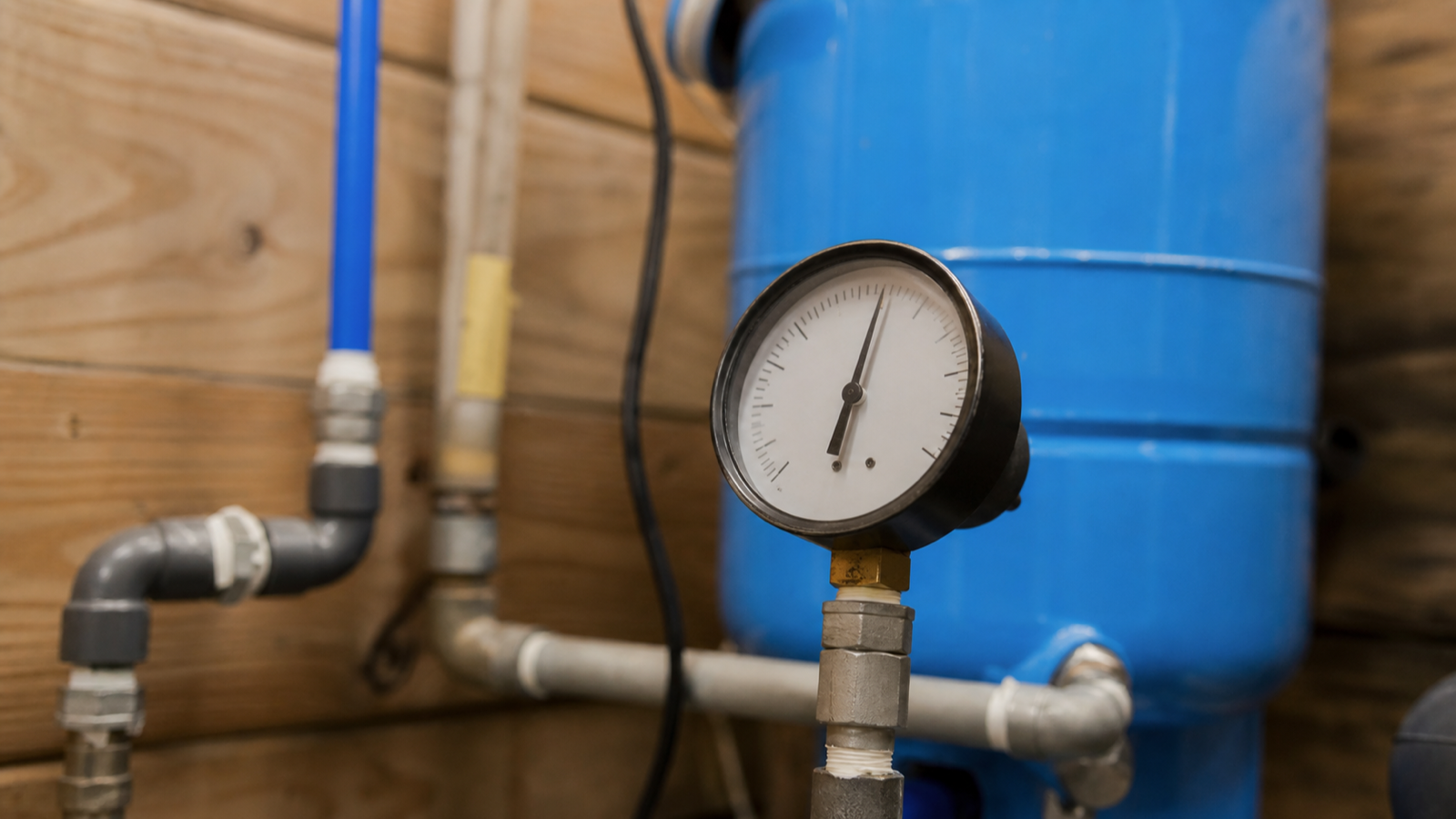
You do not need to be a technician to be a good observer of your own well system. Learning to read the basic symptoms, what the pressure gauge shows, how the pump behaves, and how flow feels at the tap, lets you describe problems clearly and helps a provider diagnose them faster. Good observation is a safe and genuinely useful skill.
This guide walks through the symptoms worth noticing and what they can suggest. The aim is informed observation, not repair; anything involving the tank, switch, wiring, or well cap should be left to a licensed provider.
Watch the pressure gauge
Most well systems have a pressure gauge near the tank. Without touching anything else, you can watch the needle as water runs and as the pump cycles. In a healthy system, pressure rises while the pump runs, then slowly falls as you use water, cycling within a consistent range. A needle that swings rapidly, barely moves, or never reaches its usual range is worth noting and reporting.
Simply observing and writing down the readings at rest and during use gives a provider valuable information before they arrive.
Listen to the pump
The pump's behavior is one of the clearest symptoms. A pump that turns on and off rapidly during a single use, known as short-cycling, often points to a tank or switch issue. A pump that runs constantly and never shuts off may signal a leak, a demand it cannot meet, or a control problem. A pump that fails to start at all is a different concern entirely. You can safely listen and note the pattern without opening anything.
Timing the pump can add useful detail. Note roughly how long it runs and how long it rests during a normal draw such as filling a sink. A dramatic change from what you remember, much shorter runs, much longer runs, or no rest at all, is exactly the kind of concrete observation that helps a provider narrow the cause before they arrive.
Symptoms and what they can suggest
- Surging or pulsing flow at the tap often suggests a waterlogged pressure tank that has lost its air charge.
- Rapid pump short-cycling commonly points to a tank or pressure switch problem that needs professional attention.
- Steady low pressure everywhere can indicate an undersized or aging pump, a clogged filter, or restricted plumbing.
- Sputtering or air in the water may mean the well is drawing down or air is entering the system.
- A pump that runs without stopping can signal a leak, a stuck switch, or demand outpacing supply.
Turn observation into action
Once you have noted your symptoms, the gauge readings, the pump behavior, and how flow feels, you have what you need to describe the problem to a professional. Resist the urge to open the tank, switch, or well cap; those combine water and electricity and are unsafe for homeowners to inspect. Instead, share your observations with a licensed provider. Our guides on surging pressure and low pressure that may indicate a pump problem can help you match your symptoms to likely causes, and our request service page connects you with help.
Related Well Pump Services
Upper Cumberland Well Pump is an independent referral service that helps connect property owners with local water-well and pump-service providers. Upper Cumberland Well Pump does not directly perform regulated well drilling, pump installation, pump repair or water-treatment work unless expressly stated. Provider licensing, qualifications, insurance, availability, pricing, scheduling and service terms must be confirmed directly with the provider.
Water Pressure and Flow — Questions
Where is my pressure gauge located?
On most systems it is mounted near the pressure tank or on the plumbing close to where the well line enters the home. You can read it visually without touching any controls. If you cannot locate it, a provider can point it out during a visit.
What is short-cycling?
Short-cycling is when the pump turns on and off rapidly in quick succession instead of running in longer, steady cycles. It often indicates a pressure tank that has lost its air charge or a switch problem, and it adds wear to the pump, so it is worth reporting.
Should I write my symptoms down before calling?
Yes, it helps a great deal. Noting when the problem happens, which fixtures are affected, the gauge reading, and how the pump behaves gives a provider a head start on diagnosis and can make the visit more efficient.
Need Help With a Well Pump Problem?
Send the property location, a description of the problem, any recent changes in pressure or water flow, the location of the well head and several clear photographs of the visible system components for an initial service review.