
Water Pressure and Flow
Low Pressure Throughout the House Versus One Fixture
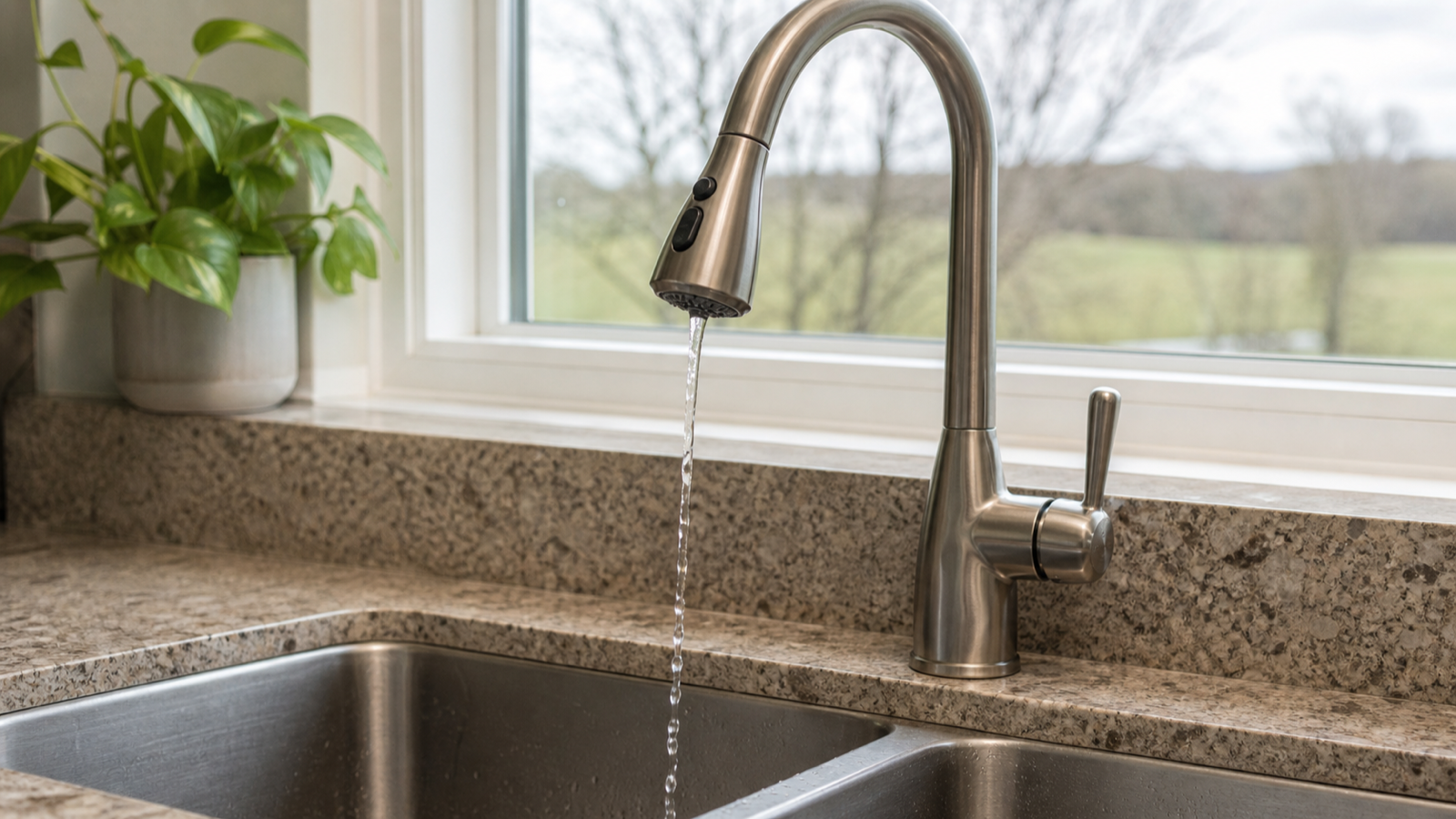
When you are troubleshooting water pressure on a well, one of the most useful questions to answer first is simple: is the pressure weak everywhere, or only at one fixture? The answer narrows the field of possible causes dramatically and helps a provider focus their diagnosis before they arrive.
This guide explains how the two patterns differ, what each tends to point toward, and how to observe your system safely. The distinction is a starting point, not a diagnosis, but it is one of the most helpful observations you can make.
Why the pattern matters
Water pressure problems fall broadly into two groups. A problem at a single fixture usually lives in that fixture or the pipe feeding it. A problem affecting the whole house usually lives in a shared part of the system, such as the pump, pressure tank, main line, or a whole-house filter. Knowing which group you are in saves time and helps everyone avoid chasing the wrong cause.
The quickest way to sort this out is to run water at several taps around the home, one at a time, and compare. Note whether hot, cold, or both are affected, since that can further narrow things down.
What each pattern tends to suggest
- Low pressure at a single fixture often points to a clogged aerator, a partially closed shutoff valve, a kinked supply line, or mineral buildup in that fixture's valve.
- Low pressure at only the hot side across the house can suggest an issue with the water heater or its connections rather than the well system itself.
- Low pressure at every fixture, hot and cold, more often points to a shared component like the pressure tank, pump, pressure switch, or a clogged whole-house filter.
- Low pressure that worsens when more than one fixture runs can indicate the pump or well is struggling to keep up with demand.
- Low pressure that comes and goes across the whole house may reflect a failing pressure tank or a pump that is short-cycling.
Safe ways to compare fixtures
You can safely test fixtures by opening them one at a time and watching the flow, then noting the results. Cleaning or replacing a clogged aerator on a faucet is a reasonable homeowner task. What you should not do is open the pressure tank, pressure switch, well cap, or any electrical enclosure. If your comparison points to a shared component, that is the moment to bring in a licensed provider rather than investigating pressurized or electrical parts yourself.
When to call a provider
If the low pressure affects the whole house, or if a single-fixture fix like cleaning an aerator does not help, a professional evaluation is the right next step. Whole-house pressure problems on a well frequently involve the tank or pump, and those require proper tools and training to diagnose. Before the visit, it helps to have your notes ready: which fixtures you tested, whether hot or cold or both were weak, and whether running several at once made things worse. That short summary often shortens the diagnosis. You can request help through our well pump repair in Cookeville or our request service page, and our guide on reading pressure symptoms can help you describe what you are seeing.
Related Well Pump Services
Upper Cumberland Well Pump is an independent referral service that helps connect property owners with local water-well and pump-service providers. Upper Cumberland Well Pump does not directly perform regulated well drilling, pump installation, pump repair or water-treatment work unless expressly stated. Provider licensing, qualifications, insurance, availability, pricing, scheduling and service terms must be confirmed directly with the provider.
Water Pressure and Flow — Questions
If only one faucet is weak, is my well the problem?
Usually not. A single weak fixture most often has a local cause such as a clogged aerator, a partly closed valve, or buildup in that fixture. If several fixtures are affected, the cause is more likely to be shared, such as the pump or tank.
How many fixtures should I test?
Try three or four spread around the house, including at least one on each floor if you have more than one level. Running them one at a time and then together gives a clearer picture of whether the system keeps up with demand.
Does hot-only low pressure mean my well is fine?
It often points toward the water heater or its supply lines rather than the well system, but not always. A provider can confirm whether the issue is isolated to the hot side or part of a larger pattern.
Need Help With a Well Pump Problem?
Send the property location, a description of the problem, any recent changes in pressure or water flow, the location of the well head and several clear photographs of the visible system components for an initial service review.