Water Pressure and Flow
Why Multiple Fixtures Can Reduce Well-Water Flow
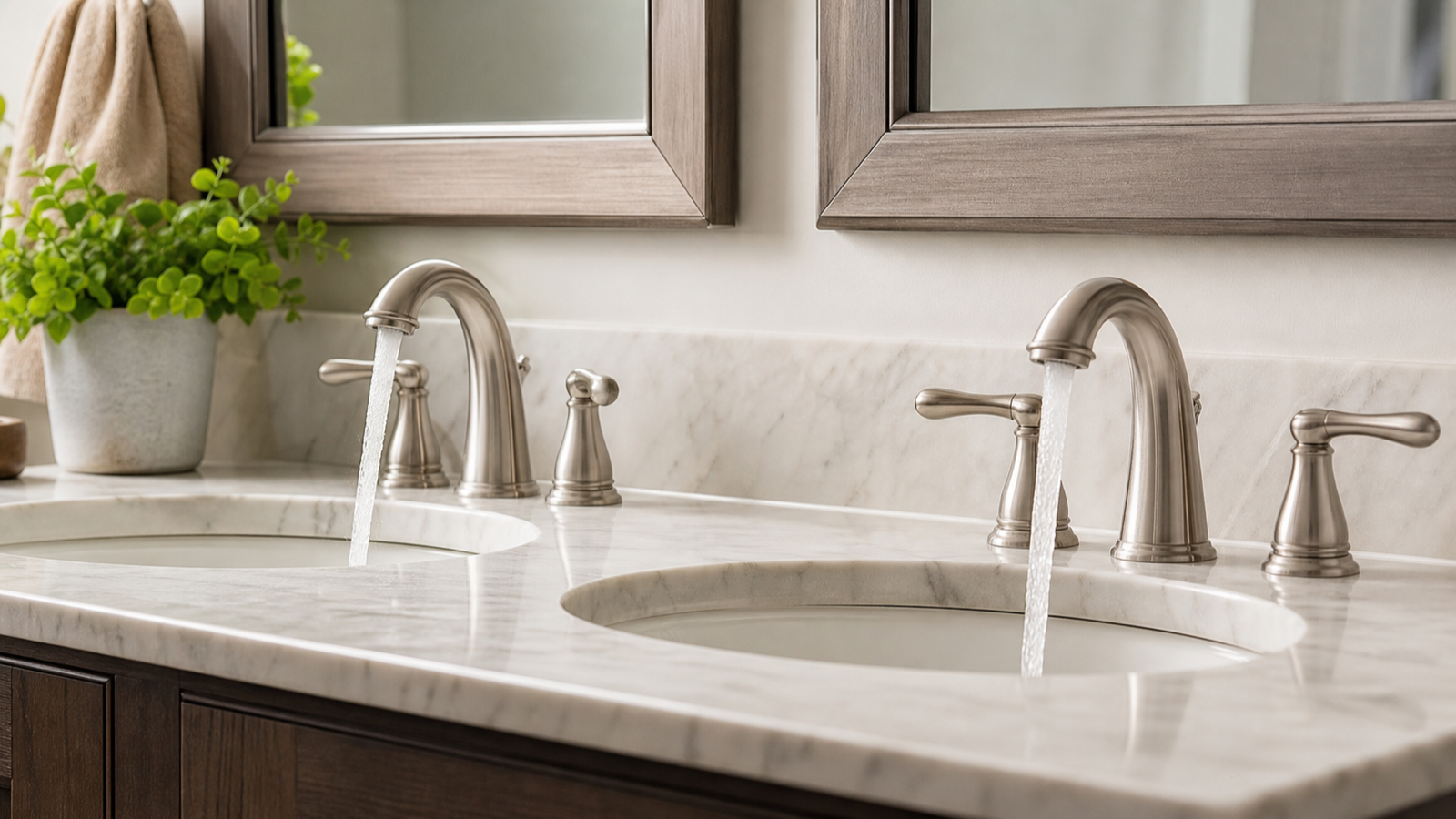
You turn on the kitchen tap and it runs strong, but the moment someone starts a shower upstairs, both slow to a trickle. This everyday experience on a well points to a basic principle: your system can deliver only so much water at once, and when multiple fixtures draw at the same time, that finite flow is shared among them.
This guide explains why flow divides across fixtures, what determines the ceiling, and how to tell whether the behavior is normal or a sign your system is under strain. Understanding it helps you know when to adjust habits and when to call a licensed provider.
A finite supply, divided
At any given moment, your well system can move a limited volume of water, set by the pump, the well's yield, and the plumbing. When only one fixture is open, it gets the full available flow. When two or three open together, that same total is split among them, so each receives less. This is why a single shower feels strong but two showers at once feel weak, the water is being shared.
In a healthy, well-matched system, that ceiling is high enough that normal household use rarely divides flow to a noticeable degree. When the ceiling is low, even routine simultaneous use becomes obvious.
What sets the ceiling
Several factors determine how much simultaneous use your system can handle gracefully. The pump's capacity sets how fast water can be delivered. The well's yield sets how fast water is replenished. The pressure tank's size affects how much reserve is available for short surges. And the plumbing's diameter and condition affect how freely water moves. A weakness in any of these lowers the ceiling and makes shared flow more noticeable.
It is worth remembering that these factors combine, so the weakest one tends to govern the whole system. A capable pump cannot deliver more than the well supplies, and generous plumbing cannot help if the pump is undersized. This is why the same symptom, flow dividing across fixtures, can trace back to very different root causes in different homes, and why a provider looks at the system as a whole rather than one part.
Normal sharing versus a warning sign
- A slight, brief reduction when two fixtures run together is normal and usually nothing to worry about.
- A dramatic drop to a trickle whenever a second fixture opens can indicate an undersized or aging pump.
- Flow that worsens seasonally may point to a well whose yield falls during dry months.
- Sputtering or air along with the flow drop can suggest the well is being drawn down during simultaneous use.
- Consistently poor flow even with modest simultaneous demand is worth a professional evaluation.
What can help
In the short term, staggering high-demand activities, avoiding showers during laundry or irrigation, eases the strain. If the sharing is severe, a provider may find that the pump is undersized or wearing, that the well's yield is limiting, or that a larger tank or a constant-pressure system would help. The right solution depends on which factor is the bottleneck. Our guides on well yield versus pump capacity and pressure dropping during heavy use explore the causes, and you can reach a provider through our request service page.
Related Well Pump Services
Upper Cumberland Well Pump is an independent referral service that helps connect property owners with local water-well and pump-service providers. Upper Cumberland Well Pump does not directly perform regulated well drilling, pump installation, pump repair or water-treatment work unless expressly stated. Provider licensing, qualifications, insurance, availability, pricing, scheduling and service terms must be confirmed directly with the provider.
Water Pressure and Flow — Questions
Is it normal for flow to drop when two taps run at once?
A modest, brief reduction is normal, since the available flow is being shared. A drop to a weak trickle whenever a second fixture opens is more likely to signal an undersized pump, a low-yield well, or another limit worth having a provider evaluate.
Would a constant-pressure system solve this?
It can help maintain steadier pressure across simultaneous use, but only if the well supplies enough water. If the well's yield is the ceiling, a constant-pressure system is still bound by it, so a provider should identify the true limiting factor first.
Why is it worse in summer?
Well yield can fall during hot, dry months and droughts, lowering how much water the well can supply. A system that shares flow gracefully in spring may struggle in late summer, so mention seasonal timing to your provider.
Need Help With a Well Pump Problem?
Send the property location, a description of the problem, any recent changes in pressure or water flow, the location of the well head and several clear photographs of the visible system components for an initial service review.