Water Pressure and Flow
What Is a Constant-Pressure Well System?
A constant-pressure well system is designed to solve one of the most common frustrations on a private well: pressure that fluctuates as you use water. Instead of letting pressure rise and fall between pump cycles, these systems work to hold a steady pressure no matter how many fixtures are running. They have become a popular option for households that want city-like consistency from a well.
This guide explains what a constant-pressure system is, how it differs from a traditional setup, and what it can and cannot do. Whether one suits your home is a question for a licensed provider, but understanding the concept helps you weigh your options.
How it works
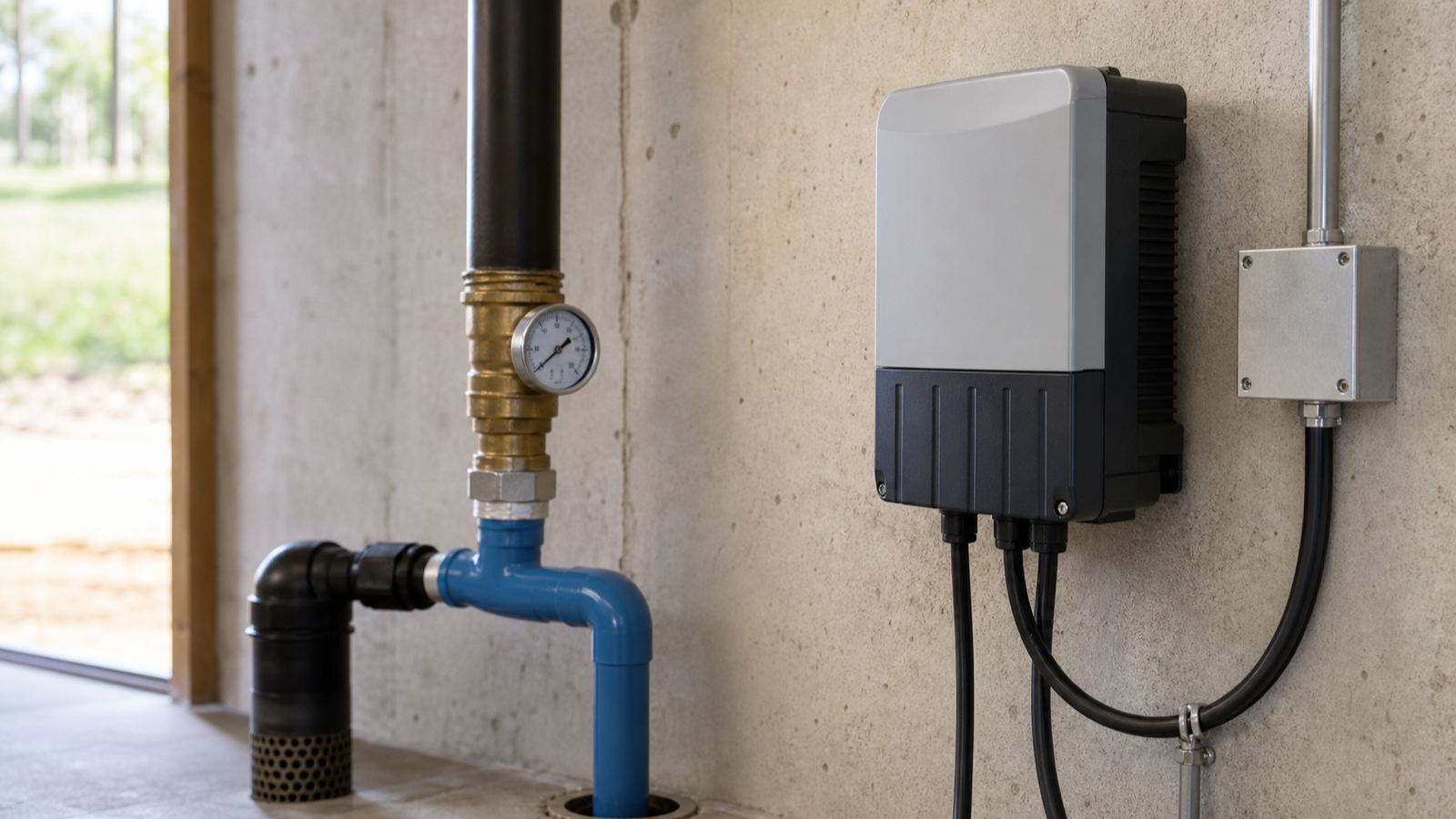
The heart of a constant-pressure system is a variable-speed pump, or a controller that varies the pump's speed. In a traditional system, the pump runs at full speed until the tank reaches a cutoff pressure, then shuts off entirely, so pressure cycles up and down. A constant-pressure system instead adjusts the pump's speed continuously to match demand, speeding up when you open more fixtures and slowing down when demand drops, holding pressure within a narrow band.
The result is water pressure that stays close to a set target whether one tap is open or several, much like the steady pressure many people are used to from municipal water.
What it aims to deliver
The main benefit is consistency. Showers do not lose pressure when someone starts the dishwasher, and pressure does not surge and fade as the pump cycles. These systems can also reduce the abrupt pressure swings that stress plumbing and fixtures. Many use a much smaller pressure tank than traditional systems, since the tank no longer has to buffer the full cycle range.
There is also a comfort dimension that homeowners often notice first. Because the pump ramps up smoothly rather than snapping fully on, the transition when demand changes feels gentle rather than jarring. For households used to the give-and-take of a cycling system, that steadiness is frequently the most immediately noticeable difference in daily use.
Considerations before choosing one
- A constant-pressure system depends on the well being able to supply enough water; it cannot create supply where the well's yield is the limiting factor.
- These systems include electronic controls, which add sophistication and mean service should be handled by a provider familiar with the technology.
- They are often chosen for larger homes, homes with multiple bathrooms, or properties where steady pressure across many fixtures matters most.
- The variable-speed pump adjusts continuously, which can reduce the hard on-off cycling that wears traditional pumps.
- Whether a constant-pressure system is a good fit depends on your household's demand, the well, and your priorities, which a provider can assess.
Is it right for your home?
A constant-pressure system can be an excellent upgrade for the right household, but it is not a universal fix. If your pressure problems stem from a low-yield well, the system will still be limited by how much water the well produces. A licensed provider can evaluate your well, your demand, and your goals to advise whether a constant-pressure setup makes sense. Our constant-pressure well pump systems service and our guide comparing these systems to traditional tanks can help you learn more.
Related Well Pump Services
Upper Cumberland Well Pump is an independent referral service that helps connect property owners with local water-well and pump-service providers. Upper Cumberland Well Pump does not directly perform regulated well drilling, pump installation, pump repair or water-treatment work unless expressly stated. Provider licensing, qualifications, insurance, availability, pricing, scheduling and service terms must be confirmed directly with the provider.
Water Pressure and Flow — Questions
Will a constant-pressure system fix low water pressure?
It can deliver steadier pressure and eliminate the surging of a traditional cycle, but only if the well can supply enough water. If a low-yield well is the root cause, the system is still bound by that limit, so a provider should confirm the source of the problem first.
Do constant-pressure systems still use a pressure tank?
Most use a much smaller tank than traditional systems rather than none at all. The small tank helps the controls respond smoothly, but it no longer needs to buffer the full pressure cycle, since the variable-speed pump handles that.
Are these systems harder to service?
They include electronic controls that require a provider familiar with the technology, so service differs from a conventional system. That is a reason to work with a qualified provider both for installation and for any later repairs.
Need Help With a Well Pump Problem?
Send the property location, a description of the problem, any recent changes in pressure or water flow, the location of the well head and several clear photographs of the visible system components for an initial service review.