Water Pressure and Flow
Why Water Pressure Drops During Heavy Use
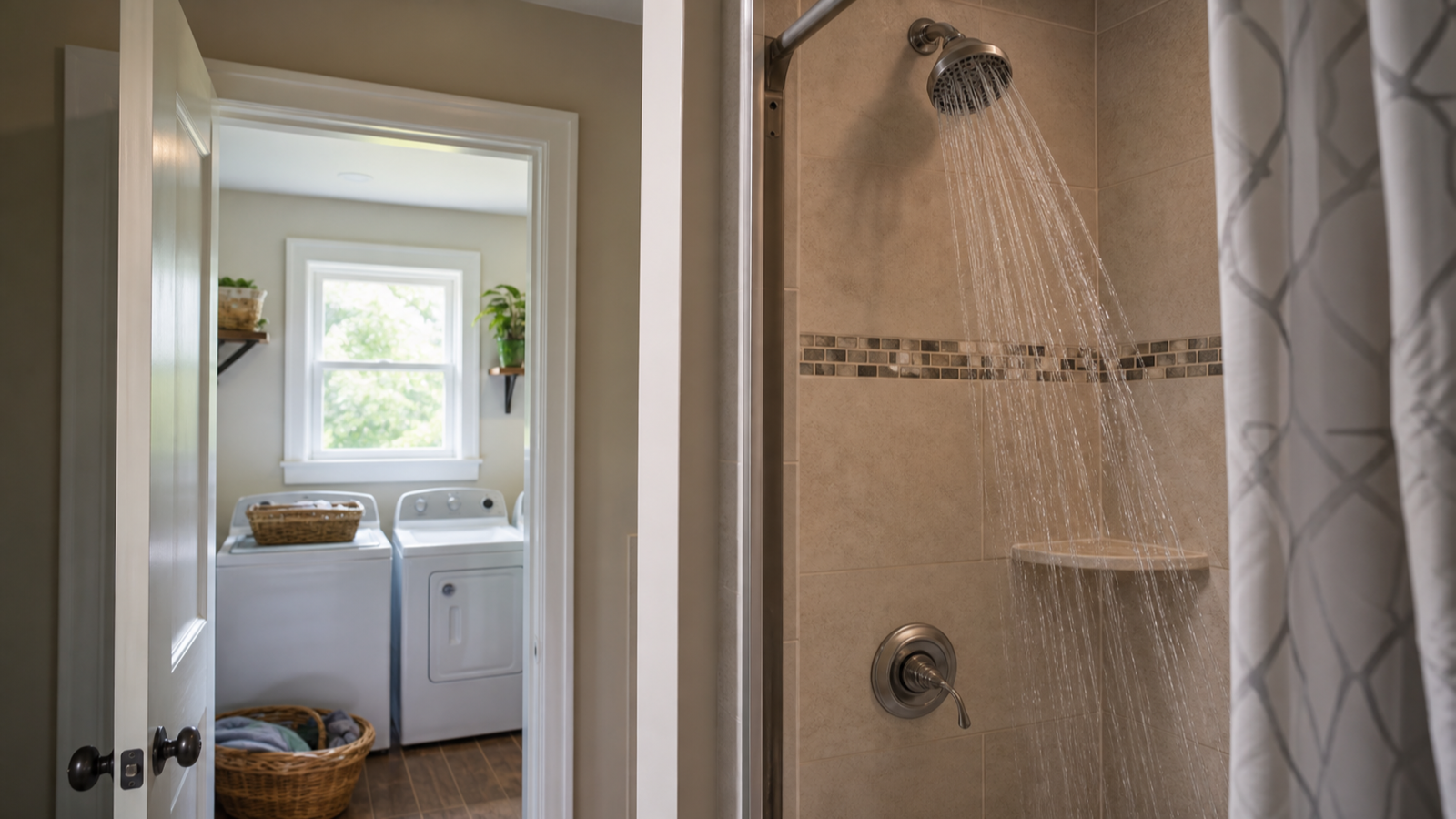
Many homeowners notice their water pressure is fine most of the day but sags the moment several fixtures run at once, during a morning shower while the washing machine fills, or when the irrigation system kicks on. This pattern is common on wells, and it usually reflects the relationship between how much water the system can supply and how much you are asking of it.
This guide explains why heavy use strains a well system and what the pattern can tell you. Recognizing it helps you decide whether the fix is a matter of habit, equipment, or a professional evaluation.
Demand versus supply
Every well system has a limit to how much water it can deliver per minute. That limit is set by the pump's capacity, the well's yield, and the sizing of the plumbing. When the water you are drawing stays below that limit, pressure holds steady. When several fixtures open at once and combined demand approaches or exceeds the limit, pressure drops because the system cannot keep every fixture fully supplied at the same time.
This is why the problem shows up only during peak moments. A single tap draws little, but a shower, a dishwasher, and an irrigation zone together can add up quickly.
Where the bottleneck usually is
The limiting factor differs from home to home. Sometimes the pump is undersized or wearing out and cannot maintain flow under load. Sometimes the well's yield is naturally low or has dropped seasonally, so water enters the well more slowly than the pump can remove it. Sometimes the pressure tank is too small to buffer the surge in demand, so the pump cannot keep up during the gap. A provider can identify which of these is at work.
Household changes matter too. A system that was sized years ago for a smaller family may simply be outmatched after a remodel that added bathrooms, a new irrigation zone, or higher-flow fixtures. In those cases the equipment is not failing so much as it has been asked to do more than it was designed for, and the fix is about capacity rather than repair.
Common heavy-use triggers
- Running a shower while the washing machine or dishwasher is filling, which stacks two steady draws on top of each other.
- Irrigation or sprinkler zones that pull a large, sustained volume while indoor fixtures are also in use.
- Multiple bathrooms in use at the same time during busy morning or evening routines.
- Filling a bathtub, pool, or large container while other water is running elsewhere in the home.
- Outdoor tasks like pressure washing or filling livestock troughs that demand high flow for long stretches.
What you can do and when to call
In the short term, staggering high-demand tasks can ease the strain, running the dishwasher after showers rather than during them, for example. If the drop is severe or getting worse, it may point to an undersized or aging pump, a low-yield well, or a system that has outgrown the household's needs. A licensed provider can evaluate whether the pump, tank, or well is the limiting factor, and our guide on well yield versus pump capacity explains the underlying relationship in more detail. You can reach a provider through our request service page.
Related Well Pump Services
Upper Cumberland Well Pump is an independent referral service that helps connect property owners with local water-well and pump-service providers. Upper Cumberland Well Pump does not directly perform regulated well drilling, pump installation, pump repair or water-treatment work unless expressly stated. Provider licensing, qualifications, insurance, availability, pricing, scheduling and service terms must be confirmed directly with the provider.
Water Pressure and Flow — Questions
Is it normal for pressure to drop a little during heavy use?
A slight, brief dip when several fixtures run at once is common and often not a concern. A large or sustained drop that leaves fixtures with weak flow is more likely to indicate the pump, tank, or well is at its limit and warrants a professional look.
Would a bigger pump fix this?
Sometimes, but not always. A larger pump only helps if the well can supply enough water to feed it. If the well's yield is the bottleneck, a bigger pump can actually make matters worse by drawing the well down. A provider can determine the right balance.
Does the season affect this?
Yes. Well yield can fall during dry summer months or droughts, so a system that keeps up in spring may struggle later in the year. If your heavy-use pressure worsens seasonally, mention that timing to your provider.
Need Help With a Well Pump Problem?
Send the property location, a description of the problem, any recent changes in pressure or water flow, the location of the well head and several clear photographs of the visible system components for an initial service review.