Water Pressure and Flow
How a Pressure Tank Affects Water Pressure
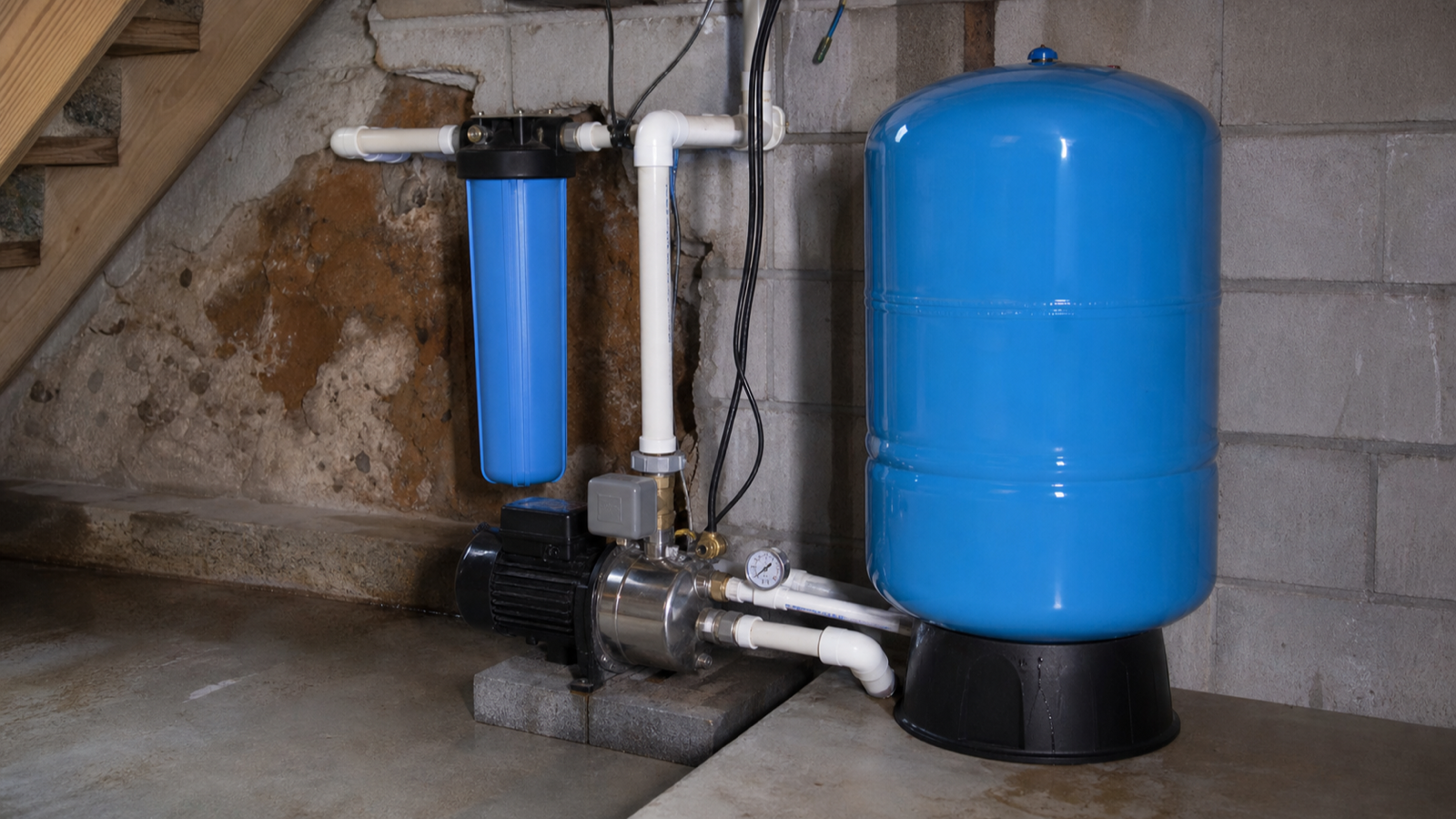
The pressure tank is one of the most misunderstood parts of a well system, yet it has a direct effect on the water pressure you experience every day. It does not create pressure on its own so much as store it, smoothing out the pump's operation and giving you steady flow between pump cycles.
This guide explains what the tank does, how it interacts with the pressure switch, and why a healthy tank matters for consistent pressure. Understanding the tank helps you recognize when it may be behind pressure problems, though confirming and correcting those problems is work for a licensed provider.
What the pressure tank actually does
Inside a modern pressure tank is a sealed air charge, usually separated from the water by a flexible bladder or diaphragm. When the pump runs, it pushes water into the tank and compresses that air. When you open a tap, the compressed air pushes water back out, delivering flow without the pump having to start instantly. This stored, pressurized water is what gives you a steady stream in the moments before and between pump cycles.
The tank also protects the pump. By holding a reserve of pressurized water, it lets the pump rest instead of switching on for every small draw, which reduces wear and helps the pump last longer.
How the tank and pressure switch work together
The pressure switch monitors system pressure and tells the pump when to start and stop, typically within a set range. The tank gives that range room to breathe. Without an adequately sized, properly charged tank, pressure swings between the switch's on and off points feel more abrupt, and the pump cycles more often. A well-matched tank and switch produce the smooth, predictable pressure most homeowners expect.
The two components are also sized to complement each other. A tank's usable water reserve, called its drawdown, depends partly on the air charge being set to work with the switch's cut-in pressure. When that pairing drifts out of balance, the symptoms can look like a pressure problem even though the underlying issue is a mismatch. This is one reason a provider evaluates the tank and switch together rather than in isolation.
Signs the tank may be affecting your pressure
- The pump turns on and off rapidly during a single use, a pattern often called short-cycling, which can signal a lost air charge.
- Water pressure surges strong then weak within seconds of opening a tap, suggesting the tank is no longer buffering flow.
- You hear the pump kick on almost immediately whenever anyone uses water, even briefly.
- The tank feels completely full and heavy when tapped, which can indicate it is waterlogged and has lost its air cushion.
- Pressure feels generally weaker than it used to across the whole house, with no plumbing change to explain it.
When a tank issue needs a provider
Because the pressure tank holds water under pressure and sits alongside electrical controls, checking or replacing it is not a safe do-it-yourself task. You can safely observe the symptoms above and note the reading on your gauge, but adjusting the air charge, testing the bladder, or replacing the tank should be handled by a professional. If your tank may be failing, our pressure tank replacement service and our guide on whether a larger tank improves pressure can help you plan the next step.
Related Well Pump Services
Upper Cumberland Well Pump is an independent referral service that helps connect property owners with local water-well and pump-service providers. Upper Cumberland Well Pump does not directly perform regulated well drilling, pump installation, pump repair or water-treatment work unless expressly stated. Provider licensing, qualifications, insurance, availability, pricing, scheduling and service terms must be confirmed directly with the provider.
Water Pressure and Flow — Questions
Does a bigger pressure tank mean higher pressure?
Not directly. The pressure range is set by the pressure switch, not the tank size. A larger tank stores more water and lets the pump run less often, which can make pressure feel steadier, but it does not raise the maximum pressure on its own.
How long does a pressure tank last?
Lifespan varies with water quality, usage, and how well the system is matched, so there is no single number. Many tanks serve for years, but a waterlogged or failed bladder can shorten that. A provider can assess the condition of yours.
Can a bad tank damage my pump?
Yes, it can contribute to problems. A failed tank makes the pump cycle far more often than it should, and that extra wear can shorten the pump's life. Addressing a failing tank promptly helps protect the pump.
Need Help With a Well Pump Problem?
Send the property location, a description of the problem, any recent changes in pressure or water flow, the location of the well head and several clear photographs of the visible system components for an initial service review.