Water Pressure and Flow
Constant-Pressure Systems Versus Traditional Pressure Tanks
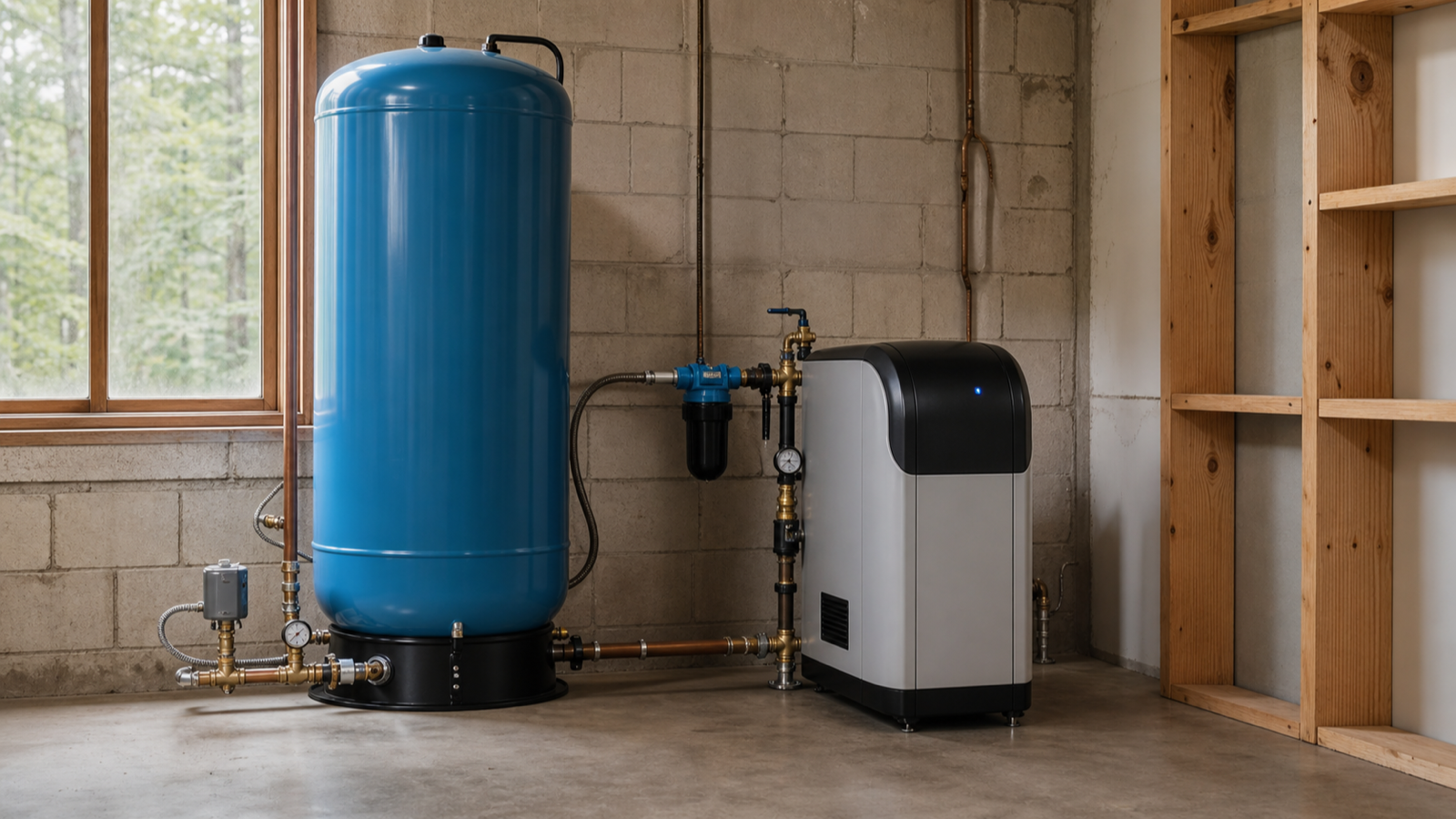
When it is time to address pressure problems or replace aging equipment, many homeowners weigh a traditional pressure-tank system against a newer constant-pressure system. Both can deliver reliable water, but they work differently and suit different situations. Understanding the trade-offs helps you have an informed conversation with a licensed provider.
This guide compares the two approaches across the things that matter most: how they handle demand, how the pump cycles, tank size, and long-term considerations. It is meant to inform, not to prescribe, since the right choice depends on your specific well and household.
How each handles changing demand
A traditional system uses a pressure tank and a pump that runs at full speed until a cutoff pressure is reached, then shuts off. Pressure naturally rises and falls within the switch's range, and when demand is high, you may feel pressure dip. A constant-pressure system uses a variable-speed pump that adjusts its speed continuously to match demand, holding pressure within a narrow band even as fixtures open and close.
In practice, a traditional system delivers pressure that cycles, while a constant-pressure system delivers pressure that stays close to a steady target. For a single fixture the difference can be subtle, but under simultaneous demand it becomes clear: the traditional system's pressure sags as draws stack up, while the constant-pressure system works to hold its target by ramping the pump.
Cycling, tank size, and complexity
Because a traditional pump cycles fully on and off, it relies on an adequately sized pressure tank to avoid excessive cycling. Constant-pressure systems typically use a much smaller tank, since the variable-speed pump smooths delivery itself. The trade-off is complexity: constant-pressure systems include electronic controls, while traditional systems are mechanically simpler and long familiar to most providers.
That difference in complexity shapes how each is maintained over its life. A traditional system's parts, the tank, switch, and pump, are well understood and widely stocked. A constant-pressure system's controller is more capable but calls for a provider comfortable with the electronics. Neither is inherently more reliable; they simply ask for different expertise when service is needed, which is worth factoring into your decision.
Comparing the two at a glance
- Pressure steadiness: constant-pressure systems hold a narrow band, while traditional systems cycle up and down within the switch's range.
- Tank size: traditional systems rely on a larger tank, while constant-pressure systems usually use a compact one.
- Pump operation: constant-pressure pumps vary their speed continuously, while traditional pumps run full-on then off.
- Simplicity: traditional systems are mechanically simple and widely understood, while constant-pressure systems add electronic controls.
- Best fit: traditional setups suit many homes well, while constant-pressure systems shine where multiple fixtures run at once and steadiness is a priority.
Which one fits your situation
Neither approach is universally better. A well-matched traditional system serves many homes reliably and is simpler to service. A constant-pressure system offers superior steadiness for larger households or homes where multiple fixtures often run together, provided the well can supply the water. Both are limited by the well's yield, so neither can overcome a supply shortfall on its own. A licensed provider can weigh your well, demand, and goals; our guide on what a constant-pressure system is and our pressure tank replacement service offer more detail.
Related Well Pump Services
Upper Cumberland Well Pump is an independent referral service that helps connect property owners with local water-well and pump-service providers. Upper Cumberland Well Pump does not directly perform regulated well drilling, pump installation, pump repair or water-treatment work unless expressly stated. Provider licensing, qualifications, insurance, availability, pricing, scheduling and service terms must be confirmed directly with the provider.
Water Pressure and Flow — Questions
Is a constant-pressure system always better?
No. It offers steadier pressure, but a well-matched traditional system serves many homes reliably at lower complexity. The better choice depends on your household size, how often multiple fixtures run at once, your well's capacity, and your priorities, which a provider can assess.
Can I switch from a traditional tank to constant pressure?
In many cases yes, but it depends on your well, wiring, and existing equipment. A provider can evaluate whether your system is a good candidate and what the conversion would involve before any change is made.
Do both systems depend on the well's yield?
Yes. Neither system can supply more water than the well produces. If a low-yield well is limiting your water, that must be addressed regardless of which system you choose, so a provider should evaluate the well first.
Need Help With a Well Pump Problem?
Send the property location, a description of the problem, any recent changes in pressure or water flow, the location of the well head and several clear photographs of the visible system components for an initial service review.