Water Pressure and Flow
Can a Larger Pressure Tank Improve Water Pressure?
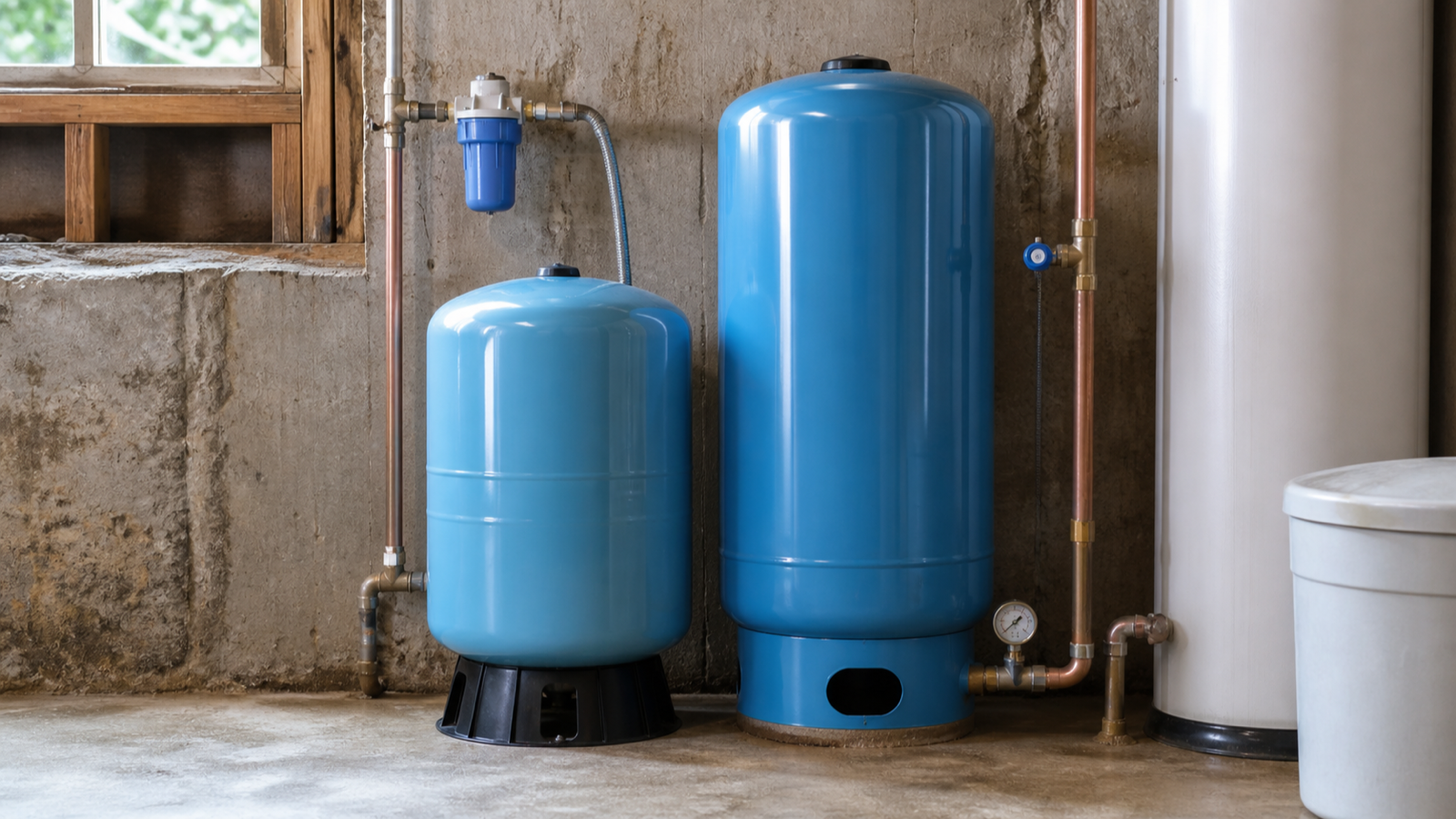
It is a natural assumption: if water pressure is weak, a bigger pressure tank should help. The reality is more nuanced. A larger tank does change how your system behaves in valuable ways, but it does not raise your water pressure in the way many people expect. Understanding the distinction can save you from disappointment and point you toward the real fix.
This guide explains what a larger tank actually does, why it does not directly increase pressure, and when upsizing is genuinely worthwhile. As with any pressurized component, installation and sizing are jobs for a licensed provider.
What sets your pressure, and what does not
The pressure range in a traditional well system is determined by the pressure switch, not the tank. The switch tells the pump when to start and stop, and those settings define the high and low ends of your pressure. The tank's job is to store pressurized water within that range, not to set the range itself. So a larger tank does not raise the pressure at your taps; it stores more water at whatever pressure the switch dictates.
This is the core misconception: tank size affects volume and cycling, while the switch affects pressure. Swapping in a bigger tank alone will not make a weak system stronger.
What a larger tank does improve
A larger tank holds a bigger reserve of pressurized water, which means the pump runs less often and for longer stretches. That reduces short-cycling, which in turn reduces wear on the pump and can extend its life. A bigger tank can also make pressure feel steadier during light use, because there is more stored water to draw from before the pump needs to restart. These are real benefits, just not the same as higher pressure.
For a pump, frequent starts are harder on the equipment than steady running, so the reduction in cycling is genuinely valuable. Think of the difference between a car in constant stop-and-go traffic versus cruising on a highway. A larger tank shifts the pump toward the gentler pattern, which is why upsizing is often recommended to protect a pump even when the homeowner's original complaint was about pressure.
When upsizing is worth considering
- The pump short-cycles, turning on and off too frequently, and a larger reserve would let it run in longer, gentler cycles.
- The household has grown or added fixtures, and more stored water would help smooth out everyday demand.
- The current tank is undersized for the pump, contributing to excessive cycling and premature wear.
- You want to reduce pump starts to protect an aging pump, where a larger reserve eases the load.
- A provider has confirmed the switch and pump are healthy, so the tank is the sensible component to address.
Getting the real fix
If your goal is genuinely higher pressure, the answer usually lies elsewhere, in the pressure switch settings, the pump, or resolving a restriction or supply issue, not in a bigger tank. A licensed provider can determine whether your pressure complaint calls for a tank change, a switch adjustment, or a different solution such as a constant-pressure system. Our guide on how a pressure tank affects water pressure and our pressure tank replacement service can help you plan the right step rather than guessing.
Related Well Pump Services
Upper Cumberland Well Pump is an independent referral service that helps connect property owners with local water-well and pump-service providers. Upper Cumberland Well Pump does not directly perform regulated well drilling, pump installation, pump repair or water-treatment work unless expressly stated. Provider licensing, qualifications, insurance, availability, pricing, scheduling and service terms must be confirmed directly with the provider.
Water Pressure and Flow — Questions
Will a bigger tank raise my water pressure?
Not on its own. Pressure is set by the pressure switch, not the tank. A larger tank stores more water and reduces pump cycling, which can make pressure feel steadier, but it does not increase the actual pressure at your taps.
Then why would I ever upsize my tank?
Chiefly to reduce pump short-cycling and the wear it causes, and to keep more pressurized water on hand for everyday use. Those benefits can extend pump life and smooth out light-use pressure, even though they do not raise the pressure range.
What actually raises water pressure?
Adjusting the pressure switch settings, addressing a pump that cannot maintain pressure, clearing restrictions in plumbing or filtration, or installing a constant-pressure system can all affect pressure. A provider should identify the right approach for your system rather than defaulting to a bigger tank.
Need Help With a Well Pump Problem?
Send the property location, a description of the problem, any recent changes in pressure or water flow, the location of the well head and several clear photographs of the visible system components for an initial service review.