
Well Pump System Components
Which Well Components Are Located Inside the House?
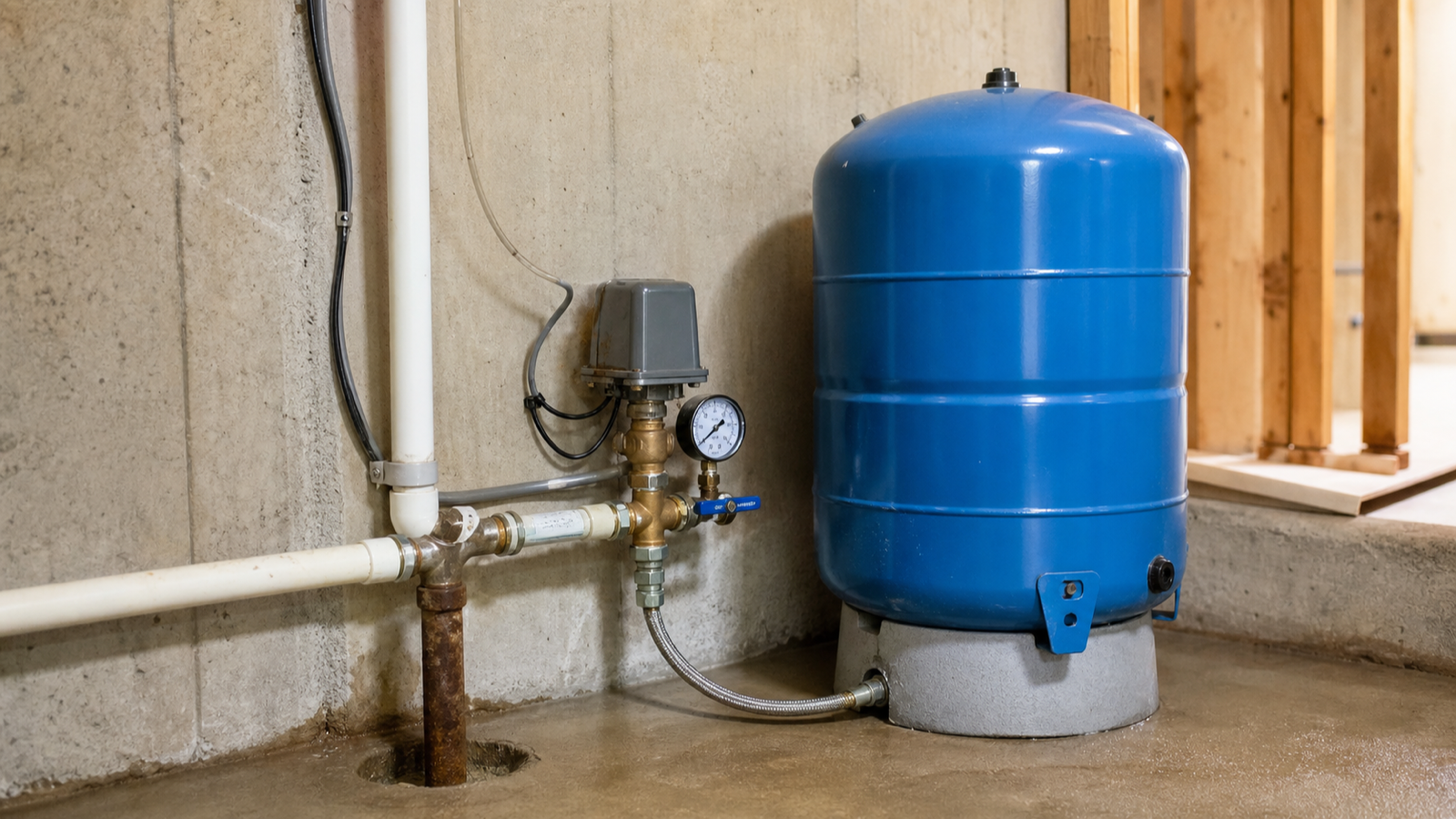
A well system is split between two worlds. Part of it lives outdoors and underground, out at the wellhead, while another part lives indoors, usually in a basement, crawlspace, garage, or utility room. Knowing which components are inside your home helps you locate them, describe a problem, and understand what you are hearing or seeing when the system runs.
This guide maps out the indoor side of a typical well system for homeowners in the Upper Cumberland region, and briefly notes what stays outside so you have the full picture.
The pressure tank and its neighbors
The most prominent indoor component is usually the pressure tank, a large tank that stores water under pressure so the pump does not run for every draw. It is commonly found in a basement, utility room, garage, or crawlspace, wherever the water line enters the house. Around the tank you will typically find a small cluster of related parts.
Mounted on or near the tank's piping are the pressure switch, which tells the pump when to run, and the pressure gauge, which lets you read the system pressure. These three parts, tank, switch, and gauge, form the control center of the system and are almost always indoors together.
Components commonly found indoors
- The pressure tank, which stores pressurized water and smooths out your household's water demand between pump cycles.
- The pressure switch, which senses pressure and automatically starts and stops the pump, usually mounted right at the tank's piping.
- The pressure gauge, which displays the current system pressure and lets you monitor the pump's cycle at a glance.
- The control box, in three-wire submersible systems, which houses the pump's starting components and is mounted on a nearby wall.
- The main shutoff valve and connection to household plumbing, where the well line ties into the pipes serving your fixtures.
What stays outside at the wellhead
Several major components live outdoors and underground. In a submersible system, the pump itself sits deep in the well, connected to the surface by the drop pipe and pump wire. The pitless adapter makes the water connection below the frost line, and the well cap seals the top of the casing out in the yard.
A jet pump system is a bit different, since the jet pump may be located above ground, sometimes indoors or in a well house, while still drawing from the outdoor well. Knowing your pump type helps clarify what is inside versus out, and a provider can confirm your specific layout.
Why knowing the layout helps
When something goes wrong, being able to say where a noise, leak, or gauge reading is coming from helps a provider respond efficiently. If you hear rapid clicking near the tank, notice water around the pressure switch, or see an odd gauge reading, you can point to the indoor control cluster with confidence.
Just as importantly, knowing the layout tells you what not to touch. The indoor electrical parts like the switch and control box, and the outdoor wellhead components, are all provider territory. If any of them is acting up, request service and let a qualified provider handle the diagnosis and any repair.
Related Well Pump Services
Upper Cumberland Well Pump is an independent referral service that helps connect property owners with local water-well and pump-service providers. Upper Cumberland Well Pump does not directly perform regulated well drilling, pump installation, pump repair or water-treatment work unless expressly stated. Provider licensing, qualifications, insurance, availability, pricing, scheduling and service terms must be confirmed directly with the provider.
Well Pump System Components — Questions
Is the well pump itself inside the house?
Usually not, in a submersible system, where the pump sits deep in the well outdoors. Some jet-pump systems place the pump above ground, occasionally indoors or in a well house, so it depends on your system type, which a provider can confirm.
Where should I look for my pressure tank?
Most often in a basement, crawlspace, garage, or utility room near where the water line enters the home. The pressure switch and gauge are typically clustered right around it, making that spot the control center of the system.
Do all well systems have an indoor control box?
No. Two-wire submersible pumps keep their starting components in the well and have no indoor control box, while many three-wire systems mount one on a nearby wall. A provider can identify whether your system includes one.
Need Help With a Well Pump Problem?
Send the property location, a description of the problem, any recent changes in pressure or water flow, the location of the well head and several clear photographs of the visible system components for an initial service review.