
Well Pump System Components
What Does a Well Pressure Tank Do?
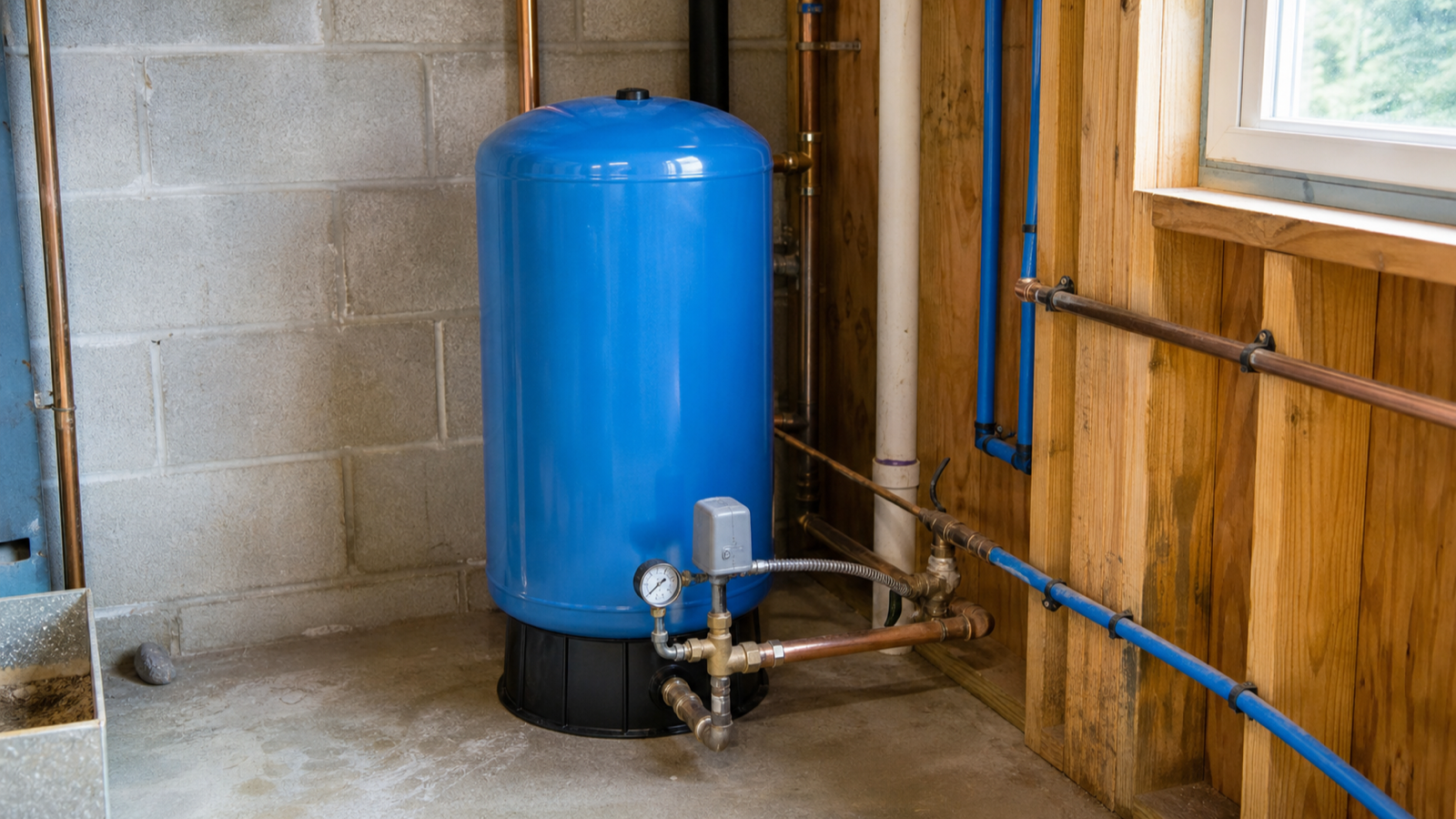
The pressure tank is one of the most important yet least understood parts of a well system. It looks like a simple metal tank, but it does two essential jobs at once: it stores a reserve of water under pressure, and it protects the pump from turning on and off too frequently. Without it, your pump would have to fire up every time you opened a faucet.
For homeowners in the Upper Cumberland region, a healthy pressure tank means steadier water pressure and a pump that lasts longer. When a tank starts to fail, the symptoms show up quickly at your faucets.
How the tank stores water under pressure
Most modern pressure tanks use a captive air design. Inside the steel shell is a flexible rubber bladder or diaphragm that separates water from a cushion of compressed air. As the pump pushes water in, the air compresses and stores energy. When you open a tap, that compressed air pushes the water back out and into your home.
This stored, pressurized water is what lets you run a faucet, flush a toilet, or fill a glass without the pump kicking on for every small draw. The air charge is the working spring of the system, and it must stay properly balanced with the pump's pressure settings for everything to run smoothly.
Why the tank protects your pump
Pumps do not like starting and stopping constantly. Each start puts stress on the motor and its electrical components. By holding a reserve of water, the tank allows the pump to run in longer, less frequent cycles, which reduces wear and helps the motor last.
The larger the usable reserve, the fewer times the pump has to start for a given amount of water use. That is why the tank and the pump are best thought of as a team, working together to balance steady pressure against motor longevity.
Signs a pressure tank may be failing
- Rapid or short pump cycling, where the pump clicks on and off every few seconds during water use, often signals that the tank has lost its air charge.
- Sputtering or spitting faucets can mean air is entering the system or the bladder has failed and water is mixing with the air chamber.
- Water pressure that surges and drops noticeably as you use a fixture may indicate the tank is no longer cushioning flow the way it should.
- A tank that feels completely full of water and heavy, with no air cushion, or that shows external rust and moisture, is a sign the internal bladder or shell may be compromised.
- Pressure readings that swing outside the normal range on the system gauge can point to a tank that is waterlogged or has lost its charge.
What to do about a suspect tank
Checking or adjusting the air charge and inspecting the bladder involves working with a pressurized vessel and the pump's electrical controls, which is provider territory. A licensed provider can safely test the tank's pre-charge, confirm whether the bladder has failed, and determine whether the tank can be serviced or needs replacement.
If you suspect your tank is the culprit behind rapid cycling or unsteady pressure, our pressure tank replacement page describes the service, and you can request a qualified provider to evaluate the tank before anything is done.
Related Well Pump Services
Upper Cumberland Well Pump is an independent referral service that helps connect property owners with local water-well and pump-service providers. Upper Cumberland Well Pump does not directly perform regulated well drilling, pump installation, pump repair or water-treatment work unless expressly stated. Provider licensing, qualifications, insurance, availability, pricing, scheduling and service terms must be confirmed directly with the provider.
Well Pump System Components — Questions
How do I know if my pressure tank is waterlogged?
A waterlogged tank has lost its air cushion, so it feels unusually heavy and full and the pump cycles rapidly during use. Confirming this safely involves checking the air charge, which a licensed provider should handle since the tank is pressurized.
Does a bigger pressure tank always mean better performance?
A larger tank generally gives a bigger water reserve and longer pump cycles, which can reduce motor wear. However, the right size depends on your household demand and pump, so a provider can recommend an appropriate match rather than simply the biggest option.
Can a pressure tank be repaired or does it need replacing?
Some issues, like an incorrect air charge, can be adjusted, but a ruptured internal bladder typically means the tank should be replaced. A qualified provider can determine which situation you are dealing with after testing the tank.
Need Help With a Well Pump Problem?
Send the property location, a description of the problem, any recent changes in pressure or water flow, the location of the well head and several clear photographs of the visible system components for an initial service review.