
Well Pump System Components
What Does a Well-System Pressure Gauge Show?
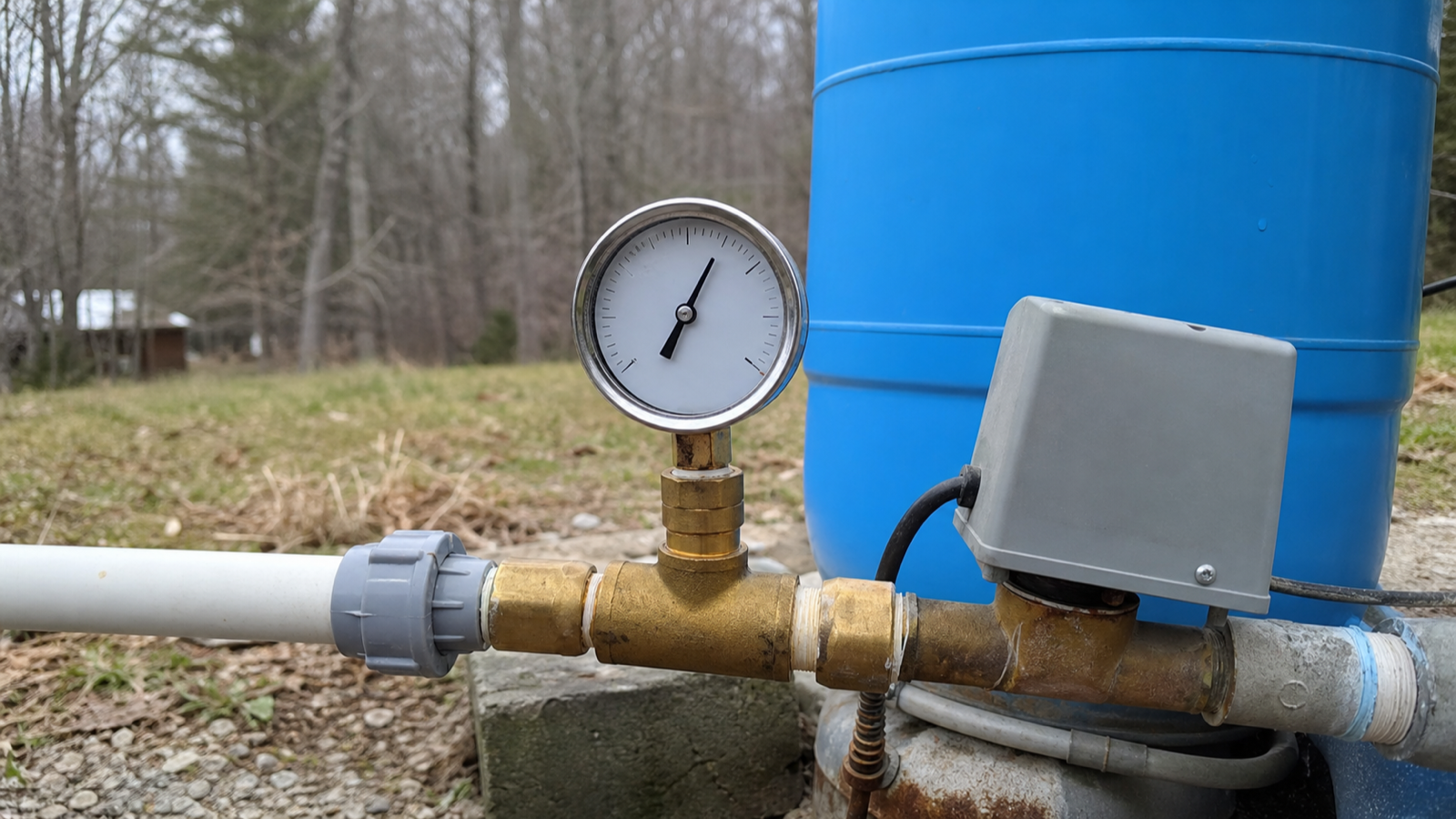
The pressure gauge is the one part of your well system that lets you actually see what is happening inside it. Mounted near the pressure tank and switch, it displays the current water pressure in the system on a simple round dial. Learning to read it turns an invisible system into something you can monitor at a glance.
The gauge does not control anything; it only reports. But that report is valuable, because the pattern of the needle rising and falling tells you whether the pump, tank, and switch are working together the way they should.
What the needle is telling you
The gauge reads the water pressure in your system, typically measured in pounds per square inch. As you use water, you should see the needle fall. When it reaches the pump's cut-in point, the pump starts and the needle should climb steadily until it reaches the cut-out point, where the pump shuts off.
That smooth rise and fall between two points is the signature of a healthy system. The gauge lets you watch the pressure switch and pump do their normal cycle, giving you a window into whether the timing and range look right.
Reading a normal cycle
In a well-behaved system, the needle moves gradually. When you open a faucet, pressure declines at a steady pace as the pressure tank gives up its stored water. Once the pump kicks in, pressure recovers smoothly. When you shut the water off, the needle settles and holds near the cut-out pressure.
The exact numbers depend on how your system is set, but the important thing is the pattern: a controlled, gradual movement within a consistent range. Learning what normal looks like for your own system makes it much easier to notice when something changes.
Readings that may signal a problem
- A needle that jumps rapidly up and down over a narrow range points to short cycling, often caused by a pressure tank that has lost its air charge.
- Pressure that falls while no water is being used can indicate a leak or a check valve letting water drain back down the well.
- A needle stuck at zero or that never builds pressure may mean the pump is not running or not delivering water, which warrants prompt attention.
- Pressure that climbs far past the normal cut-out point without the pump shutting off can indicate a pressure switch that is not opening, which needs a provider quickly.
- A gauge that appears frozen or gives readings that contradict what you feel at the faucets may itself be faulty and worth having checked.
Using the gauge without overstepping
The gauge is safe to look at and is a helpful tool for describing a problem to a provider. Noting how the needle behaves, whether it swings rapidly, drifts down at rest, or never builds, gives a service professional valuable clues before they even arrive. That said, the gauge only reveals symptoms, not causes.
Adjusting pressure settings, testing the tank charge, or working on the switch all involve pressurized or electrical components and are provider tasks. If your gauge is showing an unusual pattern, request service and share what you have observed so a qualified provider can diagnose the underlying cause.
Related Well Pump Services
Upper Cumberland Well Pump is an independent referral service that helps connect property owners with local water-well and pump-service providers. Upper Cumberland Well Pump does not directly perform regulated well drilling, pump installation, pump repair or water-treatment work unless expressly stated. Provider licensing, qualifications, insurance, availability, pricing, scheduling and service terms must be confirmed directly with the provider.
Well Pump System Components — Questions
What is a normal pressure reading on a well system?
Systems are set to cycle between a lower cut-in and a higher cut-out pressure, and the exact figures depend on how yours was configured. Rather than a single ideal number, look for a smooth, consistent rise and fall, and let a provider confirm the correct settings for your system.
Why does my pressure gauge bounce quickly up and down?
Rapid bouncing usually indicates short cycling, where the pump turns on and off too fast, often because the pressure tank has lost its air charge. Because a pressurized tank is involved, a licensed provider should diagnose and correct it.
Can the pressure gauge itself be wrong?
Yes. Gauges can stick, clog, or fail over time and give readings that do not match reality. If the gauge contradicts what you experience at the faucets, mention it to a provider, who can verify and replace it if needed.
Need Help With a Well Pump Problem?
Send the property location, a description of the problem, any recent changes in pressure or water flow, the location of the well head and several clear photographs of the visible system components for an initial service review.