Well Pump System Components
How Does a Well Pressure Switch Work?
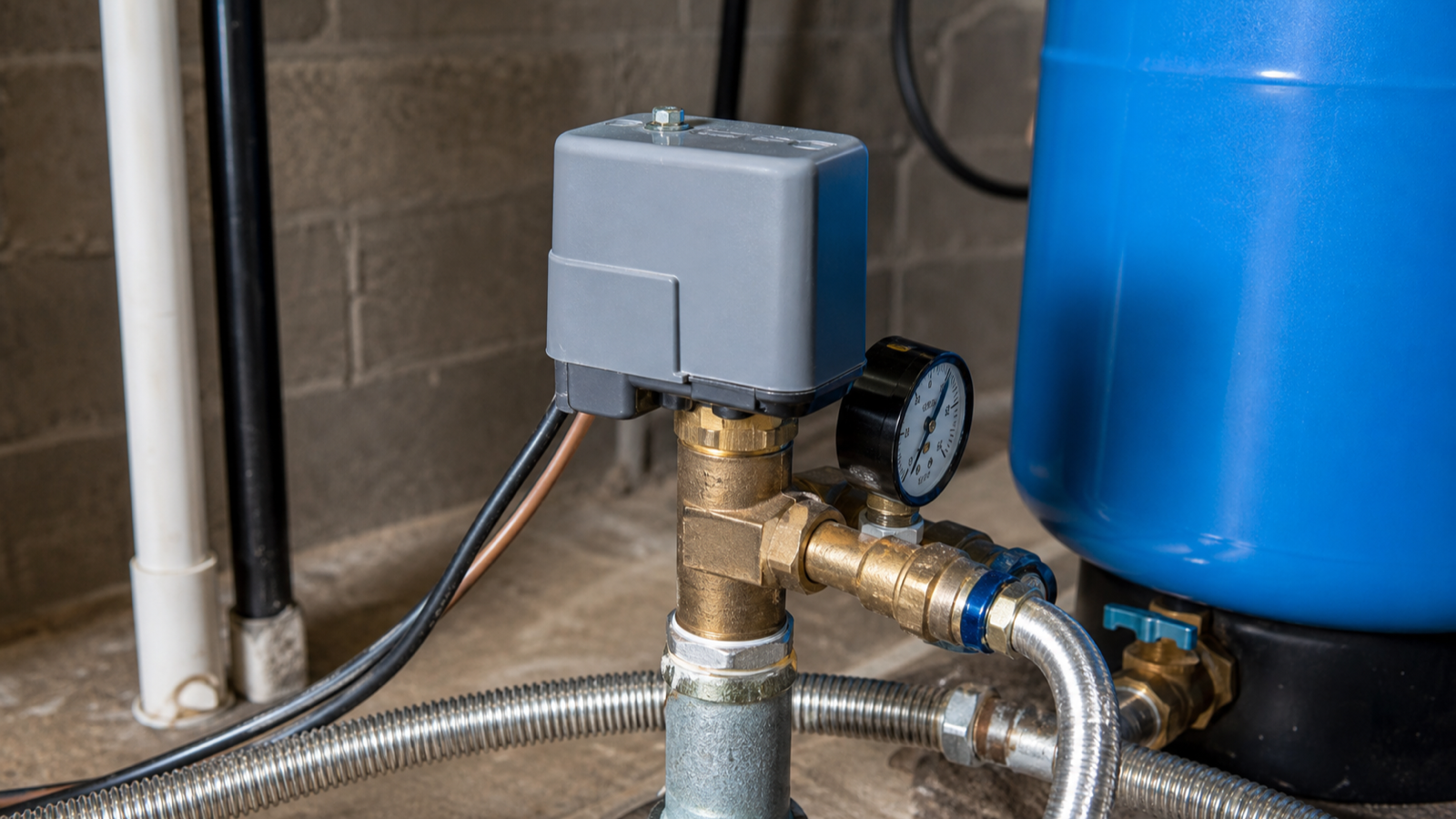
The pressure switch is a small device, often no bigger than a fist, but it acts as the automatic brain of your well system. It constantly senses the water pressure in your plumbing and decides when the pump should start and when it should stop. Every time your system delivers water without you touching a thing, the pressure switch is doing its job.
Because it makes and breaks the electrical connection to the pump thousands of times over its life, the switch eventually wears. Understanding how it works helps you recognize when it may be the reason your water is behaving strangely.
The cut-in and cut-out cycle
A pressure switch operates between two settings: a lower cut-in pressure and a higher cut-out pressure. When water use lowers the system pressure to the cut-in point, the switch closes its contacts and sends power to the pump. The pump then builds pressure until it reaches the cut-out point, at which the switch opens the contacts and shuts the pump off.
This range is what keeps your water pressure within a comfortable band. The switch is essentially a pressure-sensitive electrical gate, and it works hand in hand with the pressure tank, which provides the stored water that lets the cycle happen smoothly rather than constantly.
What is happening inside the switch
Inside the switch, a diaphragm responds to water pressure and pushes against a calibrated spring. As pressure rises and falls, that mechanical movement opens and closes a set of electrical contacts. The whole design is elegantly simple, which is part of why the humble pressure switch has been a well-system staple for decades.
Over time, the contacts can pit or burn from the repeated electrical arcing, and the diaphragm can stiffen or fail. When that happens, the switch may struggle to respond to pressure accurately, leading to erratic pump behavior.
Signs a pressure switch may be failing
- The pump fails to start even though pressure has clearly dropped, suggesting the contacts are not closing as they should.
- The pump runs continuously and does not shut off, which can mean the switch is not opening at the cut-out point and can overheat the pump if left unchecked.
- You hear repeated clicking or buzzing at the switch, a sign the contacts may be arcing or struggling to make a clean connection.
- Water pressure swings well outside its normal range, or the pump cycles at odd points, indicating the switch may be reading pressure inaccurately.
- Visible scorching, corrosion, or moisture around the switch, which points to internal wear that a provider should evaluate.
Why a switch is not a do-it-yourself repair
A pressure switch carries line-voltage electricity and is directly wired to the pump. Opening or adjusting it exposes you to live electrical connections, so it is not something to handle yourself. A licensed provider has the training and tools to safely test the switch, verify the settings, and replace it if needed.
If your pump will not start, will not stop, or the pressure is behaving unpredictably, a qualified well-service provider can diagnose whether the switch or another part is at fault. You can request help through our service page and avoid the risks of working around live wiring.
Related Well Pump Services
Upper Cumberland Well Pump is an independent referral service that helps connect property owners with local water-well and pump-service providers. Upper Cumberland Well Pump does not directly perform regulated well drilling, pump installation, pump repair or water-treatment work unless expressly stated. Provider licensing, qualifications, insurance, availability, pricing, scheduling and service terms must be confirmed directly with the provider.
Well Pump System Components — Questions
What is the difference between cut-in and cut-out pressure?
Cut-in is the lower pressure at which the switch turns the pump on, and cut-out is the higher pressure at which it turns the pump off. Together they define the range your system maintains, and they should be matched to the pressure tank's air charge by a provider.
Why won't my pump shut off?
A pump that runs without stopping can mean the switch is not opening at the cut-out point, but it can also stem from a leak, a low water level, or a pressure problem. Because a continuously running pump can overheat, it is best to have a provider diagnose it promptly.
Can I adjust the pressure switch myself?
No. The switch is a live-voltage electrical component, and adjusting it means working around exposed wiring. A licensed provider should make any adjustments so the settings are safe and correctly matched to the rest of your system.
Need Help With a Well Pump Problem?
Send the property location, a description of the problem, any recent changes in pressure or water flow, the location of the well head and several clear photographs of the visible system components for an initial service review.