Well Pump System Components
How Does a Residential Well Pump System Work?
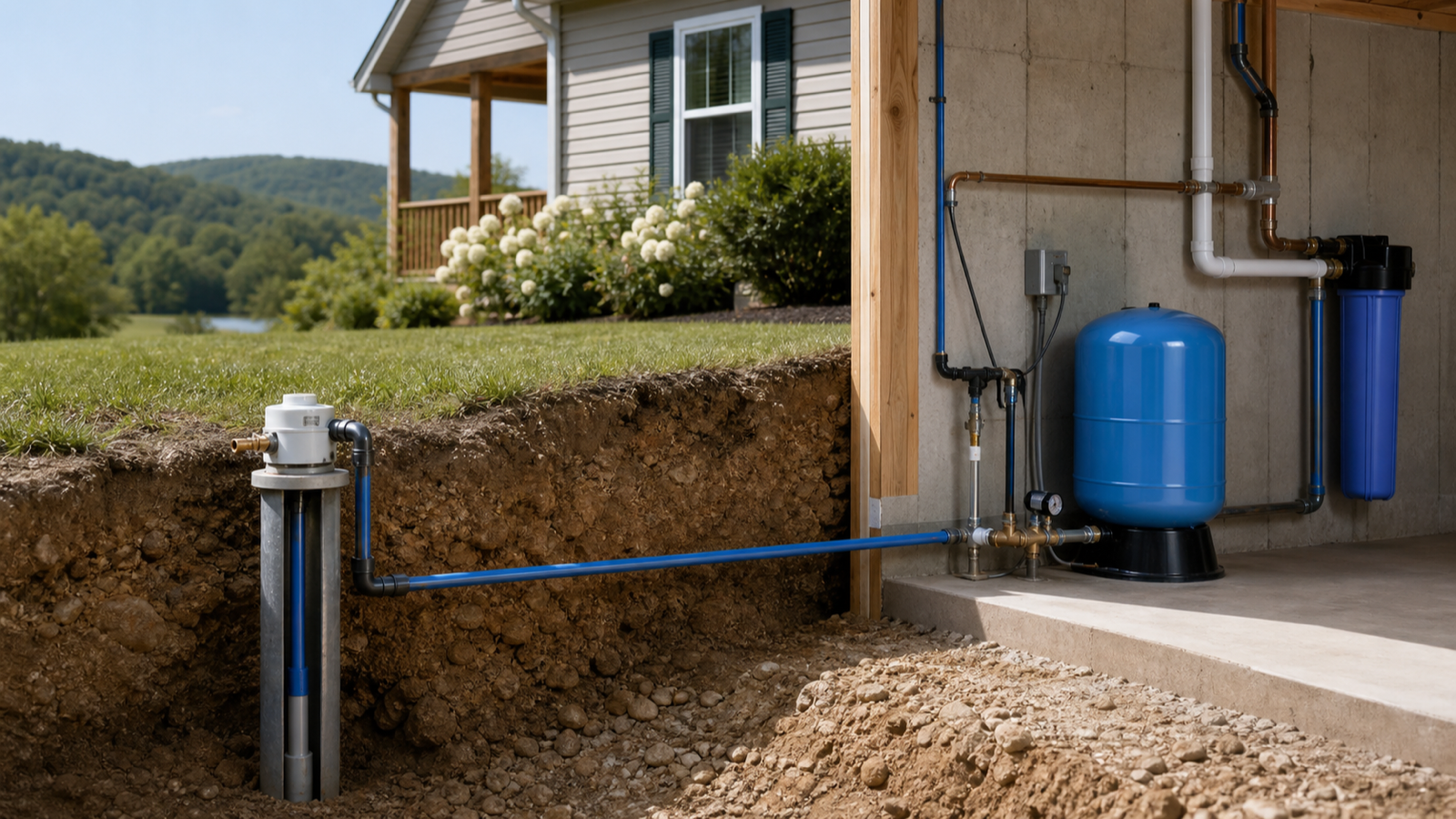
A private well system quietly does a demanding job every day: it lifts water from deep underground and delivers it to your taps at a steady, usable pressure. Most homeowners in the Upper Cumberland region never think about it until a faucet sputters or the water stops. Understanding how the pieces fit together makes it much easier to describe a problem accurately and to know when it is time to call for help.
At a high level, a well system has three jobs: draw water from the aquifer, store a small reserve under pressure, and turn the pump on and off automatically as you use water. Each of those jobs is handled by a specific component, and they all depend on one another to work smoothly.
The path water takes from the ground to your tap
Water begins in the aquifer, the water-bearing layer of rock and soil that your well was drilled into. A pump located either down in the well or near it lifts that water up through a pipe and pushes it toward the house. Along the way it passes a check valve that keeps water from draining back down, then travels through the buried supply line into your plumbing.
Before the water reaches your fixtures, it fills a pressure tank. This tank holds a cushion of pressurized water so that the pump does not need to run every single time you open a faucet. When you turn on a tap, you are first drawing from the tank, and the system only starts the pump again once the stored pressure drops to a set point.
The main components and what each one does
- The pump is the heart of the system and is responsible for physically moving water; it may be a submersible unit deep in the well or a jet pump mounted above ground near the wellhead.
- The pressure tank stores a reserve of water under air pressure so the pump cycles less often and your water pressure stays reasonably steady between draws.
- The pressure switch senses tank pressure and tells the pump when to turn on and when to shut off, acting as the automatic brain of the system.
- The check valve prevents water from flowing backward down the well when the pump stops, which protects pressure and reduces wear on the pump.
- The well cap or seal sits on top of the casing and keeps insects, surface water, and debris out of the well while allowing wiring to pass through safely.
How the system decides when to run
The cycle is governed by pressure. As you use water, the pressure in the tank falls. When it reaches the lower cut-in setting, the pressure switch closes and the pump starts. Water is pushed into the system until pressure climbs to the upper cut-out setting, at which point the switch opens and the pump stops. This on-and-off pattern repeats all day and is completely normal.
A healthy system produces long, smooth cycles. When something is off, such as a waterlogged tank or a failing switch, the pump may start and stop rapidly. That rapid cycling is one of the most common early warning signs that a component needs a professional look.
Why the whole system matters together
No single part works in isolation. A perfectly good pump can still deliver poor pressure if the tank has lost its air charge, and a healthy tank cannot help if the switch never signals the pump to run. Because the components are interdependent, a symptom you notice at the faucet often traces back to a part you never see.
If your water pressure has become erratic or the pump seems to run constantly, a qualified well-service provider can test the individual components and identify the true cause. You can request help any time through our request service page, and we will connect you with a licensed provider in the Upper Cumberland area.
Related Well Pump Services
Upper Cumberland Well Pump is an independent referral service that helps connect property owners with local water-well and pump-service providers. Upper Cumberland Well Pump does not directly perform regulated well drilling, pump installation, pump repair or water-treatment work unless expressly stated. Provider licensing, qualifications, insurance, availability, pricing, scheduling and service terms must be confirmed directly with the provider.
Well Pump System Components — Questions
Where is the pump usually located in a home well system?
It depends on the type of system. A submersible pump sits deep inside the well casing, below the water level, while a jet pump is mounted above ground near the wellhead or inside a nearby building. A licensed provider can confirm which type you have during an inspection.
Why does my pump turn on even when no water is running?
A pump that starts without any water being used can point to a leak somewhere in the system, a failing check valve, or a pressure problem. Because several parts can cause this, it is best to have a qualified provider diagnose it rather than guessing.
How long should a well system last?
Longevity varies widely with water quality, usage, and how well the system was installed. Individual components age at different rates, so routine well inspections can help you plan ahead rather than being caught by a sudden failure.
Need Help With a Well Pump Problem?
Send the property location, a description of the problem, any recent changes in pressure or water flow, the location of the well head and several clear photographs of the visible system components for an initial service review.