Maintenance and Service Planning
What Well-System Records Should a Property Owner Keep?
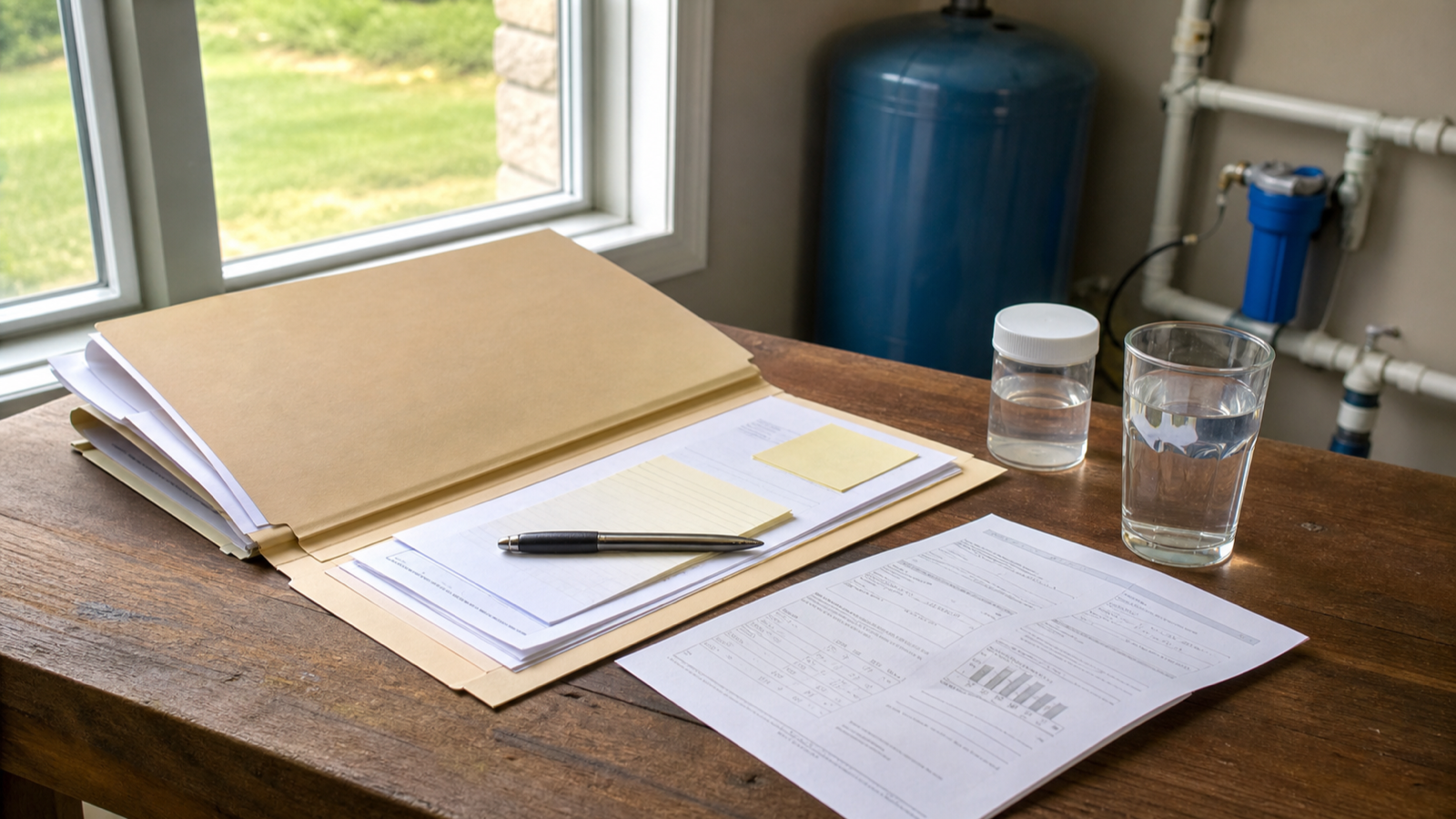
Good records are one of the most useful and least expensive things a well owner can maintain. When a problem arises, or when it is time to sell, a clear file about your well saves time, supports better decisions, and makes every conversation with a provider more productive. Yet records are easy to neglect, and many owners inherit a home with little or no history. Starting a file now pays off for years.
This guide outlines which records matter, how to organize them, and why each one is worth keeping.
Why Records Matter
A well system is hidden underground and inside equipment, so its history is not obvious from looking at it. Records fill that gap. Knowing the well's depth, the pump type, when components were serviced, and how water quality has trended helps a provider prepare, work efficiently, and avoid guesswork.
Records also add value and confidence when selling. A buyer facing a well with a clear, documented history has far more assurance than one facing an unknown, and that can make your home easier to sell.
Records Worth Keeping
- Keep the well drilling log or completion report, which typically lists depth, casing, and construction details from when the well was made.
- Keep records of the pump and pressure tank, including type, installation dates, and any specifications you have.
- Keep all service and repair invoices, noting what was done, when, and by which provider.
- Keep water test results over time so you can see quality trends and show a history of testing.
- Keep records of any treatment or filtration equipment, including installation, filter changes, and maintenance.
- Keep a simple map or note of the well head location, along with photos of the equipment for reference.
How to Organize Them
A single folder, whether paper or digital, is usually enough. Many owners keep scanned copies on a phone or computer so the information is always at hand, even when talking to a provider from the yard. Adding dates and short notes to each document makes the file far more useful than a pile of loose papers.
Consider keeping a running log alongside the documents, where you jot down observations like pressure changes, water quality notes, and dates of service. Over time this becomes a valuable record of how the system behaves. When you eventually call a provider, being able to say exactly when a symptom started and what has changed since often saves guesswork on both sides.
Using Records When It Counts
When you request service, having the well depth, pump type, and recent history ready lets a provider plan the right visit and bring the right parts. During an inspection, your records help the inspector focus on anything you have flagged. And at sale time, an organized file answers a buyer's questions before they even ask.
If you have inherited a home with no records, start fresh from today and gather what you can from past owners or providers. Even a partial file, built over time, is a meaningful improvement over none.
Related Well Pump Services
Upper Cumberland Well Pump is an independent referral service that helps connect property owners with local water-well and pump-service providers. Upper Cumberland Well Pump does not directly perform regulated well drilling, pump installation, pump repair or water-treatment work unless expressly stated. Provider licensing, qualifications, insurance, availability, pricing, scheduling and service terms must be confirmed directly with the provider.
Maintenance and Service Planning — Questions
What if I inherited a home with no well records?
That is very common. Start a file from today with anything you can gather, and ask past owners or any local provider whether they have history on the well. Even a partial record, added to over time, is far better than starting from nothing each time an issue arises.
Should records be paper or digital?
Either works, and many owners keep both. Digital copies on a phone or computer are handy because you can share them with a provider on the spot. The key is that the records are complete, dated, and easy to find when you need them.
Which record is the most important?
The drilling log is especially valuable because it lists depth, casing, and construction details that are hard to determine otherwise. Beyond that, service history and water test results matter most, since together they show how the system has been maintained and how it behaves.
How do records help when selling my home?
A documented well history gives buyers confidence, showing the system has been maintained and tested. That reassurance can make your home easier to sell and reduce back-and-forth, since many of a buyer's questions are answered by an organized file.
Need Help With a Well Pump Problem?
Send the property location, a description of the problem, any recent changes in pressure or water flow, the location of the well head and several clear photographs of the visible system components for an initial service review.