Maintenance and Service Planning
What Information Does a Well Pump Technician Need?
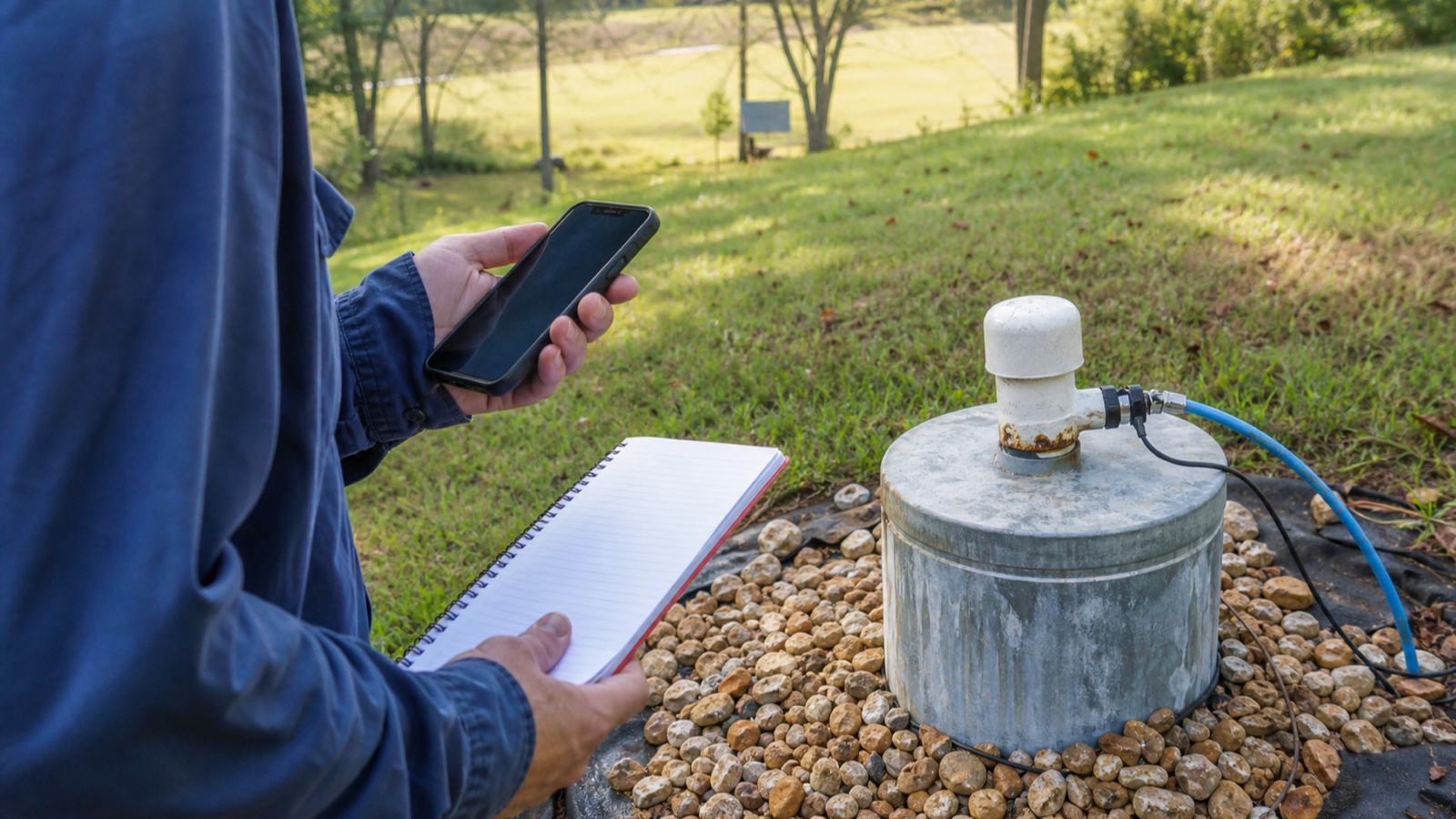
When you reach out about a well problem, the quality of the information you provide often shapes how quickly a provider can respond and how well prepared they arrive. A vague description means guesswork; a clear one lets a licensed provider bring the right parts and set aside the right amount of time. You do not need technical expertise to be helpful. You simply need to observe carefully and write down what you notice.
This guide walks through the details worth collecting before you request service so the conversation starts on solid footing and the visit goes smoothly.
Why Good Information Speeds Up Service
A well system has several components working together, and the same symptom can point to different causes. No water, for example, might trace to a tripped breaker, a failed pump, a waterlogged pressure tank, or a pipe issue. When you describe what you have observed clearly, a provider can narrow the possibilities before arriving, which often means fewer return trips and a more accurate plan.
Think of yourself as the eyes and ears of the system. You live with it every day, so you notice patterns a first-time visitor cannot. Sharing those patterns is one of the most useful things a homeowner can do.
Key Details to Gather
- Note the exact symptom and when it started, such as no water at any tap, weak pressure only upstairs, or sputtering that comes and goes throughout the day.
- Record whether the problem is constant or intermittent, and whether anything seems to trigger it, like heavy water use, cold nights, or a recent storm.
- Describe any sounds you hear from the pressure tank or nearby equipment, such as rapid clicking, cycling on and off, or continuous running.
- Check your electrical panel once for a tripped breaker labeled for the well or pump, and note whether it was off or on without touching anything else.
- Gather any records you have about the well's age, depth if known, the type of system, and when any component was last serviced or replaced.
- Note the property address, driveway conditions, and where the well head is located so the provider can plan access and equipment.
Records That Help a Provider Prepare
If previous owners or an earlier provider left paperwork, it can be gold. A well log, drilling report, or past invoice may list depth, casing size, pump type, and horsepower. These details help a provider anticipate what equipment a job may require without opening anything on site.
If you do not have records, that is common and not a problem. A provider can work from what is observable, though the visit may include more assessment time. Starting a simple file now will make every future call easier.
Describing the Problem in Plain Terms
You do not need the correct part names. Say what you experience: the water stopped, the pressure fades when two taps run, or the tank makes a knocking noise. Plain, honest description is more useful than a guessed diagnosis, because a wrong label can send preparation in the wrong direction.
When you are ready, you can share these details through a well pump service request so a qualified provider has context before scheduling. The more grounded your notes, the more efficient the whole process tends to be.
Related Well Pump Services
Upper Cumberland Well Pump is an independent referral service that helps connect property owners with local water-well and pump-service providers. Upper Cumberland Well Pump does not directly perform regulated well drilling, pump installation, pump repair or water-treatment work unless expressly stated. Provider licensing, qualifications, insurance, availability, pricing, scheduling and service terms must be confirmed directly with the provider.
Maintenance and Service Planning — Questions
Do I need to know how deep my well is?
It helps, but it is not required. If you have a well log or drilling report, share the depth and casing details, as they let a provider anticipate equipment needs. If you do not, a licensed provider can still assess the system on site.
Should I try to diagnose the problem myself?
No. Focus on describing what you observe rather than naming a cause. Checking a breaker once and noting sounds or pressure changes is safe and helpful, but leave diagnosis to a qualified provider who can safely evaluate the components.
What if I have no paperwork for the well at all?
That is very common, especially with older homes. Provide what you can observe about symptoms and access, and a provider will work from there. Consider starting a record file afterward so future visits are easier.
Need Help With a Well Pump Problem?
Send the property location, a description of the problem, any recent changes in pressure or water flow, the location of the well head and several clear photographs of the visible system components for an initial service review.