
Well Pump Problems and Troubleshooting
What Causes a Well Pump to Short Cycle?
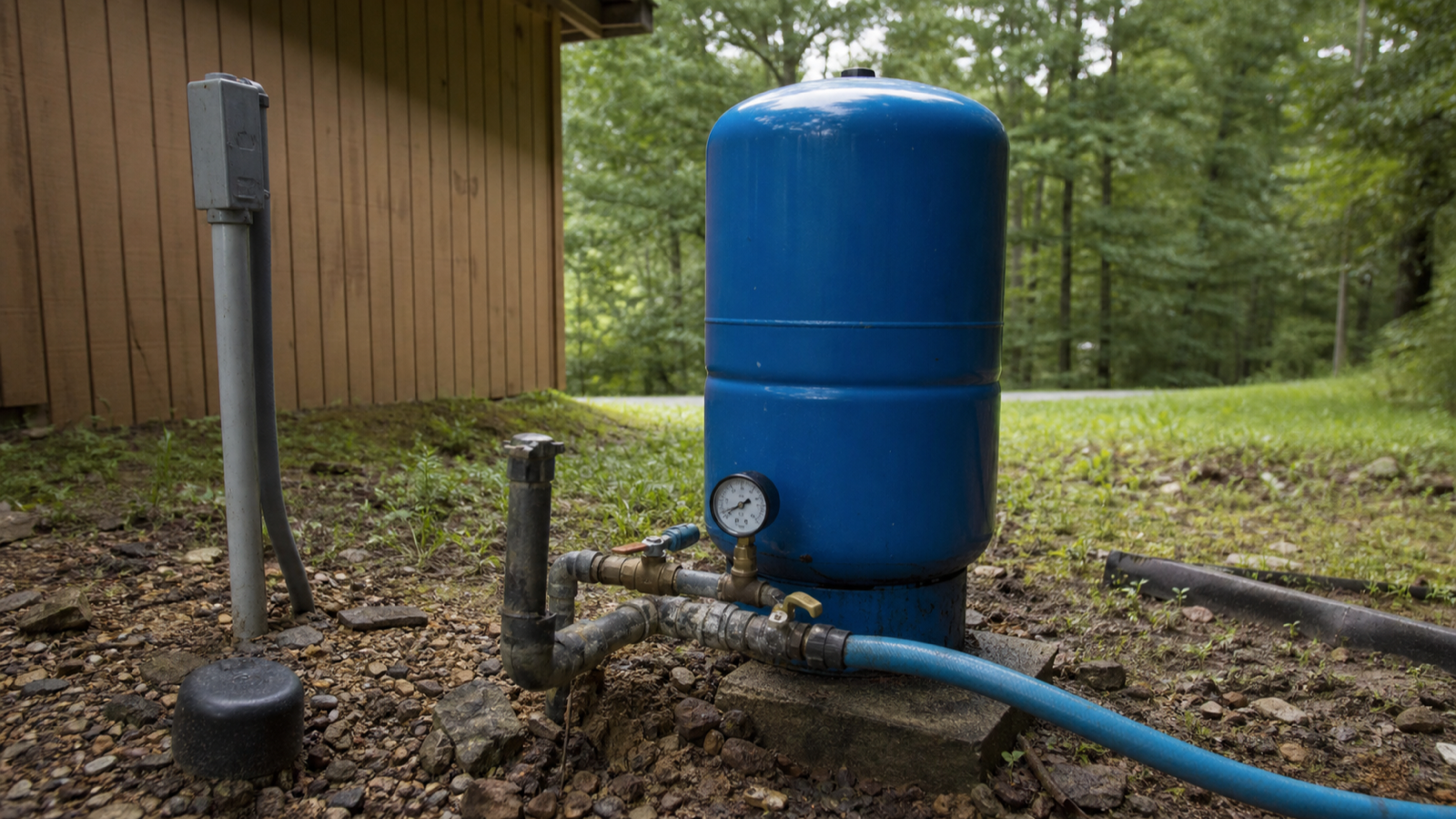
Short cycling is when a well pump switches on and off rapidly — clicking on for a few seconds, off, then on again — instead of running steadily and resting. It's one of the most common well-system complaints, and it usually points to one culprit: the pressure tank. It also matters because that rapid cycling wears the pump out, so it's worth understanding and fixing.
You'll often notice it first as rapid clicking near the tank, pressure that surges and fades at the tap, or a pump that seems to kick on the instant anyone runs water. Because these symptoms are easy to hear and feel, short cycling is one of the more catchable problems — and catching it early is what protects the pump from the slow damage it causes.
What Short Cycling Is
Normally a pump runs long enough to fill the pressure tank's reserve, then shuts off and lets that reserve supply the house for a while before running again. Short cycling breaks that rhythm — the pump turns on and off in quick succession because there's no working reserve to draw down. Each start-stop is hard on the pump motor, so a system that short cycles is aging itself with every cycle.
The strain comes from the moment of starting. A pump motor draws its heaviest current and generates the most heat in the instant it starts up, and it's built to do that a limited number of times over its life. A healthy system might start a handful of times an hour; a short-cycling one may start many times a minute, packing years of wear into a short span. That's why the problem is mechanical harm, not just an annoying noise.
Why the Pressure Tank Is Usually the Cause
The pressure tank holds a cushion of pressurized air and water that lets the pump rest between uses. When the tank loses its air charge, or its internal bladder or diaphragm fails, it can no longer hold that cushion — so pressure spikes and drops almost instantly, and the pump cycles rapidly to chase it. A waterlogged or failed pressure tank is by far the most common cause of short cycling. Our guides on what a pressure tank does and when to evaluate one cover this.
This is why a tank tapped by a professional often sounds heavy and full of water instead of hollow near the top — a telltale sign the air cushion is gone. It's also why replacing a worn pump without addressing the tank rarely solves anything: the new pump inherits the same punishing cycling and wears out early too. Treating the tank and switch as a unit is central to fixing short cycling rather than just chasing its symptoms.
Other Possible Causes
- A pressure switch problem — a switch with too narrow a range or a fault can cause rapid cycling.
- A clogged or restricted line — restrictions can affect how pressure builds and releases.
- A leak that bleeds pressure quickly between cycles.
- But the tank is the first and most likely suspect.
Why to Address It — and What to Do
Short cycling isn't just annoying; the repeated starts wear the pump and controls, so a relatively inexpensive tank problem left alone can shorten the life of an expensive pump. That's a strong reason to act. If you notice the pump clicking on and off rapidly during use, request service to have the tank and switch evaluated. This is diagnosis for a provider — don't open the tank or electrical components. Our guide on pressure tank replacement cost covers the fix.
Related Well Pump Services
Upper Cumberland Well Pump is an independent referral service that helps connect property owners with local water-well and pump-service providers. Upper Cumberland Well Pump does not directly perform regulated well drilling, pump installation, pump repair or water-treatment work unless expressly stated. Provider licensing, qualifications, insurance, availability, pricing, scheduling and service terms must be confirmed directly with the provider.
Well Pump Problems and Troubleshooting — Questions
What causes a well pump to short cycle?
Most often a pressure-tank problem — a lost air charge or a failed bladder means the tank can't hold its pressure cushion, so the pump switches on and off rapidly. Less commonly, a pressure switch issue, a restriction, or a leak. The tank is the first suspect.
Is short cycling harmful to the pump?
Yes — each rapid start-stop is hard on the pump motor and controls, so short cycling wears the system out faster. That means a relatively inexpensive tank problem, left unaddressed, can shorten the life of a costly pump. It's worth fixing promptly.
Can I fix short cycling myself?
Diagnosing and correcting it — checking the tank's air charge, bladder, and the pressure switch — involves pressurized and electrical components best left to a provider. Owner observation should stop at noticing the rapid cycling. A licensed provider evaluates the tank and switch safely.
How do I know it's the pressure tank?
Short cycling strongly suggests the tank, but confirming it (versus a switch or other cause) requires an evaluation of the tank's air charge and bladder. A provider checks the tank and switch together, since they work as a unit, and identifies the actual cause.
Need Help With a Well Pump Problem?
Send the property location, a description of the problem, any recent changes in pressure or water flow, the location of the well head and several clear photographs of the visible system components for an initial service review.