
Maintenance and Service Planning
When Should a Pressure Tank Be Evaluated?
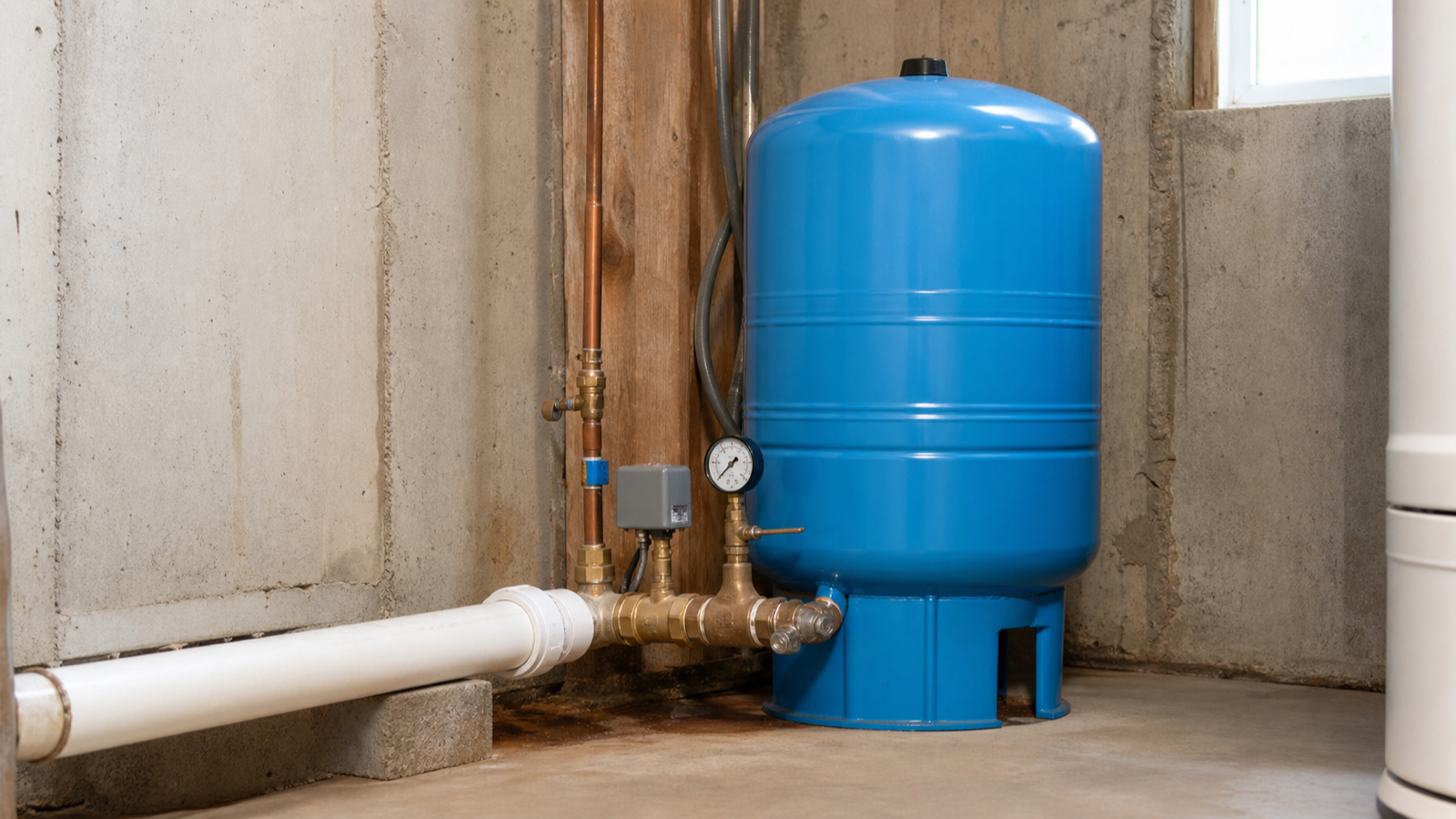
The pressure tank is one of the hardest-working and most overlooked parts of a well system. It stores pressurized water so your pump does not have to run every time you open a tap, which protects the pump and gives you steady flow. When a pressure tank starts to fail, the whole system feels it, and the pump often pays the price. Knowing the signs that a tank may need evaluation helps you act before a small issue shortens the life of more expensive components.
This guide explains what a pressure tank does, the symptoms worth watching, and when to bring in a licensed provider.
What a Pressure Tank Does
A pressure tank holds a cushion of pressurized air above or around stored water. As you use water, the tank delivers it under pressure, and the pump only kicks on when the pressure drops to a set point. This buffer means the pump runs less often and in longer, healthier cycles rather than switching on and off constantly.
When the tank loses its air charge or its internal bladder fails, that buffer disappears. The pump then cycles rapidly, which stresses it and can lead to premature failure, making the tank's health important to the whole system.
Signs a Tank May Need Attention
- The pump switches on and off rapidly during water use, a pattern often called short cycling, which is a classic sign of a tank problem.
- Water pressure surges and drops noticeably at the tap instead of staying steady during normal use.
- You hear the pump running far more often than it used to, even for small amounts of water.
- The tank feels waterlogged or unusually heavy, or you notice condensation, rust, or dampness on its exterior.
- There is spitting or sputtering of air at faucets, which can accompany a lost air charge in some systems.
- The tank is aging, has never been evaluated, or you have no record of when it was last checked or replaced.
Why Short Cycling Matters
Rapid cycling is more than an annoyance. Each time the pump starts, it draws a surge of power and experiences wear, so a pump forced to start constantly can wear out well before its time. Because pumps are more involved to replace than tanks, catching a failing tank early can protect a much bigger investment.
If you notice the pump clicking on and off frequently during ordinary use, treat it as a signal worth investigating rather than a quirk to ignore.
Getting a Tank Evaluated
Checking and adjusting a pressure tank's air charge, inspecting the bladder, and confirming the pressure switch settings involve pressurized components and are best handled by a licensed provider. You can safely observe the symptoms and note the tank's age and behavior, but leave the internal checks to a professional.
If you see signs of trouble, share your observations when you request service, or consider a well inspection that includes the pressure tank. Early evaluation often means a simpler fix and a longer life for your pump.
Related Well Pump Services
Upper Cumberland Well Pump is an independent referral service that helps connect property owners with local water-well and pump-service providers. Upper Cumberland Well Pump does not directly perform regulated well drilling, pump installation, pump repair or water-treatment work unless expressly stated. Provider licensing, qualifications, insurance, availability, pricing, scheduling and service terms must be confirmed directly with the provider.
Maintenance and Service Planning — Questions
What is short cycling and why is it bad?
Short cycling is when the pump switches on and off rapidly during use. It usually points to a pressure tank problem, and because each start wears on the pump, prolonged short cycling can cause the pump to fail early. It is worth having evaluated promptly.
How long does a pressure tank last?
It varies with the tank type, water conditions, and how the system runs, so there is no single lifespan. Rather than relying on age alone, watch for symptoms like short cycling or pressure swings and have a provider evaluate the tank when they appear.
Can I check the tank's air pressure myself?
It is best not to. Adjusting the air charge and inspecting the bladder involve pressurized components and specific settings that a licensed provider is equipped to handle safely. You can safely note symptoms and the tank's age and leave the internal checks to a professional.
Does a bad tank really damage the pump?
It can. A failing tank makes the pump cycle far more often than it should, and that extra wear can shorten the pump's life. Addressing a tank problem early is often a way to protect the more involved and important pump.
Need Help With a Well Pump Problem?
Send the property location, a description of the problem, any recent changes in pressure or water flow, the location of the well head and several clear photographs of the visible system components for an initial service review.