
Well Pump Costs and Replacement
How Much Does Pressure Tank Replacement Cost?
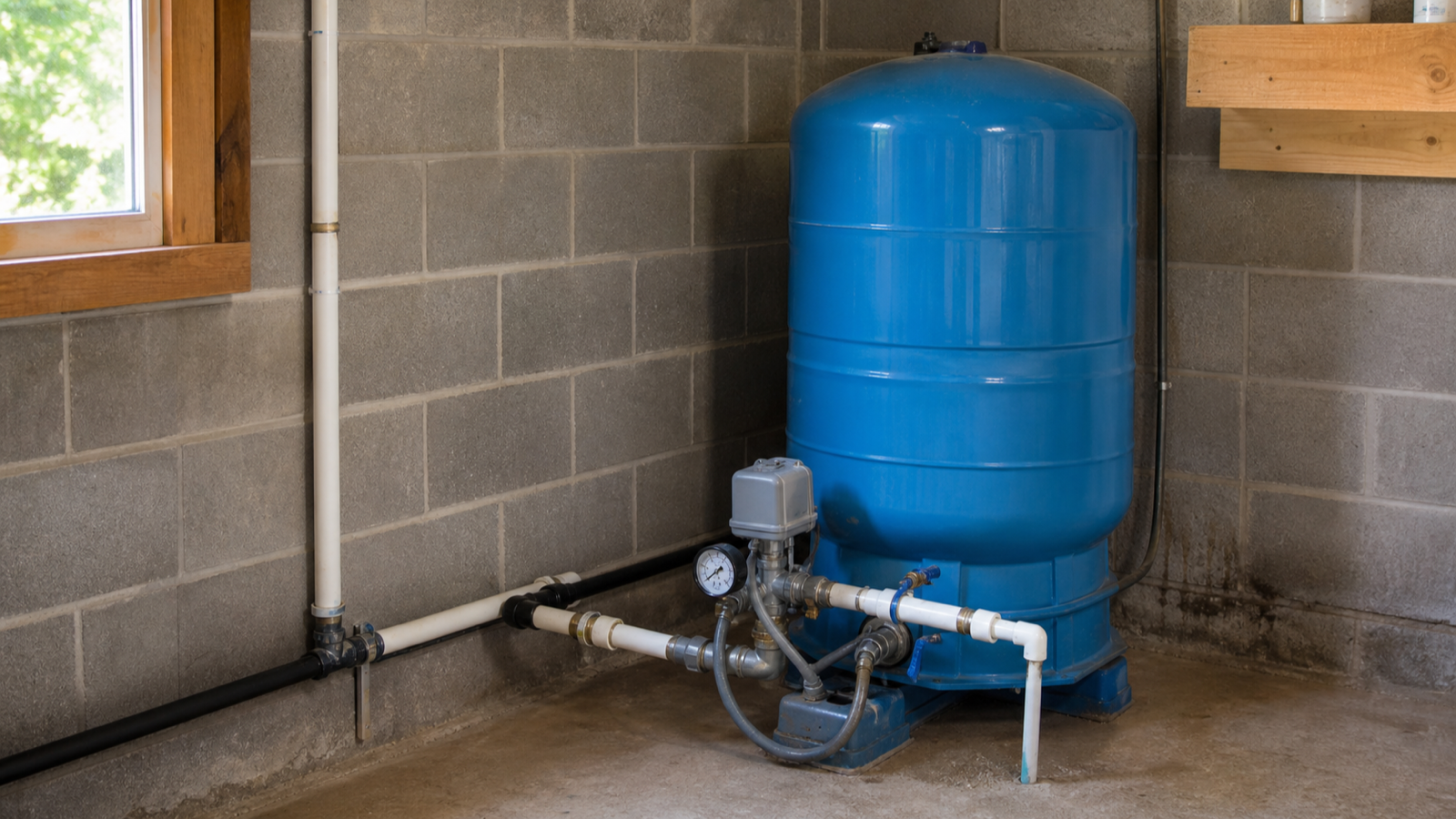
The pressure tank is one of the most important — and most replaceable — parts of a well system, and when it fails it's usually a more accessible job than pump work. Still, replacement cost varies with the tank and the installation, and understanding it helps you plan. It also helps to know why a failing tank is worth addressing rather than ignoring.
Unlike the pump, the tank lives where you can usually see and reach it, so its replacement is one of the more predictable jobs on a well system. That doesn't make it a flat price — size, type, how it's plumbed in, and the state of the parts around it all move the estimate. This guide covers what drives those differences and why a struggling tank deserves attention before it takes the pump down with it.
What the Pressure Tank Does
The pressure tank stores water under pressure so your pump doesn't have to run every time you open a tap. It holds a cushion of pressurized water and air that delivers flow between pump cycles. When the tank loses its air charge or its internal bladder fails, the pump starts cycling on and off rapidly — which wears the pump prematurely. So the tank isn't just about comfort; it protects the pump.
What Shapes the Cost
- Tank size — larger tanks store more water and cost more than small ones.
- Tank type — standard bladder/diaphragm tanks versus other configurations.
- Installation — how the tank ties into the existing piping, switch, and fittings.
- Access and condition — how accessible the tank is and whether connected components (switch, fittings) also need attention.
- Whether it's paired with other work — replacing a tank alongside a pump combines the visits.
Why Tank Size Is a Real Decision
Tank size isn't only a cost line — it affects how the whole system behaves. A larger tank stores more pressurized water, so the pump runs less often and in longer, gentler cycles, which reduces wear over the years. A tank that's undersized for a household's demand lets the pump kick on and off more frequently, and that constant starting is hard on a motor. Matching the tank to the home's water use and the pump's output is part of a good replacement, not an afterthought, and it's one reason a like-for-like swap isn't always the right call. A provider weighs the household's demand when recommending a size rather than simply copying whatever was there.
Usually More Accessible Than Pump Work
Because the pressure tank sits above ground — in a basement, utility room, or well house — replacing it doesn't involve pulling anything from the well. That accessibility generally makes it a more contained job than pump replacement. It's often the same visit where a provider addresses the pressure switch and gauge, since they work together and it's efficient to service them at once.
Why Not to Ignore a Failing Tank
A waterlogged or failed pressure tank makes the pump short-cycle, and that rapid on-off wears the pump and its controls — meaning a cheap tank problem left alone can shorten the life of an expensive pump. Replacing a failing tank protects the rest of the system, which is why it's a common companion to pump work. If you're seeing rapid cycling or pressure that fluctuates oddly, have the tank evaluated. Our guide on how a pressure tank affects water pressure and when a pressure tank should be evaluated cover the symptoms.
Related Well Pump Services
Upper Cumberland Well Pump is an independent referral service that helps connect property owners with local water-well and pump-service providers. Upper Cumberland Well Pump does not directly perform regulated well drilling, pump installation, pump repair or water-treatment work unless expressly stated. Provider licensing, qualifications, insurance, availability, pricing, scheduling and service terms must be confirmed directly with the provider.
Well Pump Costs and Replacement — Questions
Is pressure tank replacement expensive?
It's usually a more contained job than pump replacement because the tank sits above ground and nothing is pulled from the well. Cost varies with tank size and type and the installation, but accessibility generally keeps it simpler than pump work. A provider prices it after seeing the setup.
How do I know if my pressure tank is failing?
Common signs are the pump cycling on and off rapidly (short cycling), pressure that fluctuates, or a tank that feels waterlogged. Because these symptoms can also come from a pressure switch or other parts, an evaluation confirms it. See our guide on when a pressure tank should be evaluated.
Why does a bad pressure tank hurt the pump?
A failed tank can't hold its pressure cushion, so the pump switches on and off rapidly to keep up. That constant cycling wears the pump and its controls prematurely — meaning an inexpensive tank problem, left alone, can shorten the life of a costly pump. That's why a failing tank is worth replacing promptly.
Should the pressure switch be replaced with the tank?
Often it's evaluated at the same time, since the tank, switch, and gauge work together and it's efficient to service them in one visit. Whether the switch needs replacing depends on its condition, which a provider checks while replacing the tank.
Need Help With a Well Pump Problem?
Send the property location, a description of the problem, any recent changes in pressure or water flow, the location of the well head and several clear photographs of the visible system components for an initial service review.