Well Pump Costs and Replacement
What Affects the Cost of Well Pump Repair?
"Well pump repair" covers a wide range — it can mean swapping a small part at the surface or pulling the entire pump from deep in the well. Because those are very different jobs, repair cost varies widely, and understanding what drives it helps you make sense of an estimate and tell a minor fix from a major one.
The useful thing to understand is that the price of a repair tracks the scope of work, not the seriousness of the symptom. A total loss of water can turn out to be a minor fix, while a subtle drop in pressure can point to a failing pump deep in the well. This guide walks through what actually determines how big — and therefore how costly — a repair turns out to be.
Diagnosis Comes First
A loss of water or a pressure problem can come from several different parts of the system — the pressure switch, wiring, the pressure tank, a check valve, the pump itself, or even the well running low. Since the same symptom can have very different causes, a provider diagnoses before pricing. A no-water call that turns out to be a failed pressure switch is a modest repair; the same call that turns out to be a failed submersible pump deep in the well is a major one. The estimate follows the diagnosis.
Where the Repair Is Located
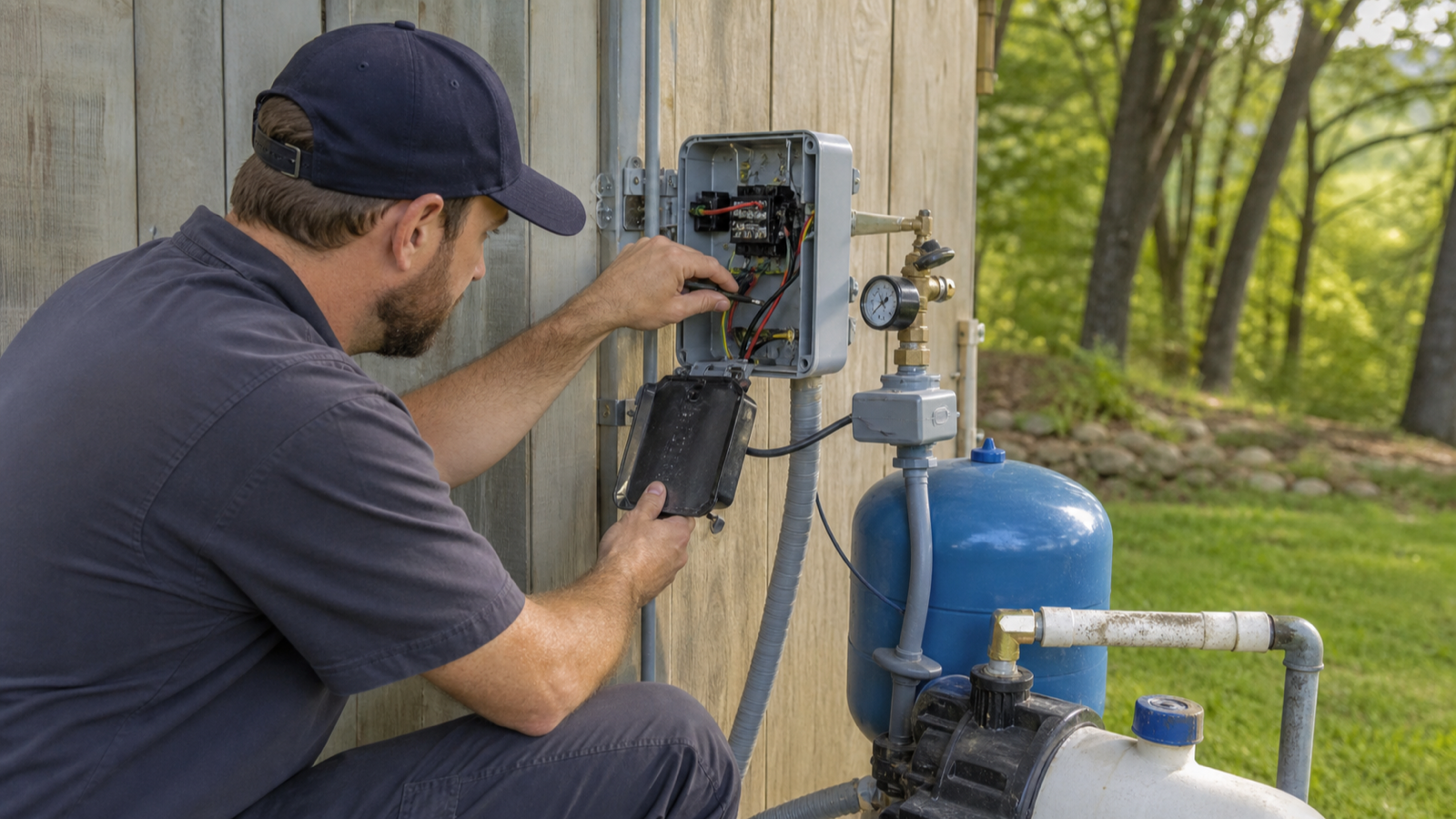
- At the surface — pressure switch, gauge, above-ground wiring, or pressure-tank issues are the most accessible and usually the smallest repairs.
- At the well head — the cap, pitless adapter, or connections just below it.
- Down the well — anything requiring the pump to be pulled (the pump, drop pipe, wire, or check valve) is the most labor-intensive.
- The deeper the problem sits, the more the repair involves.
What Else Shapes the Cost
Beyond location, a few things influence a repair: the parts involved and their availability, whether pulling the pump is required (which is significant labor on a deep well), the condition of surrounding components a provider finds during the work, and site access to the well head. Sometimes a repair reveals that related parts are also near failure, and it's worth addressing them together rather than paying to pull the pump twice.
Timing plays a role as well. An urgent, after-hours no-water call may be handled differently from a scheduled visit, and a part that has to be sourced for an older or less common system can add time. Water conditions matter too — sediment or heavy minerals can foul a check valve or wear a pump, so a repair on a system carrying gritty water sometimes turns up more than the original complaint. A provider factors these realities into the estimate once the actual cause is clear.
Small Fix or Warning Sign?
One repair worth understanding is the difference between fixing a symptom and fixing a cause. Replacing a burned-out pressure switch is straightforward, but if the switch failed because the pressure tank is waterlogged and forcing the pump to short-cycle, swapping only the switch leaves the underlying problem in place. A thorough evaluation looks past the failed part to what stressed it, which is why a good provider may recommend addressing a companion component rather than returning for the same call weeks later. That's not upselling — it's avoiding a second repair on the same root cause.
Repair or Replace?
For an aging system, repair cost has to be weighed against replacement — repeatedly repairing an old pump can cost more over time than replacing it, especially when the expensive step (pulling the pump) is involved either way. Our guide on repairing versus replacing a well pump covers that decision. To get a repair evaluated, describe the symptoms and request service; a licensed provider prices the actual problem after diagnosis.
Related Well Pump Services
Upper Cumberland Well Pump is an independent referral service that helps connect property owners with local water-well and pump-service providers. Upper Cumberland Well Pump does not directly perform regulated well drilling, pump installation, pump repair or water-treatment work unless expressly stated. Provider licensing, qualifications, insurance, availability, pricing, scheduling and service terms must be confirmed directly with the provider.
Well Pump Costs and Replacement — Questions
Why can't a provider quote a repair before looking?
Because the same symptom — no water, low pressure, a pump that won't stop — can come from a cheap pressure switch or a failed pump deep in the well. Quoting before diagnosis would be guessing. A provider evaluates the system, identifies the actual cause, then prices that specific repair.
What's usually the cheapest well pump repair?
Surface-level fixes tend to be smallest — a pressure switch, gauge, or accessible wiring issue that doesn't require pulling the pump. The cost climbs sharply when the pump has to be pulled from the well, which is why depth and location drive repair cost so much.
When does repair stop making sense?
When an aging pump keeps failing, or when a repair would require pulling the pump anyway on a system near the end of its life. At that point the labor to pull it is spent regardless, so replacing the pump can be the better value. An evaluation helps weigh it.
Should I try to fix a well pump myself?
Well systems combine electricity and water and include components that shouldn't be opened by owners — control boxes, wiring, and pressurized equipment. Observation should stop at what's safely visible; diagnosis and repair are for a licensed provider. In Tennessee, well and pump work is regulated.
Need Help With a Well Pump Problem?
Send the property location, a description of the problem, any recent changes in pressure or water flow, the location of the well head and several clear photographs of the visible system components for an initial service review.