Well Pump Costs and Replacement
Why Emergency Well Pump Repairs Can Vary in Scope
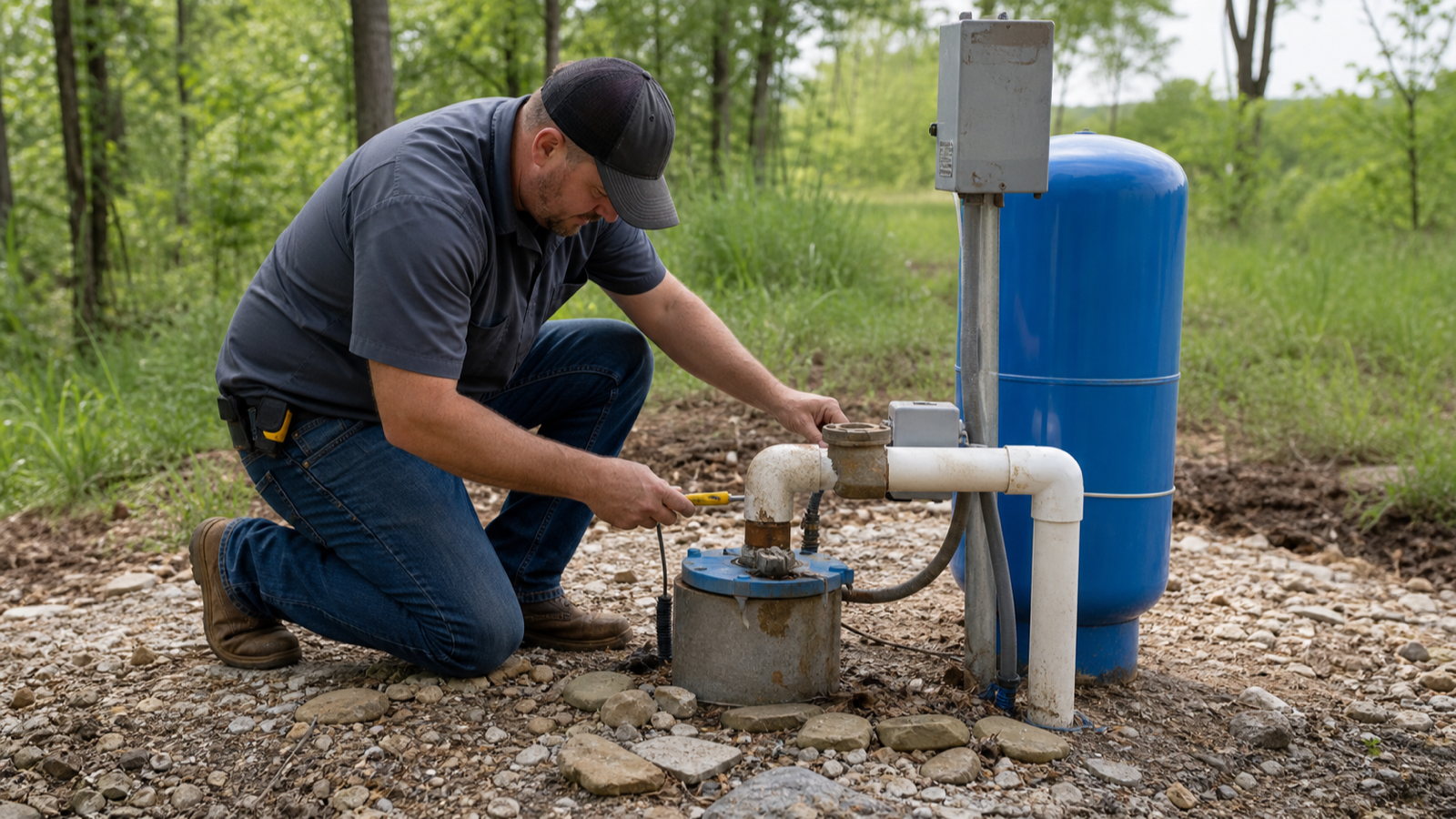
When the water suddenly stops, it's an emergency — and it's natural to want to know immediately what it'll take to fix. The honest reality is that an emergency no-water call can turn out to be a quick, inexpensive fix or a major replacement, and which one isn't known until the system is diagnosed. Understanding why helps set expectations when you're in the middle of an outage.
The urgency you feel is real, but it doesn't shrink the range of possible causes. The very same 'no water at the tap' can trace back to a tripped breaker that resets in seconds or a pump that has failed hundreds of feet down. Knowing that the scope is genuinely unknown until someone looks — rather than being withheld — makes the process less frustrating and helps you focus on getting help moving quickly.
The Same Symptom, Many Causes
'No water' is a symptom, not a diagnosis. It can come from a tripped breaker, a failed pressure switch, a wiring problem, a waterlogged pressure tank, a bad check valve, the well running low — or the pump itself having failed deep in the well. Some of those are quick surface fixes; others require pulling the pump. Because the causes range so widely, the scope of the repair genuinely isn't knowable until a provider evaluates the system.
What Makes an Emergency Fix Small or Large
- A surface component (breaker, switch, wiring, tank) — often a faster, smaller repair.
- A pump or down-well component — requires pulling the pump, a larger job.
- The well itself (low water) — a different situation that may not be a pump repair at all.
- Access and depth — how reachable the well head is and how deep the pump sits affect the work.
Why Urgency Doesn't Change the Diagnosis
Even under time pressure, a provider has to identify the actual cause before fixing it — replacing a pump when the real problem is a switch would waste time and money. Good emergency service is fast at diagnosing and responding, but it still follows the evaluate-then-fix order. What speeds things up is information: clear symptoms, system details, and access. Our guide on what to do when a well pump stops working covers the first steps.
How the Timing of the Call Plays In
The emergency context can shape a job in ways beyond the fault itself. An after-hours or weekend call, a well head buried in snow or mud, or a system in a remote spot can all affect how quickly work proceeds. Parts availability matters too — a common component may be on hand, while a match for an older or unusual system might need sourcing, which can mean a temporary measure until the right part arrives. None of this changes the underlying repair, but it explains why two no-water calls with the same cause can still unfold differently. A provider will tell you what can be resolved on the spot and what, if anything, has to follow.
Getting Help Quickly
For an active no-water situation, request emergency service promptly and give the provider as much as you safely can: what's happening, when it started, any recent power events, and where the well head is. Check the simple, safe things first (is a breaker tripped?), but don't open electrical panels or sealed components. A licensed provider diagnoses the cause and scopes the repair on site. Our emergency no-water service page is the fastest way to request help.
Related Well Pump Services
Upper Cumberland Well Pump is an independent referral service that helps connect property owners with local water-well and pump-service providers. Upper Cumberland Well Pump does not directly perform regulated well drilling, pump installation, pump repair or water-treatment work unless expressly stated. Provider licensing, qualifications, insurance, availability, pricing, scheduling and service terms must be confirmed directly with the provider.
Well Pump Costs and Replacement — Questions
Why can't I get a firm price for an emergency well repair up front?
Because 'no water' can come from a quick surface fix (like a pressure switch) or a major job (like a failed pump deep in the well), and which one isn't known until a provider diagnoses the system. Urgency doesn't change the need to identify the actual cause before pricing the repair.
What are the most common causes of a sudden no-water problem?
A tripped breaker, a failed pressure switch, wiring issues, a waterlogged pressure tank, a bad check valve, low water in the well, or a failed pump. Some are quick surface fixes; others require pulling the pump. A provider's diagnosis determines which.
What should I check myself during a no-water emergency?
Safely check whether a breaker has tripped and whether there's been a recent power event, and note the symptoms and timeline. Don't open electrical panels, control boxes, or sealed components — well systems combine water and electricity. Then request emergency service. See our guide on what to do when a pump stops working.
How do I get emergency well service fast?
Use the emergency no-water request and share the symptoms, when it started, any recent power outages, and the well head location. The more a provider knows, the faster they can respond effectively. Confirm the provider's applicable Tennessee license as part of the process.
Need Help With a Well Pump Problem?
Send the property location, a description of the problem, any recent changes in pressure or water flow, the location of the well head and several clear photographs of the visible system components for an initial service review.