Well Pump Problems and Troubleshooting
Why Did My Well Water Suddenly Stop?
Turning on a tap and getting nothing is alarming, and the instinct is to assume the worst — a failed pump deep in the well. Often it's something simpler, but a sudden loss of well water can come from several very different places in the system. This guide walks through the common causes and the safe checks you can make before requesting service.
Working through it in a logical order — from the safe checks to the components only a professional should touch — helps you avoid jumping to an expensive conclusion. The aim isn't to repair anything yourself but to understand what may be happening and to know what to report when you request service, which often makes the visit faster.
The Cause Can Be Electrical, Mechanical, or the Well
A well pump runs on electricity and controls, moves water mechanically, and depends on the well having water to deliver. A sudden stop can originate in any of those. Electrical causes include a tripped breaker, a failed pressure switch, or wiring problems. Mechanical causes include a failed pump, a bad check valve, or a waterlogged pressure tank. And sometimes the well itself has dropped low. Because the causes are so different, identifying the right one is what a diagnosis is for.
It helps to picture the water's path: power reaches the pump through the breaker and controls, the pump lifts water up the drop pipe, a check valve keeps it from draining back, and the pressure tank stores a reserve so the pump can rest. A failure at any point along that chain can leave the taps dry, which is why a single symptom rarely points to a single answer on its own.
The Timing and Pattern Offer Clues
How the water stopped can narrow the field before anyone arrives. Water that vanished instantly, mid-use, often points to an electrical interruption — a breaker, a switch, or a power event. Water that faded over minutes or hours, growing weaker before it disappeared, more often suggests a dropping well level or a pump losing its ability to deliver. A stop that coincides with a storm points toward the electrical side, while one that follows a long dry spell or unusually heavy household use hints at the well itself. None of this is a diagnosis, but noticing the pattern gives a provider a valuable head start.
What You Can Safely Check
- The breaker — check whether the well pump's circuit breaker has tripped, and note if it trips again after resetting once.
- Recent events — a storm, power outage, or power surge just before the water stopped is a useful clue.
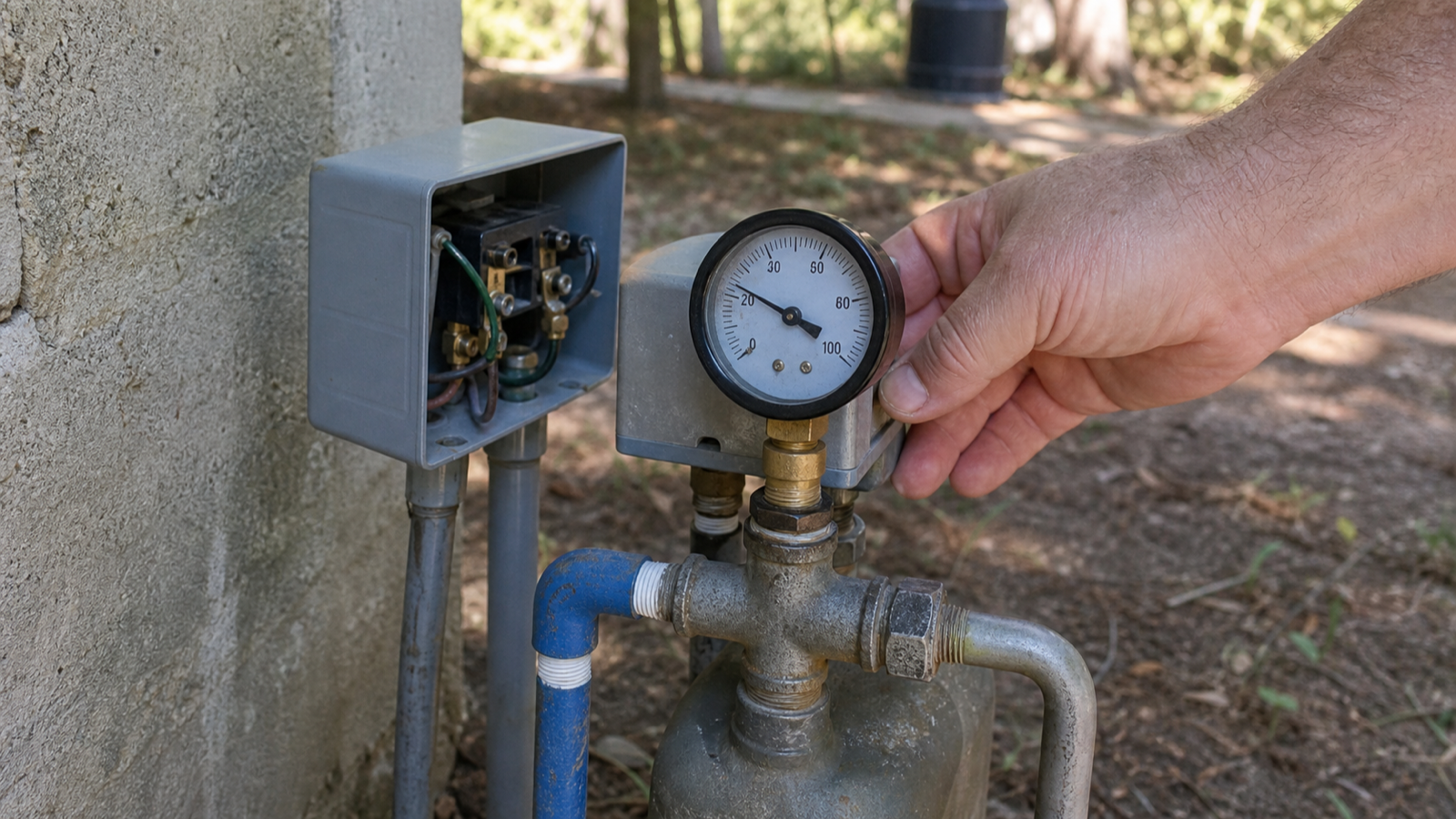
- The pressure gauge — if you have one, note the reading (very low or zero is informative).
- Other fixtures — confirm no water anywhere, versus a problem at one fixture.
- Stop there — do not open electrical panels, control boxes, the well cap, or pressurized components.
Why 'Just Reset the Breaker' Isn't the Whole Answer
A tripped breaker sometimes restores water — but a breaker that trips again immediately is a warning sign, not something to keep resetting. Repeatedly forcing a breaker that keeps tripping can be unsafe and can point to a real fault in the pump or wiring. If it trips once and holds, note it; if it trips repeatedly, leave it off and request service. Our guide on a breaker that keeps tripping explains why.
When to Request Service
If the water doesn't come back with a simple, safe breaker check — or if the breaker trips again — it's time for a licensed provider to diagnose the system. Note the symptoms, the timeline, and any recent power events to speed things up. For a household without water, this is often an emergency; our emergency no-water request is the fastest route. A provider will identify whether the cause is electrical, mechanical, or the well, and scope the fix.
Related Well Pump Services
Upper Cumberland Well Pump is an independent referral service that helps connect property owners with local water-well and pump-service providers. Upper Cumberland Well Pump does not directly perform regulated well drilling, pump installation, pump repair or water-treatment work unless expressly stated. Provider licensing, qualifications, insurance, availability, pricing, scheduling and service terms must be confirmed directly with the provider.
Well Pump Problems and Troubleshooting — Questions
Why did my well water suddenly stop?
It can be electrical (a tripped breaker, failed pressure switch, or wiring), mechanical (a failed pump, bad check valve, or waterlogged tank), or the well itself running low. The causes are very different, so a diagnosis identifies which one applies. Start by safely checking the breaker and noting any recent power events.
Should I keep resetting the breaker if it trips?
No. If the well pump breaker trips again immediately after a reset, that's a warning of a fault in the pump or wiring — repeatedly forcing it can be unsafe. Reset once; if it holds, note it, and if it trips again, leave it off and request service.
What can I safely check when the water stops?
Whether the pump's breaker tripped, any recent storm or power event, the pressure gauge reading if you have one, and whether it's all fixtures or just one. Don't open electrical panels, control boxes, the well cap, or pressurized components — well systems combine water and electricity.
Is sudden water loss always the pump?
No — often it's something simpler like a breaker or pressure switch, or it may be the pressure tank, a check valve, or low water in the well. The pump failing is one possibility among several, which is why an on-site diagnosis matters before assuming a major repair.
Need Help With a Well Pump Problem?
Send the property location, a description of the problem, any recent changes in pressure or water flow, the location of the well head and several clear photographs of the visible system components for an initial service review.