Well Pump Costs and Replacement
Should You Repair or Replace a Well Pump?
When a well pump gives trouble, the practical question quickly becomes: fix what's there, or replace it? There's no single rule, but there are clear factors that point the decision one way or the other — and the most important is a proper diagnosis, because you can't sensibly choose without knowing what actually failed.
The decision is really a balance of three things: what broke, how old and worn the overall system is, and whether reaching the fault means pulling the pump. When those line up toward keeping the system going, repair wins; when they point to a pump at the end of its life, replacement is usually the sounder choice. This guide lays out how each factor tips the scale.
What Points Toward Repair
Repair usually makes sense when the failure is a specific, accessible component on a system that's otherwise sound and not old. A failed pressure switch, a wiring issue, a bad check valve, or a pressure-tank problem on a relatively young pump are typically worth repairing — the pump itself has life left, and fixing the one failed part restores the system for far less than a replacement.
What Points Toward Replacement
- Age — a pump near or past its typical service life that fails is often better replaced than repeatedly patched.
- The pump itself has failed — if the pump motor is gone, replacement is usually the path.
- Repeated problems — a system that keeps failing signals it's wearing out.
- The pump has to be pulled anyway — if the expensive step is required, replacing the pump while it's out often makes more sense than reinstalling an old one.
The 'Already Pulling It' Factor
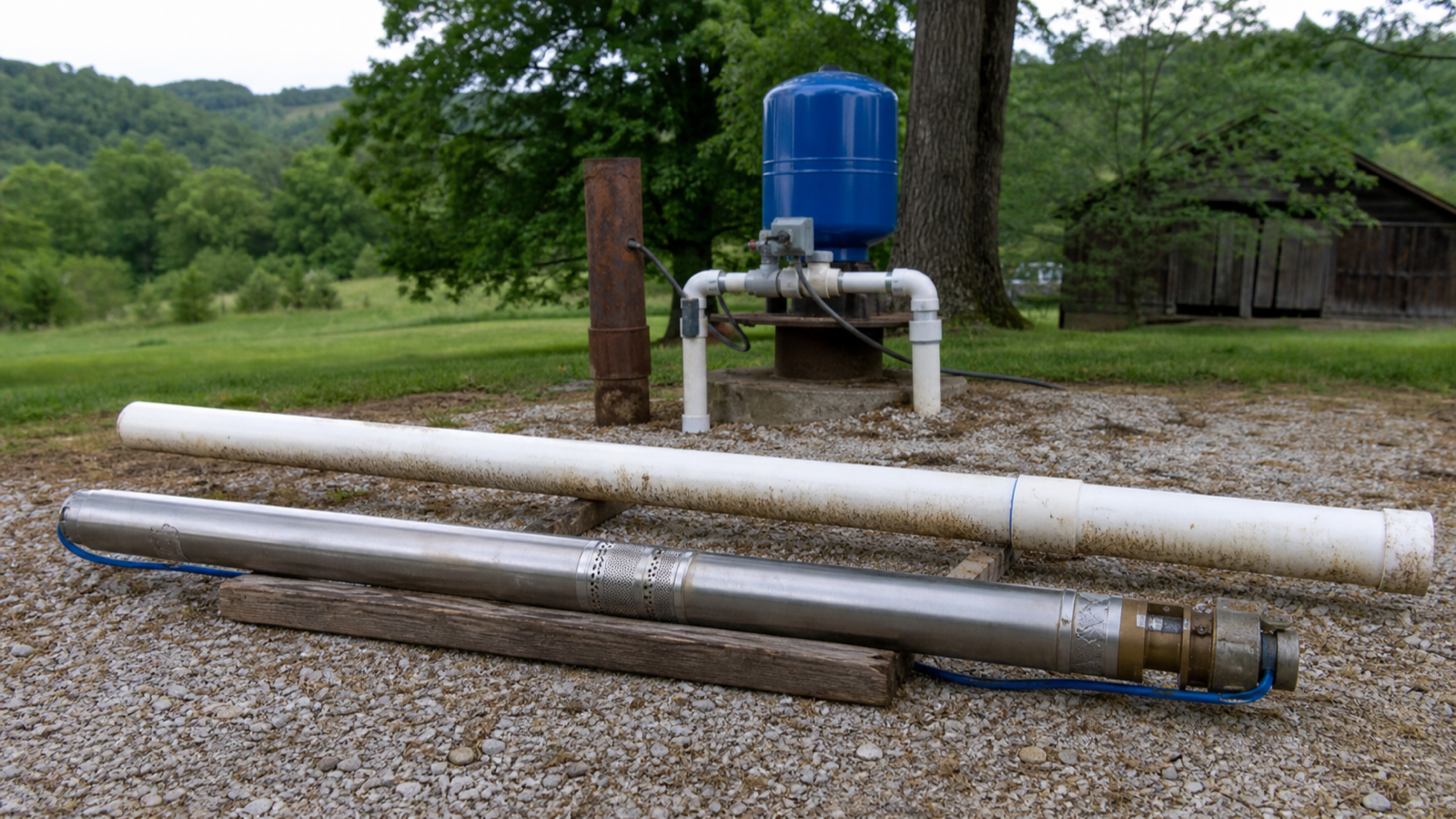
One consideration is unique to deep wells: pulling the pump is the labor-intensive part of the job. If a repair requires pulling the pump on an older system, much of the cost of a replacement is already being spent on retrieval — so putting an aging pump back down, only to pull it again in a year or two, can be false economy. When the pump is already out, replacing it can be the better long-term value. Our guide on why pulling a deep-well pump affects labor explains this.
Weighing Lifetime Cost, Not Just Today's
It helps to think past the immediate bill. A repair that gets an old pump running again may feel like the cheaper choice today, but if that pump is likely to fail again within a season or two — each time incurring the labor to pull it — the repeated repairs can quietly exceed the cost of replacing once. A newer pump also tends to run more efficiently and cycle less, which eases wear on the pressure tank and controls. The right comparison is the total expected cost over the next several years, including the odds of another failure, not just the number on the current estimate. A provider who explains that reasoning is giving you the information to decide well.
Let the Diagnosis Lead
The right answer depends on what failed, the age and condition of the system, and whether the pump has to come out. A good provider explains the trade-offs rather than defaulting to the biggest job — and sometimes the answer is a middle path, like repairing now while planning to replace soon. To weigh it for your system, describe the symptoms and request service; a licensed provider can lay out repair versus replacement after evaluating what's actually wrong.
Related Well Pump Services
Upper Cumberland Well Pump is an independent referral service that helps connect property owners with local water-well and pump-service providers. Upper Cumberland Well Pump does not directly perform regulated well drilling, pump installation, pump repair or water-treatment work unless expressly stated. Provider licensing, qualifications, insurance, availability, pricing, scheduling and service terms must be confirmed directly with the provider.
Well Pump Costs and Replacement — Questions
How do I decide whether to repair or replace a well pump?
Start with a diagnosis of what actually failed. Repair tends to win for a specific failed part on a younger, sound system; replacement tends to win for an old pump, a failed pump motor, repeated problems, or when the pump has to be pulled anyway. A provider can lay out the trade-offs for your system.
Is it worth replacing an old pump that still works?
Not usually on its own — but if an old pump fails and would require pulling to repair, replacing it while it's out often makes sense, since the costly retrieval labor is being spent regardless. Proactive replacement can also be worth considering for a pump well past its typical life.
Does the pump always have to be pulled?
No — many repairs are at the surface (pressure switch, wiring, tank) and don't require pulling the pump. Pulling is needed only when the problem is the pump, drop pipe, wire, or check valve down the well. Whether pulling is required heavily influences the repair-versus-replace math.
Will a provider push me toward replacement?
A reputable one explains the options and trade-offs rather than defaulting to the biggest job, and may suggest repairing now if that's genuinely the better call. Because Tennessee well work is regulated, confirm the provider's license and get the reasoning behind their recommendation.
Need Help With a Well Pump Problem?
Send the property location, a description of the problem, any recent changes in pressure or water flow, the location of the well head and several clear photographs of the visible system components for an initial service review.