Well Pump Costs and Replacement
How Much Does Well Pump Replacement Cost in Tennessee?
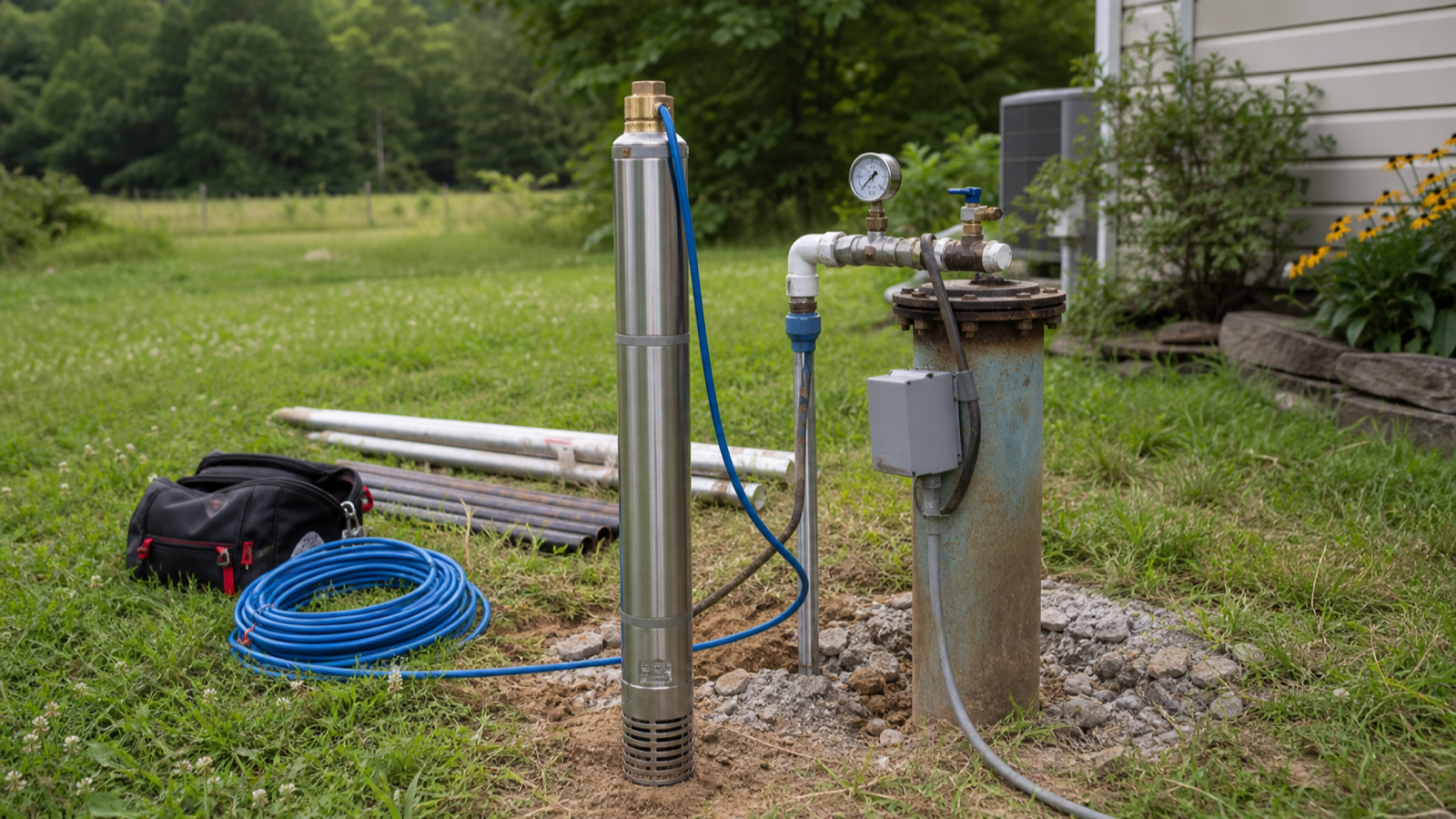
It's the first question almost every well owner asks when the water stops, and the honest answer is that well pump replacement doesn't have a single price. What looks like the same job — "replace the pump" — can involve very different work depending on the pump type, how deep it sits, and the condition of the rest of the system.
This guide explains the factors that actually shape a well pump replacement estimate in Tennessee, so the numbers make sense when a licensed provider gives them to you, and so you know what details matter when you request service.
Why There's No Flat Price
A well pump is part of a system that runs from deep underground into your home, and replacing it touches more than the pump itself. The pump type, the depth it hangs at, the drop pipe and wire that come up with it, the electrical controls, and the pressure tank can all factor into the work. Two homes on the same road can have a shallow jet pump and a deep submersible — the same failure, very different jobs.
That's why a responsible provider evaluates the system before committing to a number, and why an estimate quoted sight-unseen is usually padded or subject to change once the work starts.
The Factors That Move the Estimate
- Pump type — a submersible pump deep in the well, a jet pump at the surface, or a constant-pressure system each involve different equipment and labor.
- Well depth and pump setting — a deeper pump means more drop pipe and wire to pull and replace, and more retrieval work.
- Retrieval labor — pulling a heavy pump from a deep well is a significant part of the job on its own.
- Electrical and controls — the condition of wiring, splices, the pressure switch, and any control box.
- Pressure tank condition — a failing tank alongside a new pump is a common companion replacement.
- Site access — how close equipment can get to the well head.
How the Local Ground Plays a Part
Wells across the Upper Cumberland region aren't drilled to a uniform depth. The area's limestone and karst geology means the water-bearing zone can sit close to the surface on one property and far deeper on the next, even within the same neighborhood. Because the pump has to be set below the water level to keep working through seasonal fluctuations, that variation directly changes how much pipe, wire, and retrieval labor a job involves. Water chemistry matters too — sediment, iron, or mineral content can wear a pump and its components faster, which is why the age and condition a provider finds during evaluation feed into the recommendation. None of this can be read off a chart; it's why the same-sounding job differs from one home to the next.
Repair vs. Replacement Is a Separate Question
Not every no-water situation is a full pump replacement. Sometimes the pump is fine and the problem is a pressure switch, wiring, or the pressure tank — a smaller repair. Other times an aging pump has genuinely failed and replacement is the practical path. Because the fix depends on the diagnosis, the estimate follows the evaluation, not the other way around. Our guide on whether to repair or replace a well pump covers how that decision is weighed.
Getting an Accurate Estimate
The fastest route to a real number is giving a provider what they need to picture the system: the symptoms and when they started, the pump type if you know it, the well depth if it's on record, the location and accessibility of the well head, and photos of the visible equipment (pressure tank, gauge, well cap). Our guide on what information is needed for a pump replacement estimate lists it in full. Because Tennessee well and pump work is regulated, confirm the provider's applicable license and terms directly — pricing is always set by the provider after evaluating the system.
Related Well Pump Services
Upper Cumberland Well Pump is an independent referral service that helps connect property owners with local water-well and pump-service providers. Upper Cumberland Well Pump does not directly perform regulated well drilling, pump installation, pump repair or water-treatment work unless expressly stated. Provider licensing, qualifications, insurance, availability, pricing, scheduling and service terms must be confirmed directly with the provider.
Well Pump Costs and Replacement — Questions
Is there an average well pump replacement cost?
Not a reliable one for your specific system. Averages blend together shallow jet pumps and deep submersibles, minor and major jobs, so they rarely match a real property. Pump type, well depth, retrieval labor, electrical condition, and pressure-tank condition vary too much for a single number to be meaningful — an on-site evaluation is what produces an accurate estimate.
Why does well depth matter so much for cost?
Because a deeper pump means more drop pipe and wire to remove and replace, and pulling a heavy pump from a deep well is significant labor on its own. A shallow pump is far quicker to retrieve than one hanging hundreds of feet down, so depth is one of the biggest factors in a replacement estimate.
Does replacing the pump mean replacing the pressure tank too?
Not always, but a failing pressure tank is a common companion replacement — an old tank can shorten the life of a new pump by causing it to cycle hard. A provider evaluates the tank's condition and advises whether replacing both at once makes sense. See our guide on pressure tank replacement cost.
Can I get a price over the phone?
A provider may give a rough range from a good description and photos, but the real estimate is confirmed after evaluating the system, because so much depends on pump type, depth, and condition. Be cautious of a firm flat quote given without seeing the system.
Need Help With a Well Pump Problem?
Send the property location, a description of the problem, any recent changes in pressure or water flow, the location of the well head and several clear photographs of the visible system components for an initial service review.