Well Pump Costs and Replacement
How Well Depth Can Affect Pump Replacement
Two well pump replacements can look identical on paper and be very different jobs, and depth is often the reason. How far down the pump hangs affects the equipment needed, the amount of pipe and wire involved, and the labor to get the old pump out and the new one in. Understanding this explains why depth is one of the biggest factors in a replacement estimate.
Depth isn't just a single number, either. There's the total drilled depth of the well, the level the water actually stands at, and the setting where the pump is hung below that water level — and all three influence the job. Across the Upper Cumberland's varied terrain, those figures swing widely from one property to the next, which is a large part of why no two estimates match.
The Pump Hangs Far Below the Surface
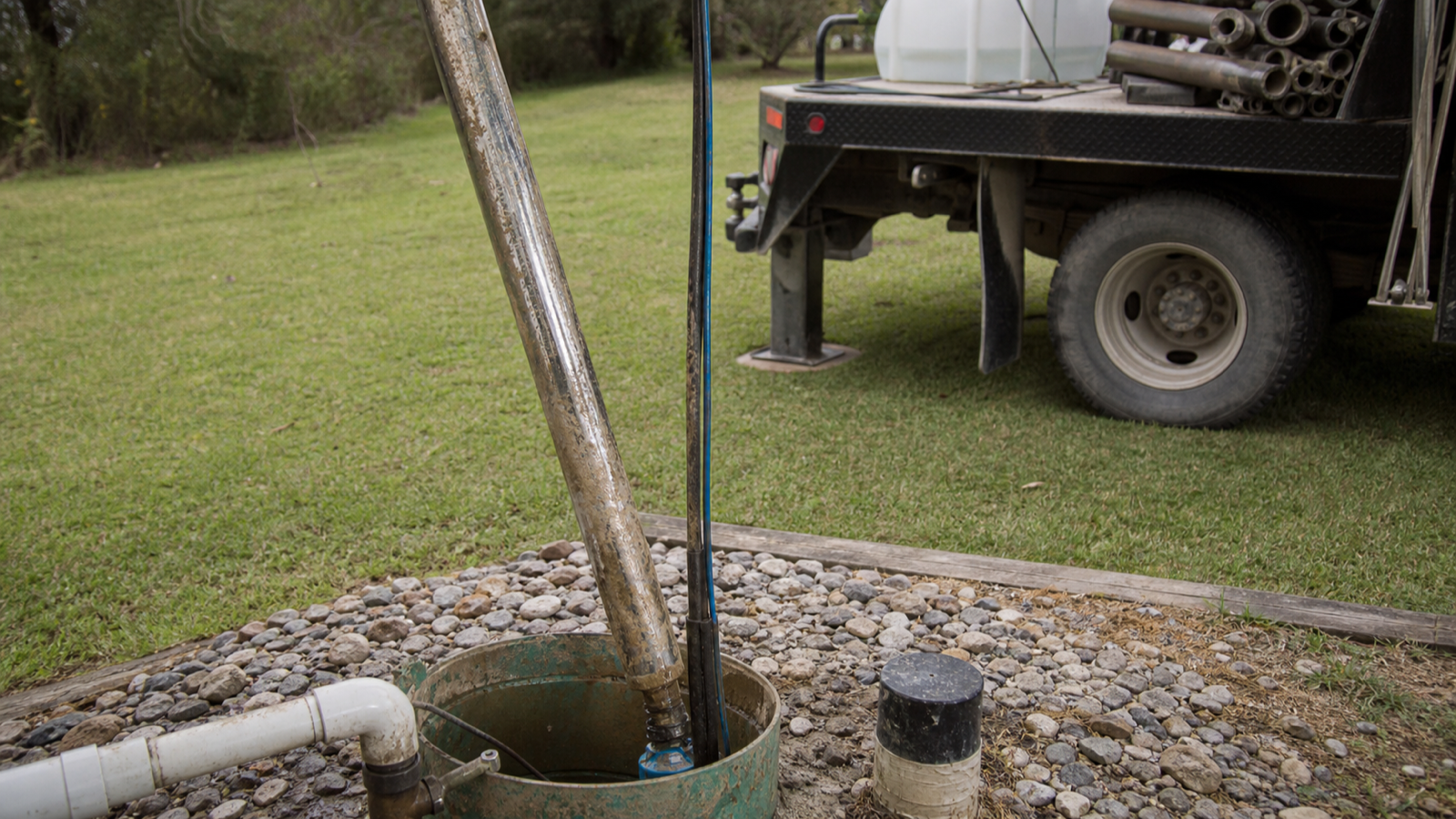
In a drilled well, the submersible pump doesn't sit at the top — it hangs near the bottom of the water column, often well down a well that can be hundreds of feet deep. It's suspended on a length of drop pipe with the electrical wire running alongside, all the way from the pump up to the well head. Everything between the pump and the surface has to be dealt with to replace it.
More Depth Means More of Everything
- Drop pipe — a deeper pump means a longer run of pipe to pull out and replace.
- Pump wire — the electrical wire runs the full depth alongside the pipe.
- Retrieval labor — pulling hundreds of feet of pipe, wire, and a pump is heavy, time-consuming work.
- Equipment — deeper wells may require more capable equipment to pull and reinstall safely.
- The pump itself — deeper settings can call for a pump built for more head (lift), which affects the equipment.
Why Retrieval Is the Hidden Cost
People focus on the price of the pump, but on a deep well the labor to pull the old pump and lower the new one can be a large share of the job. It's physical, careful work — the string of pipe and wire has to come up section by section without dropping anything down the well, and go back down the same way. This is why the same pump replacement costs more on a deep well than a shallow one, and why our guide on pulling a deep-well pump treats retrieval as its own topic.
Depth Also Shapes the Pump Itself
Depth doesn't only change the labor — it can change the pump that's specified. Lifting water from farther down demands a pump capable of more 'head,' the vertical distance and pressure it must overcome to deliver usable flow at the house. A provider balances that against the household's demand, so a deep well serving a busy home may call for different equipment than a shallow well on a smaller property. Getting that match right matters: an underpowered pump struggles and wears out early, while an oversized one can cost more to run and cycle harder than the system needs. Depth is one of the first numbers that guides this decision.
Knowing Your Depth Helps
If your well's depth and pump setting are on record — from the original well log or prior service — sharing that helps a provider scope the job accurately. If they're unknown, a provider can determine them, but having the records saves time. Our guide on what records to keep covers this. When you request service, include the depth if you know it; a licensed provider factors it into the estimate.
Related Well Pump Services
Upper Cumberland Well Pump is an independent referral service that helps connect property owners with local water-well and pump-service providers. Upper Cumberland Well Pump does not directly perform regulated well drilling, pump installation, pump repair or water-treatment work unless expressly stated. Provider licensing, qualifications, insurance, availability, pricing, scheduling and service terms must be confirmed directly with the provider.
Well Pump Costs and Replacement — Questions
Why does well depth affect pump replacement cost so much?
Because the pump hangs near the bottom of the well on drop pipe with wire alongside — so a deeper pump means more pipe and wire to pull and replace, and much more retrieval labor. Pulling hundreds of feet of pipe, wire, and pump is heavy, careful work that a shallow well doesn't require.
How deep are most residential well pumps?
It varies widely by property and water table — some pumps sit relatively shallow while others hang hundreds of feet down. The original well log usually records the well depth and pump setting; if you don't have it, a provider can determine the setting as part of the work.
Does a deeper well need a different pump?
Often the pump has to be capable of lifting water from a greater depth (more 'head'), which can affect the equipment specified. A provider matches the pump to the well's depth and the household's demand, so depth influences both the pump choice and the labor.
Where can I find my well's depth?
On the original well log or driller's report, and sometimes on prior service records or a tag at the well head. If you can't find it, a provider can determine the pump setting during service. Keeping these records makes future service faster — see our guide on well-system records.
Need Help With a Well Pump Problem?
Send the property location, a description of the problem, any recent changes in pressure or water flow, the location of the well head and several clear photographs of the visible system components for an initial service review.