Well Pump System Components
What Are Drop Pipe and Pump Wire?
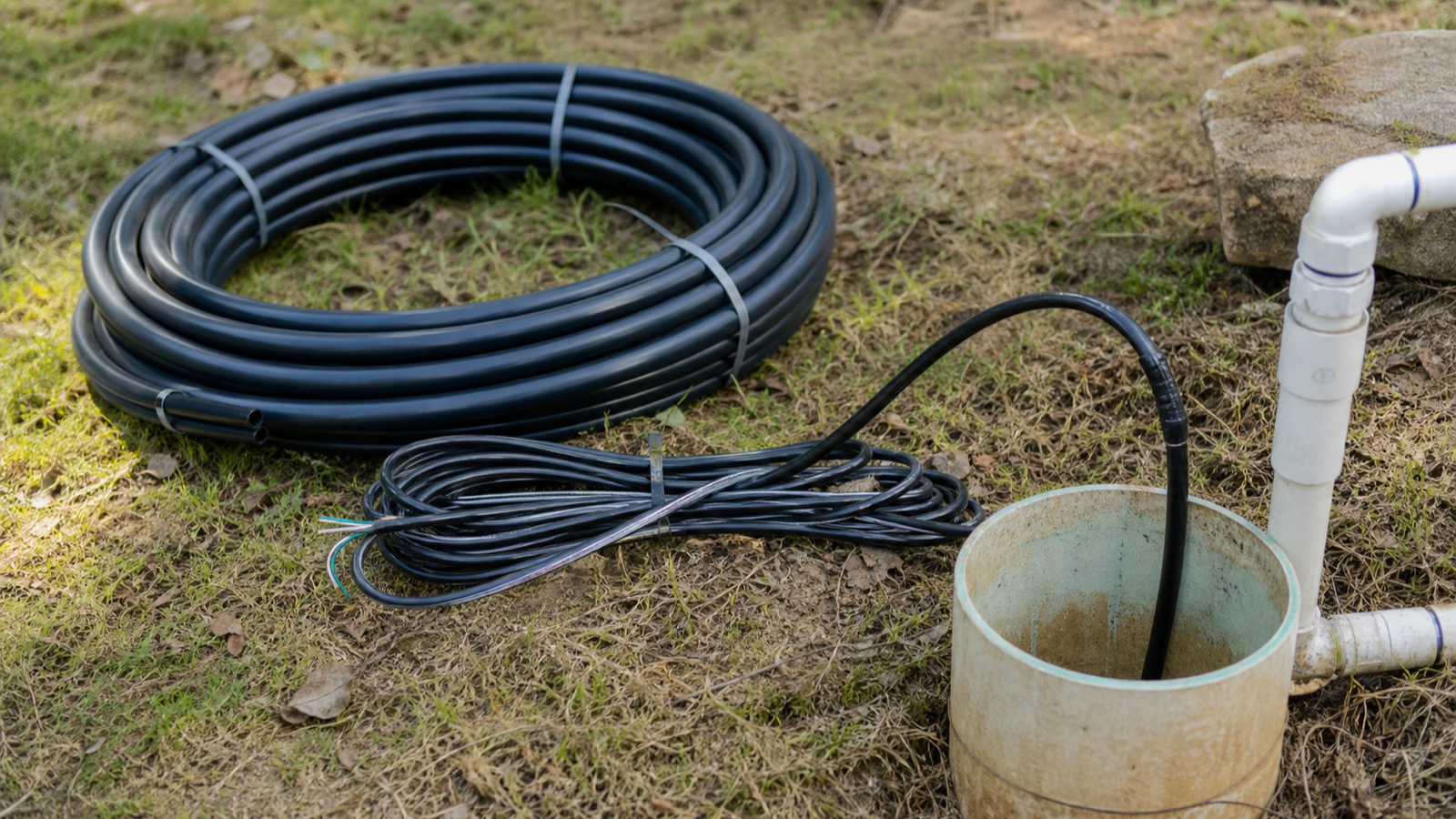
In a submersible well system, the pump sits deep underground, sometimes hundreds of feet down. Two things connect it to the surface: the drop pipe, which carries water up, and the pump wire, which delivers electricity down. Together they are the lifeline between your pump and the rest of the system.
These components are hidden inside the well casing and rarely thought about, but they endure constant weight, pressure, and immersion. When either one fails, the effects reach all the way to your faucets.
What the drop pipe does
The drop pipe is the pipe that hangs down from the pitless adapter to the submersible pump, carrying water upward as the pump pushes it toward the surface. It also physically supports the weight of the pump hanging below it. Drop pipe is commonly made of durable polyethylene or, in some installations, threaded steel or PVC.
Because the drop pipe holds both the pump's weight and the pressure of the water column, it has to be strong and properly rated for the depth. A pipe that is undersized or degraded can leak, lose pressure, or in serious cases allow the pump to drop, which is one reason material and installation quality matter.
What the pump wire does
The pump wire, sometimes called submersible cable, is the electrical cable that runs down the well to power the pump motor. It is specially designed to be submerged in water for years without failing, with insulation rated for continuous immersion. It is typically fastened alongside the drop pipe so the two travel down the well together.
The wire carries the exact voltage the pump needs, and its size must be matched to both the motor and the depth of the well so that the motor receives adequate power. Wire that is too small for the run can cause voltage drop, which strains the motor over time.
How they hold up over time
- Drop pipe can develop leaks, cracks, or joint failures after years of bearing the pump's weight and the pressure of the water column.
- Pump wire insulation can eventually degrade, chafe, or fail where it flexes or rubs against the casing, leading to electrical faults.
- Corroded or loosened connections at the pump or the surface can interrupt power or reduce the voltage reaching the motor.
- An undersized wire or pipe, if the original installation was not matched to the well depth, can cause chronic pressure or motor problems.
- Because both components are submerged and out of sight, their condition is usually only revealed when the pump is pulled for service.
Why servicing them means pulling the pump
The drop pipe and pump wire run deep inside the well casing, so inspecting or replacing them requires pulling the entire pump assembly up out of the well. This is heavy, specialized work that involves the well casing, the pitless adapter, and live electrical connections, and it is strictly a job for a licensed provider.
When a provider replaces a submersible pump, they often evaluate the drop pipe and wire at the same time, since everything comes up together. If your pump is being serviced or replaced, our well pump replacement page explains the process, and a qualified provider can advise whether the pipe and wire should be renewed too.
Related Well Pump Services
Upper Cumberland Well Pump is an independent referral service that helps connect property owners with local water-well and pump-service providers. Upper Cumberland Well Pump does not directly perform regulated well drilling, pump installation, pump repair or water-treatment work unless expressly stated. Provider licensing, qualifications, insurance, availability, pricing, scheduling and service terms must be confirmed directly with the provider.
Well Pump System Components — Questions
What is drop pipe made of?
Drop pipe is commonly made of durable polyethylene, though some installations use threaded steel or PVC. The right material and pressure rating depend on the well's depth and the pump, which a provider matches to your system.
Why does pump wire need to be a specific size?
The wire size must match the motor and the depth of the well so the pump receives adequate voltage. Wire that is too small for the distance causes voltage drop, which can strain the motor, so sizing should be handled by a qualified provider.
Can drop pipe or pump wire be inspected without pulling the pump?
Not thoroughly. Both run deep inside the casing, so a real inspection usually means pulling the pump assembly out of the well, which is specialized work for a licensed provider rather than a homeowner task.
Need Help With a Well Pump Problem?
Send the property location, a description of the problem, any recent changes in pressure or water flow, the location of the well head and several clear photographs of the visible system components for an initial service review.