Well Pump Costs and Replacement
Submersible Pump Versus Jet Pump Replacement
Not all well pumps are the same, and the two main types — submersible and jet — are installed and replaced in very different ways. Which one you have affects where the work happens, the equipment involved, and the labor. Knowing the difference helps you understand your system and any replacement estimate.
The core distinction is simple once you see it: a submersible pump pushes water up from inside the well, while a jet pump pulls water up from above ground. That one difference — push versus pull, down-well versus surface — ripples through everything about how each is diagnosed, accessed, and replaced. This guide explains what each type is, where each fits, and what those differences mean when it's time to replace one.
Submersible Pumps
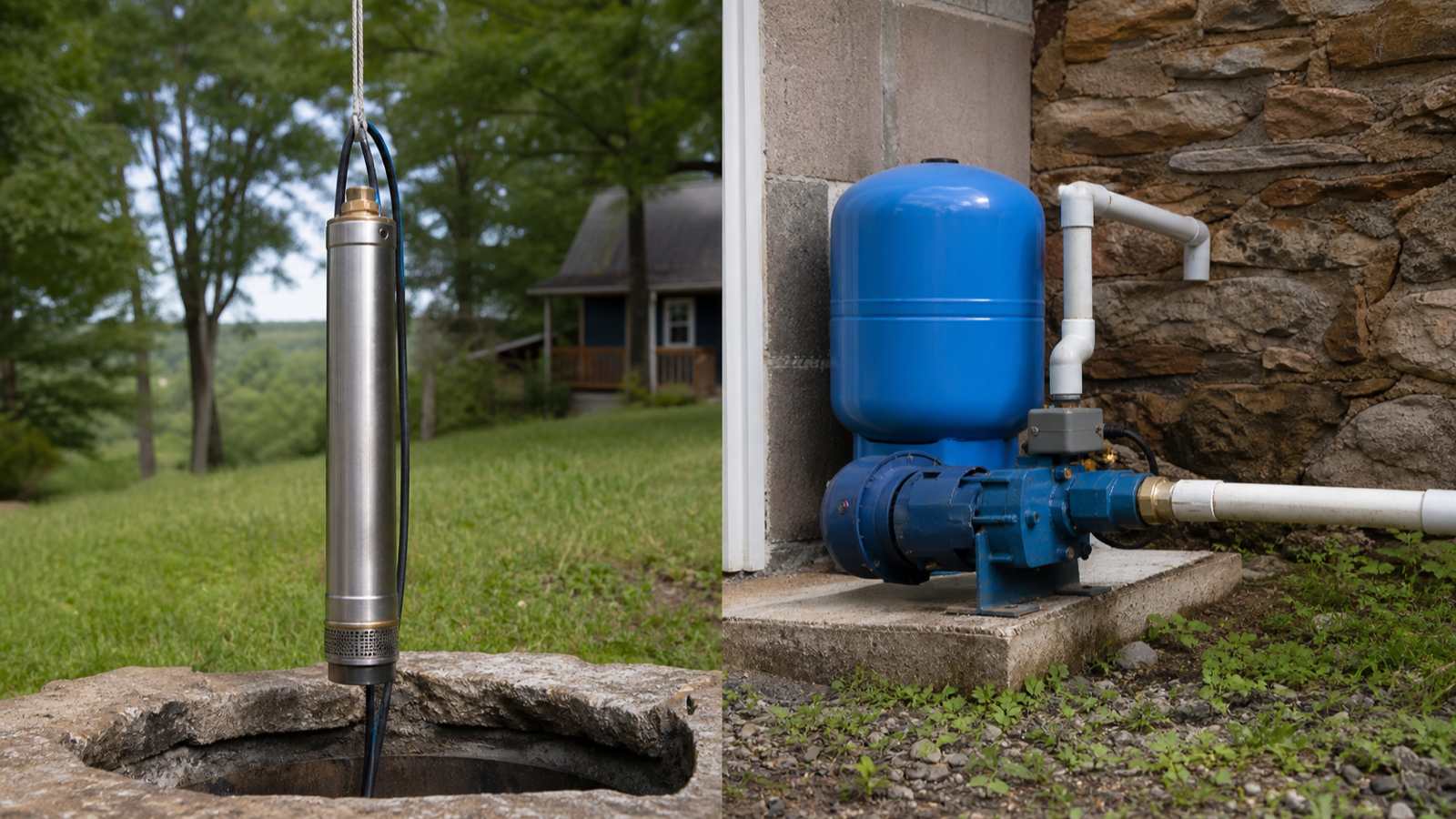
A submersible pump sits down in the well, submerged in the water near the bottom, and pushes water up to the house. It's the common choice for deeper wells. Because it lives down the well on drop pipe and wire, replacing a submersible pump means pulling that whole assembly up from depth — the retrieval labor covered in our guides on well depth and pulling a deep-well pump. The pump is out of sight and, when it fails, the whole string comes up.
Jet Pumps
A jet pump sits above ground — typically in a basement, well house, or utility area — and draws water up from the well by suction. It's generally used for shallower wells. Because it's at the surface, a jet pump is far more accessible: replacing one doesn't require pulling anything from deep in the well, so the labor profile is different. Shallow-well and deep-well (two-line) jet configurations exist, but the defining trait is that the pump itself is above ground.
What the Difference Means for Replacement
- Access — a jet pump is reached at the surface; a submersible must be pulled from the well.
- Labor — submersible replacement includes retrieval of pipe, wire, and pump from depth.
- Well depth — submersibles suit deep wells; jet pumps suit shallower ones.
- Diagnosis — a surface jet pump can be inspected directly; a submersible's condition is assessed once it's pulled or through electrical testing.
Reliability and Longevity Differences
The two designs age differently, and that shapes both service and cost over time. Because a submersible sits in the water and runs cooler, it often enjoys a long, quiet service life — but when it does fail, the whole assembly must come up, so the eventual job is larger. A jet pump runs in open air where it can be heard and inspected, which makes early warning signs easier to catch and routine service simpler, though a surface pump priming from a well is more sensitive to leaks or a lost prime. Neither is universally 'better'; each is suited to the wells it typically serves, and understanding your type helps you read symptoms and plan for eventual service.
Which Do You Have — and Which Fits?
If your pump is a visible unit in a basement or well house, it's likely a jet pump; if there's no pump in sight and only a well head outside, it's likely submersible. When replacing, the well's depth and your household demand guide which type is appropriate — it's not always a free choice, since deep wells generally need submersibles. A provider matches the pump to the well. Describe your setup (and send a photo of any visible pump) when you request service so the estimate fits your system.
Related Well Pump Services
Upper Cumberland Well Pump is an independent referral service that helps connect property owners with local water-well and pump-service providers. Upper Cumberland Well Pump does not directly perform regulated well drilling, pump installation, pump repair or water-treatment work unless expressly stated. Provider licensing, qualifications, insurance, availability, pricing, scheduling and service terms must be confirmed directly with the provider.
Well Pump Costs and Replacement — Questions
What's the difference between a submersible and a jet pump?
A submersible pump sits down in the well, submerged, and pushes water up — common for deeper wells. A jet pump sits above ground and draws water up by suction — used for shallower wells. The big practical difference is access: a jet pump is reached at the surface, while a submersible must be pulled from the well.
Which pump type is more expensive to replace?
It depends on the specific job, but submersible replacement includes pulling the pump, pipe, and wire from depth, which adds retrieval labor a surface jet pump doesn't require. A jet pump's accessibility can make it simpler to service, while a submersible's cost is influenced heavily by well depth.
Can I choose which pump type to install?
Not always freely — the well's depth largely dictates it, since deep wells generally require submersibles and jet pumps suit shallower wells. A provider matches the pump type to the well and your household demand rather than to preference alone.
How do I know which type I have?
If there's a visible pump in a basement, well house, or utility area, it's likely a jet pump. If there's no pump in sight and just a well head outside, it's likely a submersible down the well. A photo of any visible equipment helps a provider confirm it.
Need Help With a Well Pump Problem?
Send the property location, a description of the problem, any recent changes in pressure or water flow, the location of the well head and several clear photographs of the visible system components for an initial service review.