Well Pump Costs and Replacement
Does a Well Pump Estimate Include Wiring and Pipe?
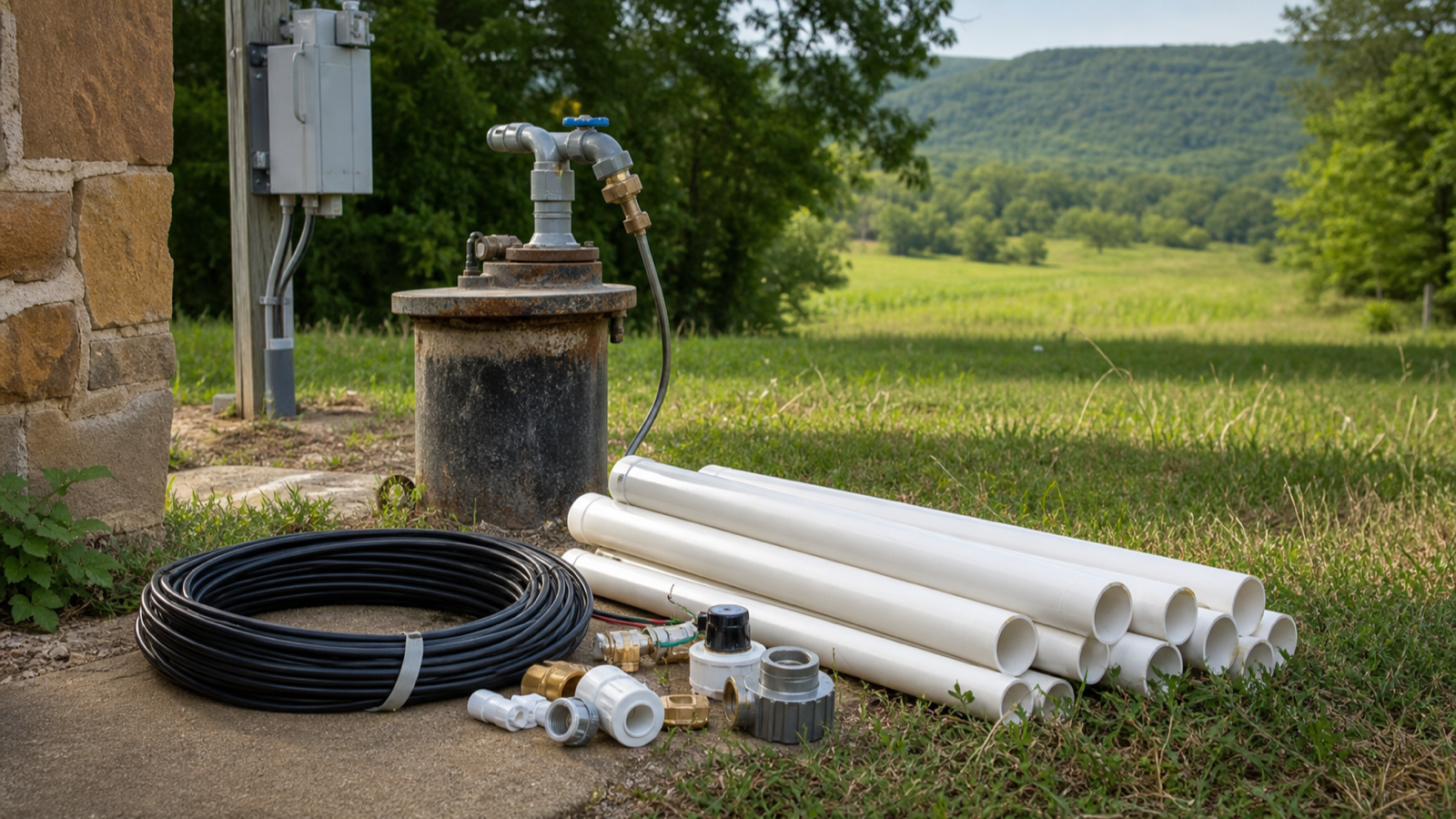
When you get an estimate to 'replace the well pump,' it's fair to ask what's actually included. A pump doesn't work in isolation — it depends on the drop pipe, wire, fittings, and controls around it, and some of those may be replaced along with the pump. Knowing what a pump estimate can include helps you compare quotes and avoid surprises.
This is one of the most common places where two estimates that look different are really just describing different amounts of work. A number that seems high may be a complete job, and a number that seems low may quietly leave out parts you'll end up paying for later. Learning what belongs to a pump replacement — and asking each provider to spell out their scope — puts you in a position to compare fairly.
The Pump Is Part of an Assembly
A submersible pump comes up from the well attached to its drop pipe and wire, and those components age alongside the pump. When the pump is replaced, a provider often evaluates whether the pipe, wire, and connections should be replaced too — because they're already up out of the well, and reusing worn parts can lead to another failure (and another pull) soon after. Whether they're included in a given estimate is exactly the kind of thing worth confirming.
What May Be Included Beyond the Pump
- Drop pipe — the pipe the pump hangs on, which may be replaced if it's aged or if it's the older type.
- Pump wire — the electrical wire running down to the pump.
- Fittings and connections — torque arrestors, splices, and the connections at the pump and well head.
- Check valve — often replaced with the pump.
- Controls — the pressure switch, and for some pumps a control box, may be addressed.
- Pressure tank — evaluated separately, sometimes replaced alongside.
Why Scope Varies Between Quotes
Two 'pump replacement' quotes can differ because they include different scope. One might be pump-only, assuming the pipe and wire are reused; another might include new pipe, wire, and fittings for a more complete job. Neither is automatically wrong, but they're not comparable until you know what each covers. A lower number that reuses worn components isn't a bargain if it means another failure and another pull.
Materials Make a Difference Too
Even within the same list of parts, choices about materials affect both the estimate and how long the repair lasts. Drop pipe, for instance, comes in different types, and an older galvanized run may be worth upgrading rather than reusing. Wire has to be properly rated and correctly spliced for a wet, down-well environment, and the quality of a check valve or torque arrestor influences how the pump holds up over time. A thoughtful estimate reflects not just how many parts are being replaced but what's being installed in their place — and that's worth understanding, because the cheapest components can shorten the life of an otherwise sound job.
Confirm the Scope
The practical takeaway: before comparing pump replacement estimates, ask what each includes — pump only, or pump with new pipe, wire, fittings, and check valve — and whether the pressure tank and controls are being evaluated. A good provider explains what they recommend replacing and why. Because the retrieval is the expensive step, doing a thorough job while the pump is out is often the better value. Confirm scope and the provider's Tennessee license when you request service.
Related Well Pump Services
Upper Cumberland Well Pump is an independent referral service that helps connect property owners with local water-well and pump-service providers. Upper Cumberland Well Pump does not directly perform regulated well drilling, pump installation, pump repair or water-treatment work unless expressly stated. Provider licensing, qualifications, insurance, availability, pricing, scheduling and service terms must be confirmed directly with the provider.
Well Pump Costs and Replacement — Questions
Does a well pump estimate include the pipe and wire?
It depends on the estimate — some are pump-only, assuming the existing drop pipe and wire are reused, while others include new pipe, wire, fittings, and a check valve. Since those components come up with the pump and age alongside it, many providers recommend replacing them together. Always confirm what a quote covers.
Why would the pipe and wire need replacing with the pump?
Because they age with the pump and are already out of the well during the job. Reusing worn pipe, wire, or fittings can lead to another failure soon — and another costly pull. Replacing them while the pump is out is often the better long-term value, though a provider evaluates their condition.
Why do two pump quotes differ so much?
Often because of scope — one may be pump-only while another includes new pipe, wire, fittings, check valve, and controls. They aren't comparable until you know what each includes. A cheaper pump-only quote that reuses worn parts may cost more overall if it fails again.
What should I ask about a pump replacement quote?
Ask whether it's pump-only or includes new drop pipe, wire, fittings, and check valve; whether the pressure switch and control box are being evaluated; and whether the pressure tank is included. Also confirm the provider's applicable Tennessee license. Knowing the scope lets you compare quotes fairly.
Need Help With a Well Pump Problem?
Send the property location, a description of the problem, any recent changes in pressure or water flow, the location of the well head and several clear photographs of the visible system components for an initial service review.