Well Pump Problems and Troubleshooting
Why Water Stops After a Power Outage
If you're on a private well, a power outage means no water — the pump runs on electricity, so when the power's out, the pump can't push water to the house. That part is expected. What surprises people is when the water doesn't come back after the power does, and this guide explains why that happens and what to check.
For an area like the Upper Cumberland, where storms and rural power lines make outages a regular fact of life, this is worth understanding before it happens. Knowing which parts of the situation are normal and which point to a fault lets you respond calmly — making the one safe check that's reasonable and recognizing the moment it's time to hand things to a provider.
No Power, No Pump
Unlike municipal water, a private well has no water pressure without the pump running, and the pump needs electricity. During an outage you'll have only the limited reserve in the pressure tank, then nothing until power returns. This is normal and not a fault — it's simply how well systems work, which is why outage planning matters for well owners (see our backup water and outage guides).
That reserve is also why the water doesn't vanish the instant the lights go out. The pressure tank holds a small stored volume that can cover brief tasks, which is why a short blink of power may pass unnoticed while a long outage empties the tank and leaves the taps dry. Understanding that buffer explains both why you have a little water at first and why it runs out.
Why Water Sometimes Doesn't Return
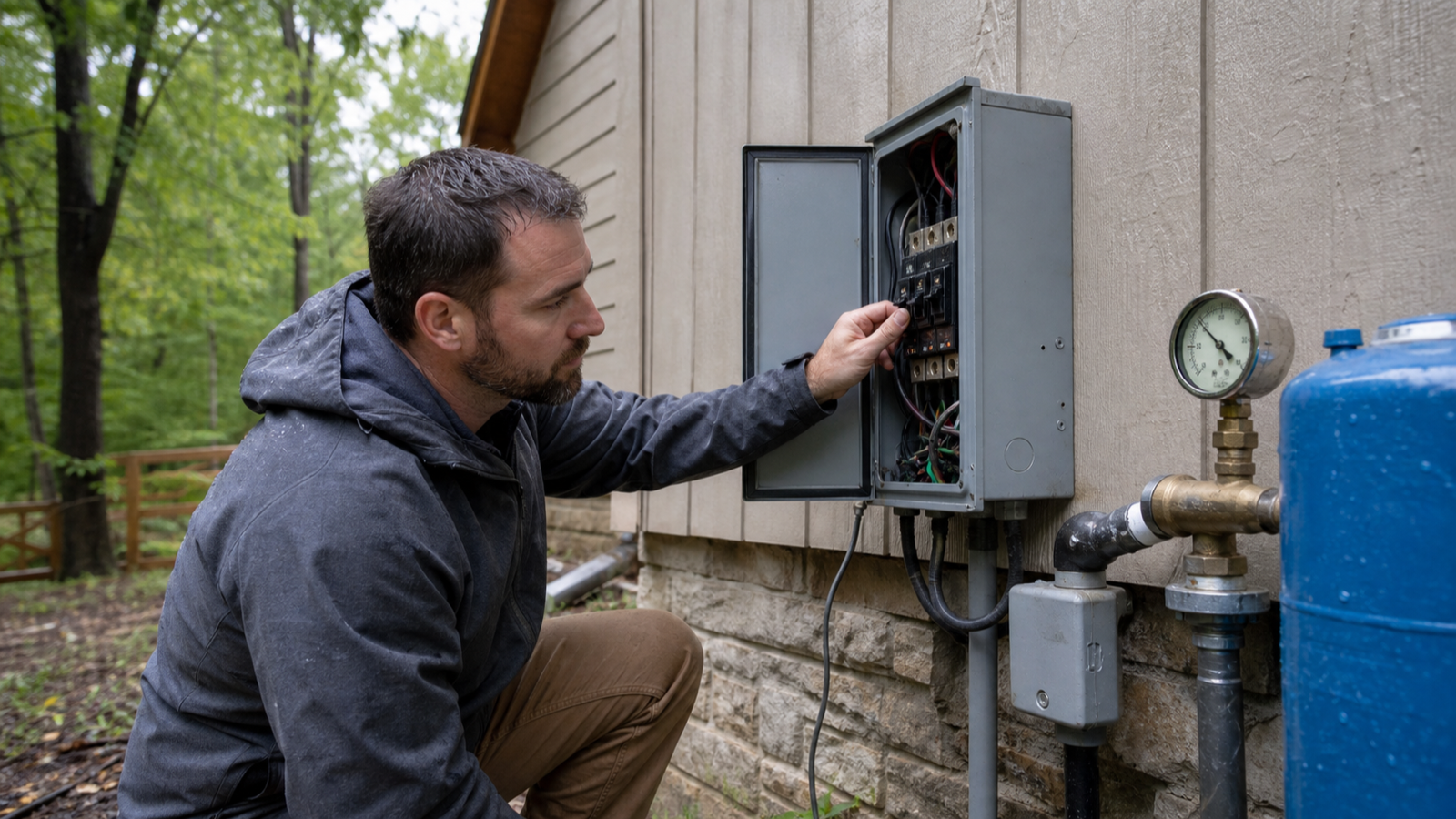
When power comes back but water doesn't, the outage itself may have caused or revealed a problem. Power surges and the abrupt loss and return of power can stress electrical components — a pressure switch, control box, capacitor, or the pump's wiring — and can trip breakers. Sometimes a breaker simply needs a single safe reset; other times the surge damaged a component. The outage can also coincide with an unrelated failure that happened to surface at the same time.
The riskiest moments for electronics are often not the outage itself but the surge as power snaps back, and lightning near the lines during a storm can send spikes down to equipment even underground. Sensitive parts like a control box or capacitor are the usual casualties. That's also why a component can seem fine for a day or two after an outage and then fail — the surge weakened it rather than destroying it outright, which is useful context to give a provider.
What to Safely Check
- The breaker — check whether the pump's breaker tripped during the outage; reset once and see if it holds.
- Give it a moment — after power returns, the system may take a short time to rebuild pressure.
- Watch for repeat trips — a breaker that trips again signals a fault; don't keep resetting it.
- Note the storm — surges and lightning are common culprits worth mentioning to a provider.
- Stop at safe checks — don't open electrical panels, the control box, or the well.
When to Request Service
If a single safe breaker reset doesn't restore water, or the breaker trips again, it's time for a diagnosis — the outage may have damaged a component that needs professional attention. Note that it followed a power event, which helps a provider focus on the electrical side. Our guide on what to check after a storm covers this, and for a household without water it may warrant emergency service. A licensed provider can safely test what the surge affected.
Related Well Pump Services
Upper Cumberland Well Pump is an independent referral service that helps connect property owners with local water-well and pump-service providers. Upper Cumberland Well Pump does not directly perform regulated well drilling, pump installation, pump repair or water-treatment work unless expressly stated. Provider licensing, qualifications, insurance, availability, pricing, scheduling and service terms must be confirmed directly with the provider.
Well Pump Problems and Troubleshooting — Questions
Why do I have no water during a power outage on a well?
Because a private well has no pressure without the pump running, and the pump needs electricity. During an outage you have only the small reserve in the pressure tank, then no water until power returns. This is normal for wells — it's why outage and backup planning matter.
Why didn't my water come back after the power returned?
The outage may have tripped a breaker (try one safe reset) or a surge may have damaged an electrical component like the pressure switch, control box, capacitor, or wiring. Sometimes it's an unrelated failure that surfaced at the same time. If a single reset doesn't work, request service.
Should I reset the breaker after an outage?
One safe reset is reasonable — if it holds and water returns, the trip was likely from the outage. But if the breaker trips again, leave it off and request service; repeatedly resetting a tripping breaker can be unsafe and signals a fault the surge may have caused.
Can a power surge damage a well pump?
Yes — surges and the abrupt loss and return of power can stress or damage electrical components (switch, control box, capacitor, wiring) and sometimes the pump. That's why water occasionally doesn't return after an outage. A provider can test what was affected; mention the power event when you request service.
Need Help With a Well Pump Problem?
Send the property location, a description of the problem, any recent changes in pressure or water flow, the location of the well head and several clear photographs of the visible system components for an initial service review.