Rural Well and Pump Projects
Backup Water Planning During Power Outages
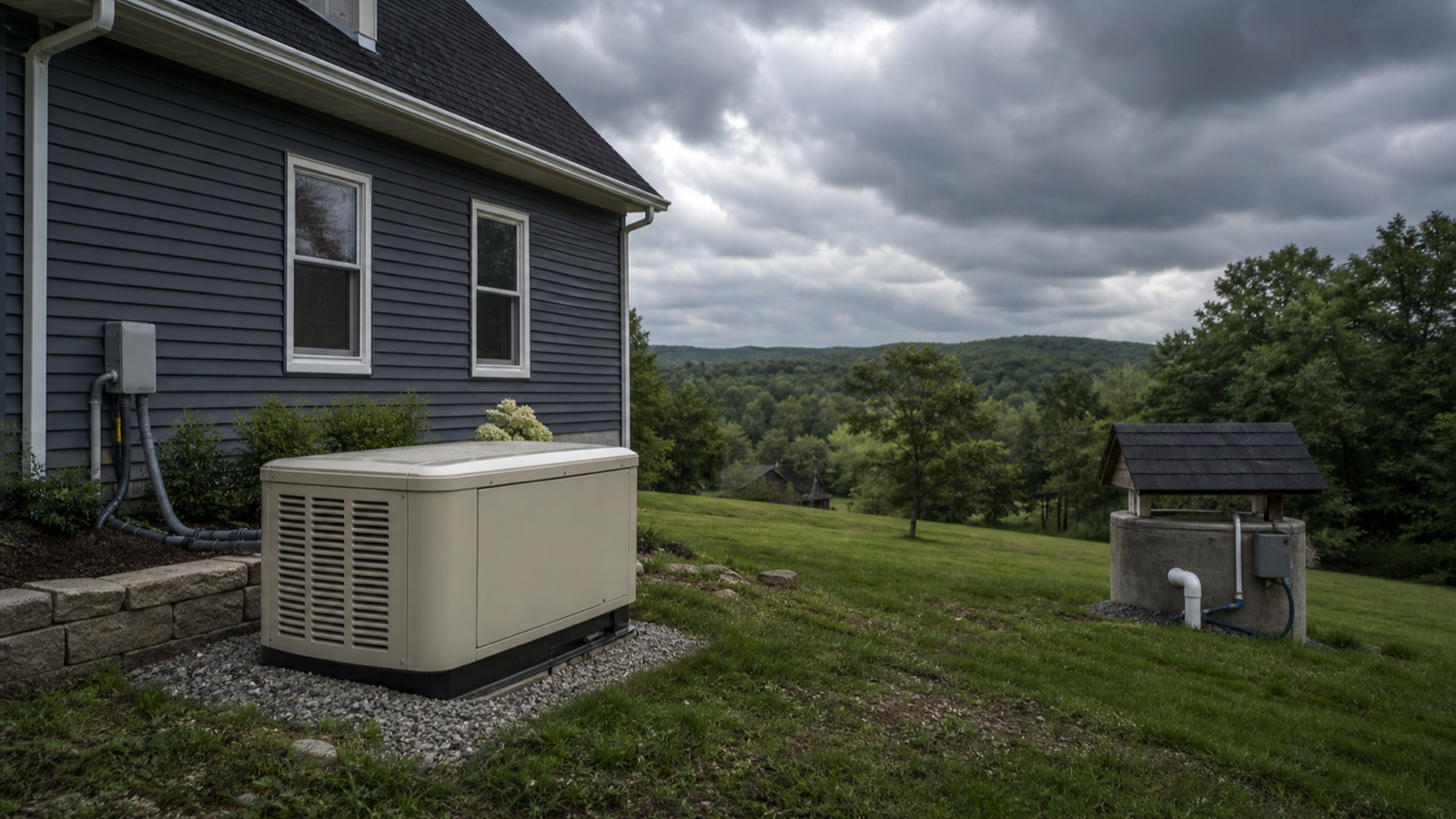
One reality of well water catches many rural owners off guard: when the power goes out, so does the water. A private well depends on an electric pump, so an outage means no pressure at the tap until either power returns or a backup keeps the pump running. On rural Upper Cumberland lines, where storms and ice can cause extended outages, this is worth planning for rather than discovering during an emergency.
This guide explains why well water stops during outages and the sensible options for keeping water available when the power is out.
Why Well Water Depends on Power
A well pump is an electric device. When the power fails, the pump stops, and although a pressure tank holds a small reserve, that reserve is quickly used and pressure fades. Unlike a home on municipal water, which may keep flowing during a local outage, a well home loses its supply the moment the pump loses power.
This dependence is manageable once you understand it. The key is deciding in advance how you want to bridge an outage, whether through stored water, backup power, or a combination, rather than scrambling when the lights go out.
Storage as a Simple Buffer
The simplest form of backup is stored water. A reserve kept in a cistern, storage tank or even containers set aside for the purpose covers basic needs during a shorter outage without any special equipment. For drinking, cooking and sanitation, a modest stored supply can carry a household through many interruptions.
Larger storage, such as a cistern the pump fills over time, serves double duty by buffering both outages and peak demand. How much storage makes sense depends on your household size and how long outages tend to last in your area.
Backup Power and Contingencies
- A properly sized generator arrangement that can run the well pump, planned and connected by qualified professionals rather than improvised, so water is available during longer outages.
- Stored water in a cistern, tank or containers to cover drinking, cooking and sanitation through shorter interruptions without any equipment.
- For livestock owners, a larger reserve or backup power, since animals cannot go without water even briefly during an outage.
- Knowing your pump's electrical requirements in advance, so any backup power source is sized to actually start and run it.
- A simple household plan for what to shut off and conserve during an outage, extending whatever reserve or backup you have.
Planning the Right Approach for Your Property
The right backup strategy depends on your priorities and risks. A household in an area prone to long ice-storm outages, or a farm with livestock, has more reason to invest in generator backup than a home that rarely loses power for long. Matching the plan to your real exposure keeps it practical.
Because connecting a generator to a well system involves electrical work, that portion belongs to qualified professionals; never improvise connections to a pump or its controls. A provider can advise on your pump's requirements and sensible options. When you are ready to plan, you can request service at /request-service/.
Related Well Pump Services
Upper Cumberland Well Pump is an independent referral service that helps connect property owners with local water-well and pump-service providers. Upper Cumberland Well Pump does not directly perform regulated well drilling, pump installation, pump repair or water-treatment work unless expressly stated. Provider licensing, qualifications, insurance, availability, pricing, scheduling and service terms must be confirmed directly with the provider.
Rural Well and Pump Projects — Questions
Does my well really stop working when the power goes out?
Yes. A well pump runs on electricity, so when power fails the pump stops and the small reserve in the pressure tank is quickly used up. Homes on municipal water may keep flowing during a local outage, but a well home does not. Planning stored water or backup power bridges the gap.
What is the simplest way to have water during an outage?
Stored water is the simplest option, requiring no special equipment. A reserve in a cistern, tank or containers can cover drinking, cooking and sanitation through shorter outages. For longer or more frequent outages, or for livestock, backup power to run the pump becomes worth considering.
Can I run my well pump on a generator?
Often yes, provided the generator is sized to start and run the pump and is connected safely. Because this involves electrical work, the connection should be planned and installed by qualified professionals rather than improvised. A provider can advise on your pump's requirements and a suitable arrangement.
How much backup should a farm plan for?
More than a typical home, because livestock cannot go without water even briefly. A larger stored reserve, backup power for the pump, or both, help ensure animals stay watered through the extended outages that storms and ice can cause on rural lines. Planning this before an outage is far better than improvising during one.
Need Help With a Well Pump Problem?
Send the property location, a description of the problem, any recent changes in pressure or water flow, the location of the well head and several clear photographs of the visible system components for an initial service review.