Rural Well and Pump Projects
Preparing Remote Property Access for Pump Service
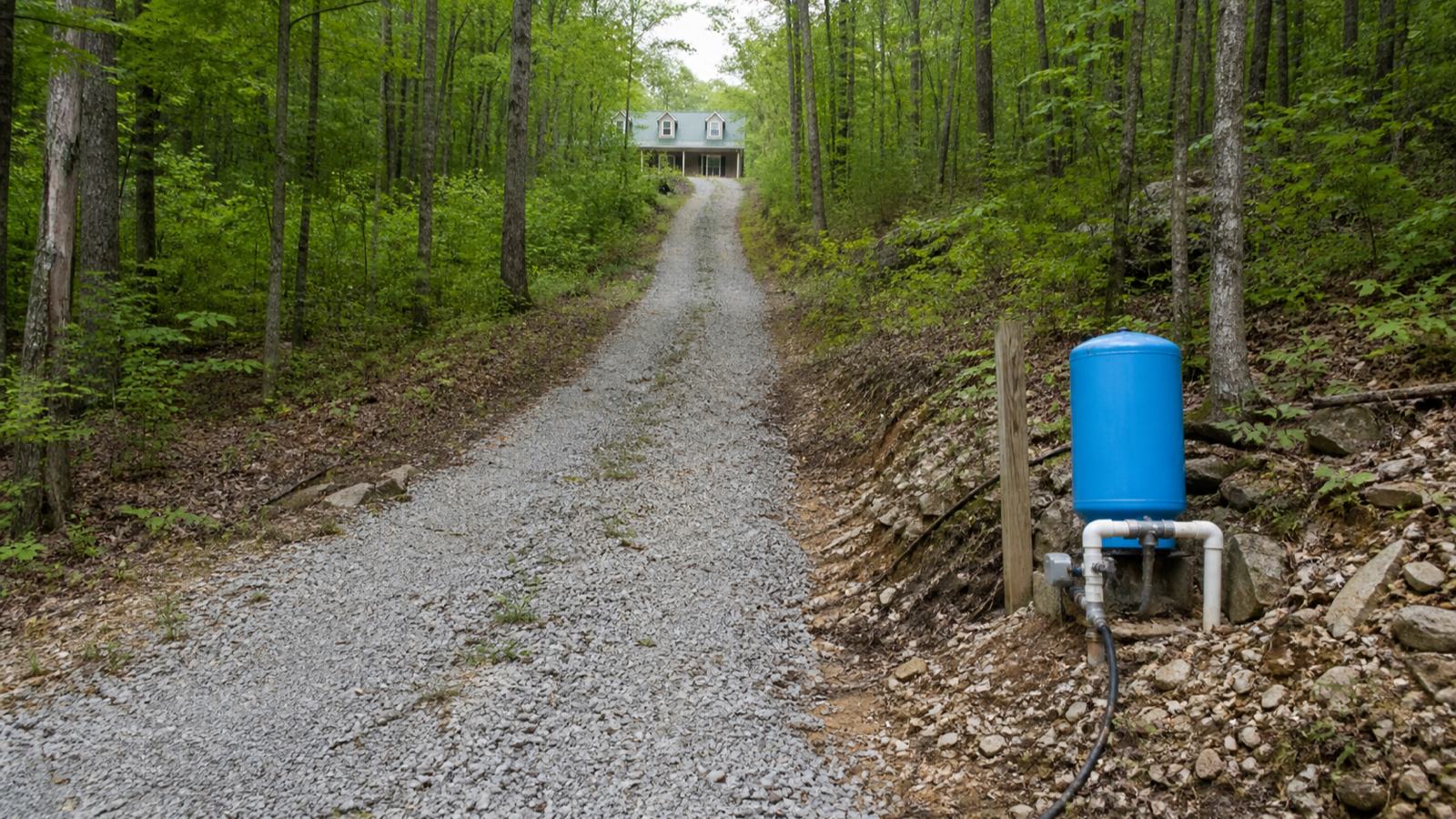
When a pump needs service, getting the right people and equipment to the wellhead can be half the challenge on a remote property. Steep driveways, locked gates, overgrown paths and wooded terrain are all common across the Upper Cumberland, and they can turn a straightforward job into a difficult one if access has not been considered in advance.
This guide covers how to prepare your property so service can happen smoothly, which matters most when a pump fails unexpectedly and you need help quickly.
Why Access Deserves Advance Thought
Pump service often involves more than a hand tool. Pulling a submersible pump from a deep well, for instance, can require a rig or specialized equipment that needs room to maneuver and a way to reach the wellhead. If a truck cannot get close, or the path is blocked, the work becomes slower and more complicated regardless of the provider's skill.
Thinking about access before you need service means a provider can arrive and work without delay. This is especially valuable during an outage, when your household or livestock is already without water and time matters.
Common Rural Access Challenges
On the Cumberland Plateau, long steep driveways, tight wooded turns, soft or washed-out gravel, and low tree limbs all limit what equipment can reach the wellhead. Gates and cattle guards may need to be opened or navigated, and overgrown vegetation can hide the wellhead entirely. Winter conditions add another layer, since a driveway that is fine in summer may be impassable after ice or snow.
None of these are insurmountable, but each is far easier to address before a service visit than during one. Knowing your property's limitations lets you communicate them clearly to a provider.
Preparing Access for Service
- Keep the driveway clear and passable for service vehicles, mindful that steep or washed-out gravel can stop a loaded truck on the plateau.
- Clear vegetation and low limbs around the wellhead and along the access path so equipment can reach and work at the well.
- Make sure the wellhead is visible and findable, marking it if it sits away from the house or is easily overlooked.
- Arrange for gates, cattle guards or locked access points to be opened or the codes shared when a provider is scheduled.
- Note seasonal limits, such as a driveway that becomes impassable in ice or snow, and share these when planning a visit.
Communicating With Your Provider
Clear communication about access saves everyone time. When you schedule service, describing the driveway, any gates, the wellhead location and any seasonal constraints lets a provider bring the right equipment and plan the visit. A provider who knows what to expect can serve a remote property far more efficiently than one arriving blind.
If your property has access challenges, it is worth noting them when you reach out. You can request service at /request-service/ and describe your access situation so the visit can be planned around it.
Related Well Pump Services
Upper Cumberland Well Pump is an independent referral service that helps connect property owners with local water-well and pump-service providers. Upper Cumberland Well Pump does not directly perform regulated well drilling, pump installation, pump repair or water-treatment work unless expressly stated. Provider licensing, qualifications, insurance, availability, pricing, scheduling and service terms must be confirmed directly with the provider.
Rural Well and Pump Projects — Questions
Why does access matter so much for well pump service?
Pump work, especially pulling a pump from a deep well, can require a rig or specialized equipment that needs room to reach and maneuver at the wellhead. If a service truck cannot get close, the job becomes slower and harder. Preparing clear access in advance lets a provider work efficiently, which matters most during an outage.
What should I do about a steep or rough driveway before service?
Keep it as clear and passable as conditions allow, and be honest with the provider about its limits, including any spots where a loaded truck might struggle. On the plateau, steep or washed-out gravel is common. Sharing these details when scheduling lets the provider plan the right approach and equipment.
How can I help a provider find the wellhead on a large lot?
Make sure it is visible and not buried in vegetation, and mark it if it sits well away from the house or is easy to overlook. Clearing brush and low limbs around it and along the access path also helps. Describing its location when you schedule service saves time on arrival.
Need Help With a Well Pump Problem?
Send the property location, a description of the problem, any recent changes in pressure or water flow, the location of the well head and several clear photographs of the visible system components for an initial service review.