Rural Well and Pump Projects
Well Pump Considerations for Farms and Livestock
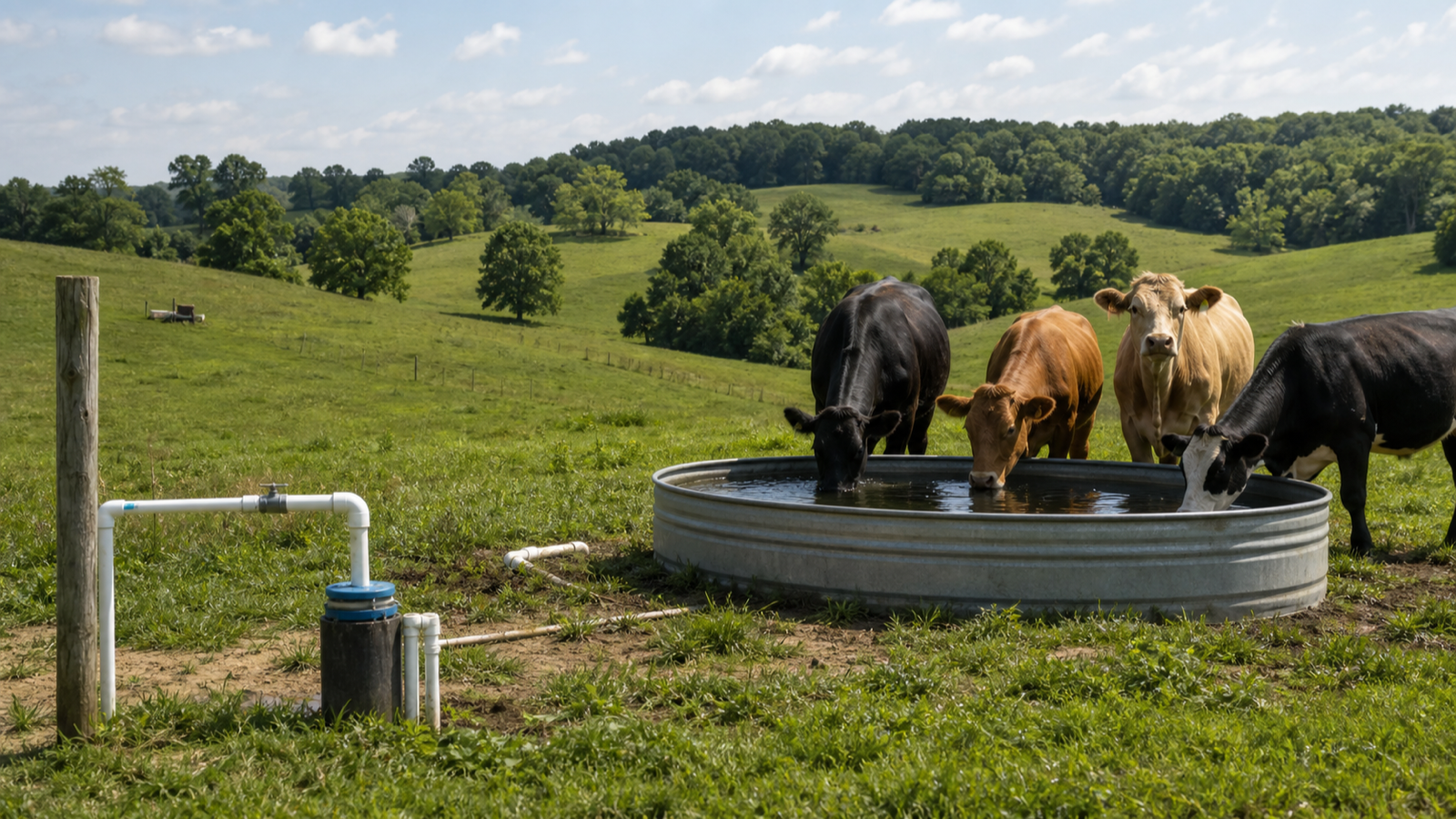
Water is not optional on a working farm. Livestock need a steady supply every day of the year, and irrigation, wash-down and household use add to the load. A well pump serving a farm across Upper Cumberland acreage has to meet demands that are both higher and less forgiving than those of an ordinary home.
This guide covers the planning considerations that matter for agricultural water, from capacity and storage to the redundancy that keeps animals watered even when something goes wrong.
Demand Is Higher and Less Forgiving
Livestock consume significant volumes daily, and demand climbs sharply in summer heat when animals drink more and pastures may need water. Unlike a home, where a brief interruption is an inconvenience, a farm cannot let stock tanks run dry. Sizing a system for peak agricultural demand, not average use, is the foundation of a dependable farm setup.
Distances add complexity. Stock tanks, barns and fields may sit far from the well, meaning the pump must move water across long runs and often uphill. These factors all feed into the capacity a licensed provider will recommend.
Storage Buffers Demand and Failure
Many farms benefit from water storage, such as a cistern or storage tank, that holds a reserve the pump fills over time. Storage lets a modest pump keep up with heavy peaks by drawing down the reserve, and it provides a buffer if the pump or power fails. For livestock, that buffer can be the difference between a manageable problem and an emergency.
How much storage makes sense depends on your herd size, the number of watering points and how quickly your well recovers. A provider can help balance pump capacity against storage to fit your operation.
Planning for Agricultural Water
- Peak seasonal demand, especially summer heat when livestock drink more and any irrigation runs, which should drive sizing rather than average daily use.
- Water storage such as a cistern or tank that buffers heavy demand and provides reserve capacity if the pump or power is interrupted.
- The number, distance and elevation of watering points, since spread-out stock tanks and barns place long-run demands on the system.
- Redundancy planning, including backup power or a secondary water source, so livestock stay watered during outages common on rural lines.
- Freeze protection for stock-tank supply lines and exposed piping, which is essential through hard Upper Cumberland winters when animals still need water.
Reliability and Redundancy
Because a water failure on a livestock operation has real consequences, redundancy deserves attention. Backup power for the pump, a stored reserve, or a plan to bring in water temporarily can all reduce risk. Planning these before a failure is far better than improvising during one.
Farm systems also earn from routine attention. Periodic inspection can catch wear on hard-working equipment before it strands you. When you are planning or upgrading agricultural water, you can request service at /request-service/ to connect with a provider who understands high-demand rural properties.
Related Well Pump Services
Upper Cumberland Well Pump is an independent referral service that helps connect property owners with local water-well and pump-service providers. Upper Cumberland Well Pump does not directly perform regulated well drilling, pump installation, pump repair or water-treatment work unless expressly stated. Provider licensing, qualifications, insurance, availability, pricing, scheduling and service terms must be confirmed directly with the provider.
Rural Well and Pump Projects — Questions
How much water capacity does a livestock operation need?
It depends on your herd size and species, the number and location of watering points, and seasonal peaks, since animals drink far more in summer heat. Capacity is usually planned around peak demand rather than daily averages, often combined with storage. A licensed provider can assess your operation and recommend a system with adequate margin.
Why add water storage to a farm well?
Storage such as a cistern or tank lets a modest pump keep up with heavy peaks by drawing on a reserve, and it provides a buffer if the pump or power fails. For livestock that cannot go without water, that reserve is valuable insurance. The right size depends on your demand and how quickly your well recovers.
What happens to my livestock water during a power outage?
Without backup power, a typical pump stops when the power does, so stored water or a backup power source becomes important on a farm. Planning redundancy in advance keeps animals watered through the outages that can occur on rural lines. A provider can help you weigh storage, backup power and other options.
Do farm supply lines need freeze protection?
Yes. Stock-tank supply lines and exposed piping are vulnerable during the hard freezes common in the region, and livestock still need water in winter. Planning insulation, heat measures or freeze-resistant configurations helps keep water flowing. A qualified provider can recommend measures suited to your layout.
Need Help With a Well Pump Problem?
Send the property location, a description of the problem, any recent changes in pressure or water flow, the location of the well head and several clear photographs of the visible system components for an initial service review.