Maintenance and Service Planning
What to Check After a Storm or Power Outage
Storms and power outages are a fact of life in the Upper Cumberland, and both can affect a private well system. A pump needs electricity to run, so an outage can leave you temporarily without water, while lightning and power surges can damage electrical components. After the weather clears, a short round of safe checks helps you confirm the system is working and spot anything that needs a provider's attention.
This guide covers what to observe safely, what to avoid, and when a post-storm issue warrants a call for help.
Understanding the Risks
When power goes out, your well pump stops, so no water is normal until electricity returns. Once power is back, most systems resume on their own, but not always. Lightning strikes and power surges can trip breakers, damage control components, or affect the pump, and heavy storms can wash out ground or debris near the well head.
Knowing that both a simple outage and a damaging surge are possible helps you interpret what you find. Water returning normally is reassuring; anything unusual is worth noting.
Safe Checks After the Storm
- Confirm that household power has fully returned before expecting the pump to work, since partial or intermittent power can affect operation.
- Check the electrical panel once for a tripped breaker labeled for the well or pump, and note its position without repeatedly resetting it.
- Test a few taps to see whether water pressure has returned to normal, and note any weakness, sputtering, or discoloration.
- Look at the pressure gauge if you have one and record the reading, comparing it to what you usually see.
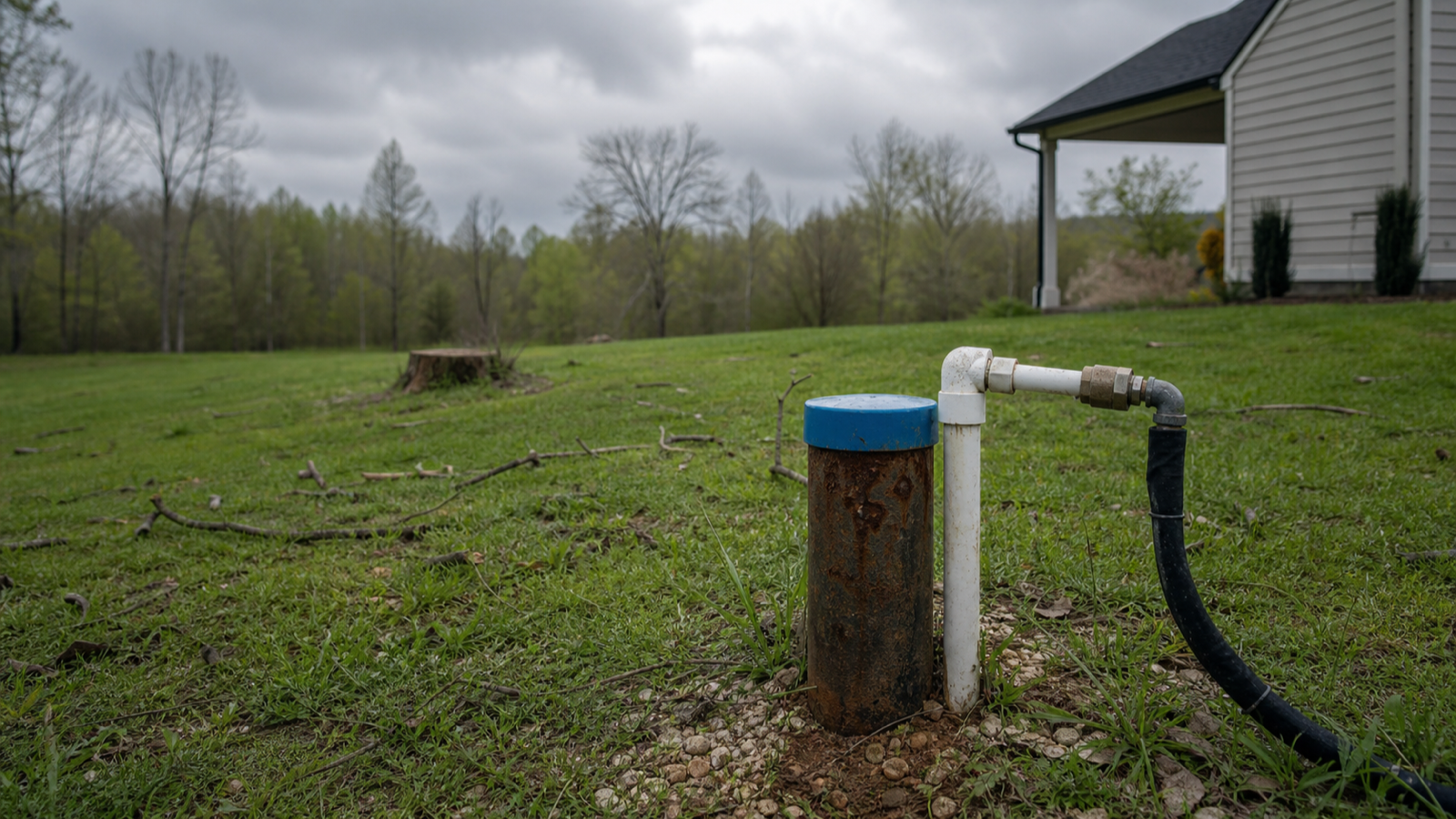
- Inspect the visible area around the well head for storm damage, flooding, erosion, or debris without opening or disturbing the cap.
- Watch for signs of surge damage such as tripped breakers that will not hold, burning smells, or equipment that seems dead.
Signs of Possible Damage
A breaker that trips again immediately, a burning smell near electrical equipment, or a pump that will not restart after power returns can all point to storm-related damage. Water that comes back cloudy or discolored, or a well head area that has flooded, may indicate contamination or debris intrusion that needs evaluation.
In these cases, do not keep resetting breakers or attempt to inspect wiring. Keep people away from any equipment showing signs of electrical trouble, and note exactly what you observed. Repeated resets after a surge can worsen damage and put you at risk, so it is safer to stop and let a professional evaluate the components.
When to Call a Provider
If water does not return after power is restored and a single breaker check, if you see signs of surge damage, or if the well head area flooded, it is time to involve a licensed provider. They can safely assess electrical components, check the pump, and advise on water testing if contamination is a concern.
When a storm leaves your household with no water and simple checks do not help, an emergency no-water request can connect you with assistance. Share your storm observations so the provider arrives prepared.
Related Well Pump Services
Upper Cumberland Well Pump is an independent referral service that helps connect property owners with local water-well and pump-service providers. Upper Cumberland Well Pump does not directly perform regulated well drilling, pump installation, pump repair or water-treatment work unless expressly stated. Provider licensing, qualifications, insurance, availability, pricing, scheduling and service terms must be confirmed directly with the provider.
Maintenance and Service Planning — Questions
My water did not come back after the power returned. What now?
Check once for a tripped well breaker and confirm the whole home has power. If water still does not return, or a breaker will not hold, avoid repeated resets and contact a licensed provider, since a surge may have affected the pump or controls.
Could lightning have damaged my pump?
Yes. Lightning and power surges can damage control components or the pump itself. Signs include breakers that trip immediately, dead equipment, or burning smells. If you suspect surge damage, keep clear of the equipment and have a provider evaluate it.
Why is my water cloudy after a storm?
Heavy storms can disturb the well or introduce debris, and flooding near the well head can raise contamination concerns. Note the change and avoid assuming it is safe. A provider can advise on water testing and inspect the well head area.
Is it safe to run the pump right after flooding?
If the well head area flooded, be cautious. Flooding can introduce contaminants and affect electrical components. Rather than assuming the system is fine, have a licensed provider assess it and advise on testing before you rely on the water.
Need Help With a Well Pump Problem?
Send the property location, a description of the problem, any recent changes in pressure or water flow, the location of the well head and several clear photographs of the visible system components for an initial service review.