Maintenance and Service Planning
How to Protect Accessible Well Components During Freezing Weather
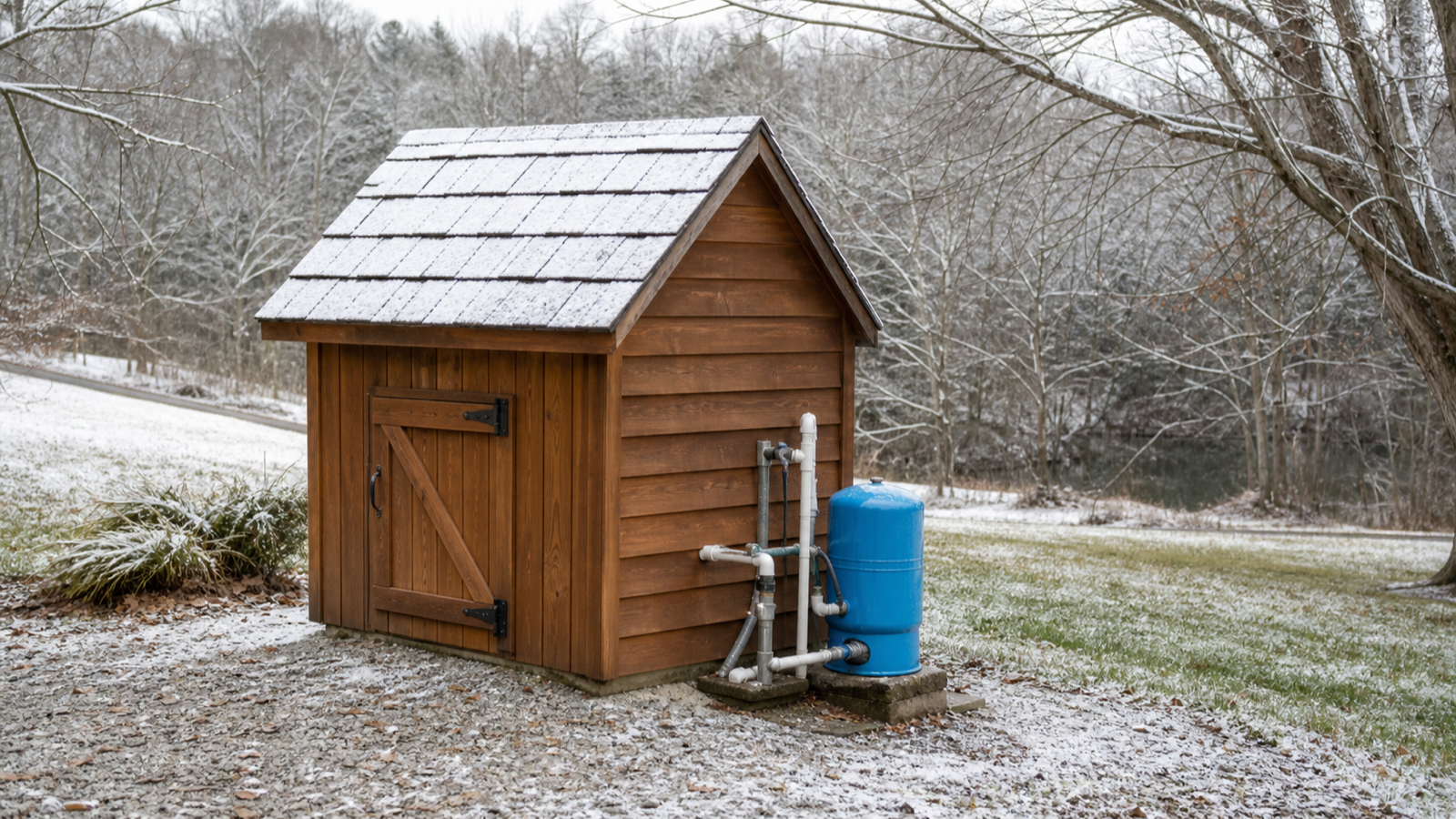
Freezing weather is one of the most common seasonal threats to a private well system. When exposed pipes, an above-ground pump, or a pressure tank in an unheated space drop below freezing, water inside can freeze, expand, and cause cracks or blockages that leave you without water. In the Upper Cumberland, a hard cold snap can arrive quickly, so a little preparation before winter goes a long way.
This guide focuses on safe measures for accessible, above-ground components. Anything involving the wellhead internals, the well cap, or wiring should be left to a licensed provider.
Where Freezing Trouble Starts
The most vulnerable spots are usually the parts exposed to cold air: above-ground pipes, a jet pump sitting in an unheated well house, a pressure tank in a drafty basement or crawlspace, and any hose bibs or exposed fittings. Water sitting still in these components can freeze first, and even a small ice blockage can stop your supply or crack a fitting.
Well houses and pump houses help, but only if they are reasonably sealed and, in very cold conditions, kept above freezing. Knowing your weak points lets you focus your effort where it counts.
Safe Steps to Take Before a Freeze
- Insulate accessible above-ground pipes with foam pipe sleeves or wrapping rated for the purpose, focusing on exposed runs and fittings.
- Add insulation to a well house or pump house, and check that doors, vents, and gaps are reasonably sealed against drafts.
- Keep a pressure tank located in an unheated space protected with an insulating cover or blanket suited to the equipment.
- Disconnect and drain garden hoses, and insulate or cover exterior hose bibs before the first hard freeze.
- Maintain a little warmth in the space around a vulnerable pump or tank using a safe, appropriately rated heat source if needed.
- Keep the area around accessible components clear so you can check on them quickly during a cold snap.
What to Leave to a Provider
Do not open the well cap, the control box, or any electrical enclosure to add insulation or heat, and do not attempt to thaw or work on internal components yourself. These carry real safety risks, and improper heat sources near equipment can be a fire hazard. If you are considering heat tape or a specialized heating solution, have a licensed provider advise on and install anything appropriate.
Anything involving the wellhead itself, buried lines, or wiring belongs with a qualified provider. Your role is limited to protecting the safely accessible, above-ground parts.
If Something Freezes Anyway
If you lose water during a freeze and suspect a frozen component, avoid applying open flame or unsafe heat, and do not disassemble anything. Note what you observe, such as which fixtures are affected and where you suspect the freeze, and keep the area safe.
A licensed provider can safely thaw and assess the system and check for any cracks or damage. If the freeze has left you without water, an emergency no-water request can connect you with help while you keep the space as protected as possible.
Related Well Pump Services
Upper Cumberland Well Pump is an independent referral service that helps connect property owners with local water-well and pump-service providers. Upper Cumberland Well Pump does not directly perform regulated well drilling, pump installation, pump repair or water-treatment work unless expressly stated. Provider licensing, qualifications, insurance, availability, pricing, scheduling and service terms must be confirmed directly with the provider.
Maintenance and Service Planning — Questions
Can I use heat tape on my well pipes?
Heat tape can help, but it must be the right type, correctly installed, and used safely, since improper use is a fire risk. It is best to have a licensed provider advise on and install any heating solution for well components.
Should I let a faucet drip during a freeze?
Keeping a small trickle of water moving can help reduce freezing in some plumbing, but it does not protect exposed well equipment on its own. Focus on insulating accessible components and consult a provider about your specific setup.
What do I do if my pipes or pump are already frozen?
Do not use open flame or unsafe heat, and do not take anything apart. Note what is affected and keep the area safe. A licensed provider can thaw and assess the system, and an emergency request can help if you have no water.
Is it safe to add a heater in my well house?
Only a safe, appropriately rated heat source kept clear of flammable materials should be used, and even then with caution. For anything beyond simple insulation, ask a licensed provider to recommend a safe approach for your well house.
Need Help With a Well Pump Problem?
Send the property location, a description of the problem, any recent changes in pressure or water flow, the location of the well head and several clear photographs of the visible system components for an initial service review.