Well Pump System Components
Why Are Check Valves Used in Well Systems?
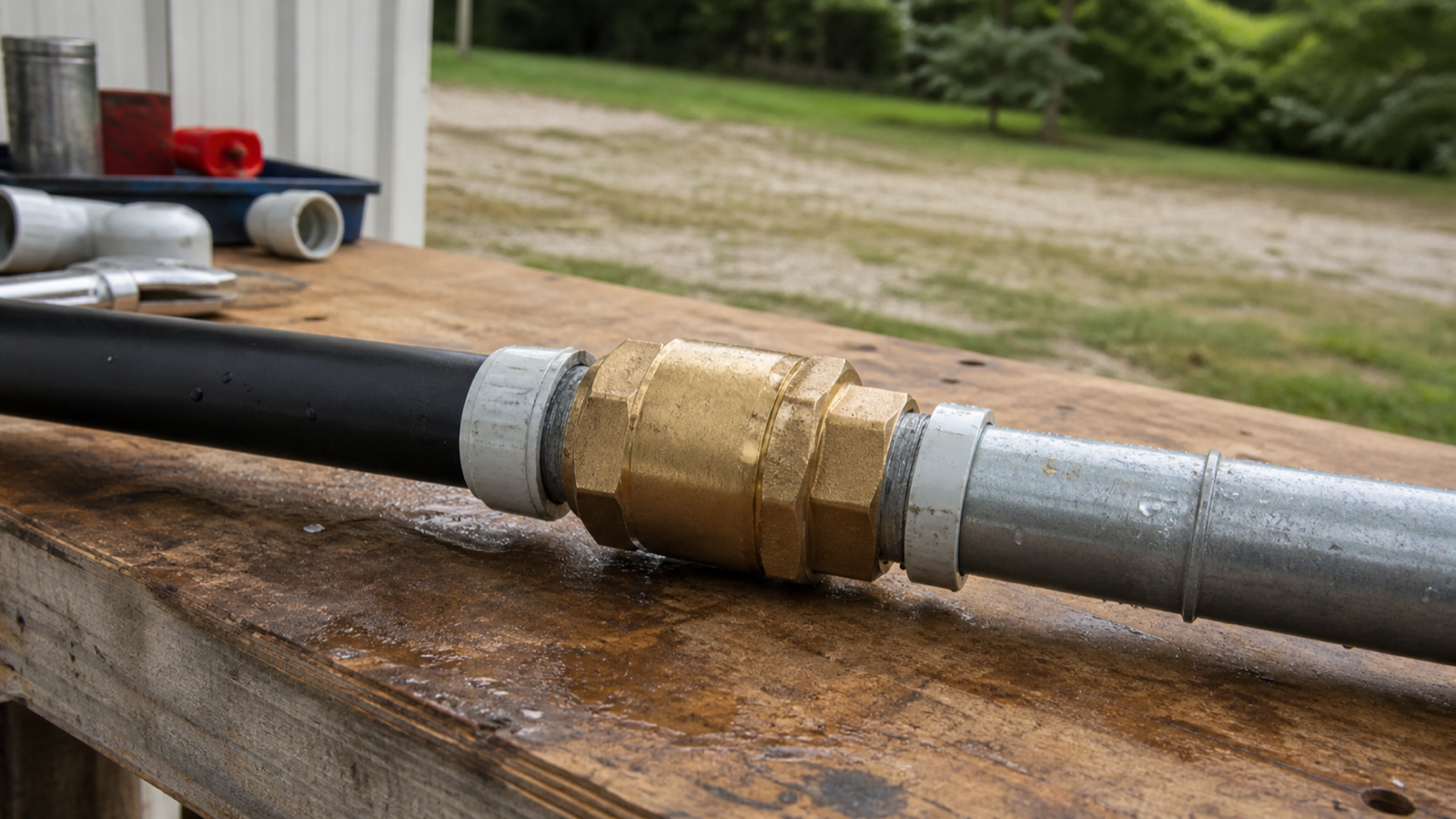
A check valve is a simple one-way valve that lets water flow in a single direction and blocks it from flowing back. In a well system, that one-way behavior is surprisingly important. Check valves keep the water your pump has already lifted from draining back down into the well every time the pump shuts off.
Though small, these valves protect your pressure, reduce wear on your pump, and help the whole system respond quickly when you open a tap. Understanding them explains why your pump does not have to start from scratch every single time.
What a check valve does
When your pump runs, it pushes water upward against gravity and out to your home. The moment the pump stops, gravity wants to pull all that water back down the well. A check valve sits in the line and closes automatically when flow stops, holding the water in place above it.
This means the next time the pump starts, it does not have to re-lift a full column of water from the bottom. The system already holds pressure, so it responds faster and the pump works less. Check valves are often placed just above the pump and sometimes at additional points in the line.
Why keeping water from draining back matters
- It prevents back-spin, where water rushing back down could spin the pump backward, and starting a still-spinning motor can cause stress and damage.
- It reduces water hammer, the pressure shock that can occur when water surges back and forth, protecting fittings and pipes over time.
- It helps maintain steady system pressure so the pressure tank and switch can do their jobs without the line constantly draining and refilling.
- It lowers pump wear by reducing the number of hard starts and the volume of water the pump must re-lift each cycle.
- It keeps your water pressure ready at the fixtures, so you are not waiting for the system to refill an empty line every time you open a tap.
What happens when a check valve fails
A check valve can fail in two main ways. It can stick open, letting water drain back down the well, or it can stick partially closed and restrict flow. When a valve leaks back, you may notice the pump cycling on even when no water is being used, rapid short cycling, or a loss of pressure after the system sits idle.
Because these symptoms overlap with other issues like a failing pressure tank or a leak in the plumbing, a check valve problem is not always obvious. Multiple check valves in one system can also work against each other if they are not correctly placed, which is another reason diagnosis is best left to a professional.
Getting a check valve looked at
Check valves are often located down the well near the pump or along the buried line, which puts them out of reach for casual inspection. Assessing or replacing one usually involves accessing the pump assembly, so it is a job for a licensed provider rather than a homeowner.
If your pump cycles when no water is running, or your pressure fades after the system sits, a check valve could be one cause among several. A qualified provider can test the system and pinpoint the issue. You can request service to have your well evaluated.
Related Well Pump Services
Upper Cumberland Well Pump is an independent referral service that helps connect property owners with local water-well and pump-service providers. Upper Cumberland Well Pump does not directly perform regulated well drilling, pump installation, pump repair or water-treatment work unless expressly stated. Provider licensing, qualifications, insurance, availability, pricing, scheduling and service terms must be confirmed directly with the provider.
Well Pump System Components — Questions
What is the difference between a check valve and a foot valve?
Both are one-way valves, but a foot valve sits at the bottom of the intake, commonly in jet-pump systems, to keep the pump primed, while check valves are placed in the line to prevent backflow. A provider can tell you which your system uses.
Why does my pump run when no water is being used?
One possible cause is a check valve that is leaking back and letting pressure drain, which makes the pump kick on to recover. However, leaks and other faults can do the same thing, so a provider should diagnose it.
Can a well have more than one check valve?
Yes, some systems use more than one check valve along the line. They must be correctly positioned, though, because poorly placed multiple valves can trap pressure or interfere with one another, which is why placement is a job for a professional.
Need Help With a Well Pump Problem?
Send the property location, a description of the problem, any recent changes in pressure or water flow, the location of the well head and several clear photographs of the visible system components for an initial service review.