Well Pump Problems and Troubleshooting
Why a Well Pump Runs Constantly
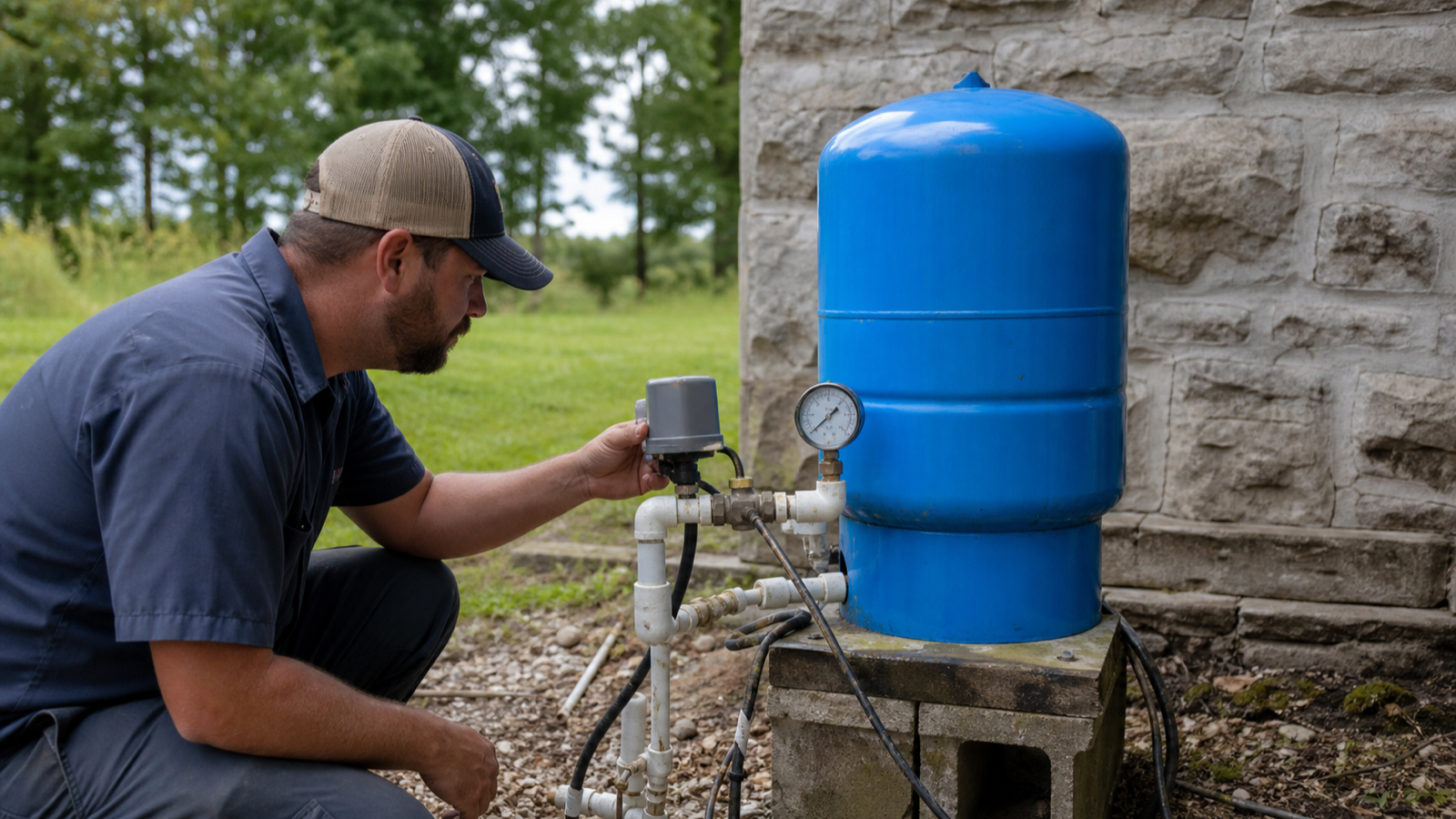
A well pump is supposed to cycle — run to build pressure, then shut off until it's needed again. When it runs constantly and never shuts off, something is preventing it from reaching or holding the pressure that would tell it to stop. That's both a symptom of a problem and a cause of new ones, since a pump running nonstop wears out faster. This guide covers why it happens.
A useful first distinction is whether the pump has ever been shutting off recently or has simply never stopped since the problem began. A pump that reaches pressure but cycles too often is a different pattern from one that never reaches shut-off at all — and the second is the one covered here. Recognizing which you have helps a provider zero in on the cause and keeps you from confusing constant running with rapid short cycling.
The Pump Can't Reach or Hold Shut-Off Pressure
A pump shuts off when the system reaches the pressure setting on the switch. If it runs constantly, either it can't build up to that pressure, or the pressure is escaping as fast as it's made. So the causes fall into two groups: something preventing the pump from building pressure (a demand it can't meet, a worn pump, a dropping well), or something bleeding pressure away (a leak, a stuck-open valve, or a control problem).
The pressure gauge, if you have one, often reveals which group you're in. A pump running hard while the gauge sits stuck at a low reading suggests it simply can't build pressure — a worn pump, a low well, or a demand beyond its capacity. A gauge that climbs but then falls back quickly points instead to pressure escaping through a leak or a component that won't hold it. Noting that behavior is a safe observation and a genuinely useful clue.
Common Causes
- A leak — in the drop pipe, plumbing, a running toilet, or a stuck-open fixture — pressure escapes as fast as it builds.
- A dropping well level — the pump can't keep up if the well is low, so it never reaches shut-off.
- A worn pump — an aging pump may no longer build full pressure.
- A waterlogged or failed pressure tank — affects how pressure is stored and sensed.
- A pressure switch problem — the switch may not be signaling the pump to stop.
Why to Act Promptly
A pump running continuously is working far beyond its normal duty and can overheat and wear out quickly — turning a smaller problem into a pump replacement if left alone. It also often signals water being wasted (through a leak) or a well that's struggling. Because the pump is stressing itself the whole time, this isn't a 'wait and see' symptom; it's worth diagnosing soon.
The cost of waiting is rarely just the original fault. A leak that once needed a simple repair can, by keeping the pump running around the clock, take the pump down with it — so what began as an inexpensive fix becomes two problems instead of one. Acting while the pump is only overworked, rather than after it has burned out, generally keeps the repair smaller and your options broader.
What to Do
First rule out an obvious leak — a running toilet or open fixture is a common, fixable cause. Note when the constant running started and any changes in water use or well performance. If there's no obvious leak, request service, since the remaining causes (pump, tank, switch, well level) need a provider to diagnose safely. Leaving a pump to run nonstop risks the pump, so don't delay. Our guides on short cycling and pressure-tank issues cover related patterns.
Related Well Pump Services
Upper Cumberland Well Pump is an independent referral service that helps connect property owners with local water-well and pump-service providers. Upper Cumberland Well Pump does not directly perform regulated well drilling, pump installation, pump repair or water-treatment work unless expressly stated. Provider licensing, qualifications, insurance, availability, pricing, scheduling and service terms must be confirmed directly with the provider.
Well Pump Problems and Troubleshooting — Questions
Why does my well pump run constantly and never shut off?
Because it can't reach or hold the pressure that tells it to stop — either something prevents it from building pressure (heavy demand, a worn pump, a low well) or pressure escapes as fast as it's made (a leak, stuck-open fixture, or control problem). A leak or running toilet is a common, checkable cause.
Is a constantly running pump bad?
Yes — it's working far beyond normal and can overheat and wear out quickly, potentially turning a smaller issue into a pump replacement. It often also signals wasted water or a struggling well. It's worth diagnosing promptly rather than letting the pump run itself down.
What should I check first?
Look for a leak — a running toilet, a dripping or stuck-open fixture, or visible plumbing leaks — since that's a common and fixable cause. Note when the constant running began and any changes in water use. If there's no obvious leak, request service for a diagnosis.
Could the well be running low?
Yes — if the well level drops (from a dry spell or heavy use), the pump may not be able to reach shut-off pressure and runs continuously trying. A provider can determine whether it's the well, the pump, the tank, or a leak causing the constant running.
Need Help With a Well Pump Problem?
Send the property location, a description of the problem, any recent changes in pressure or water flow, the location of the well head and several clear photographs of the visible system components for an initial service review.