
Well Pump System Components
What Does a Well Pump Capacitor Do?
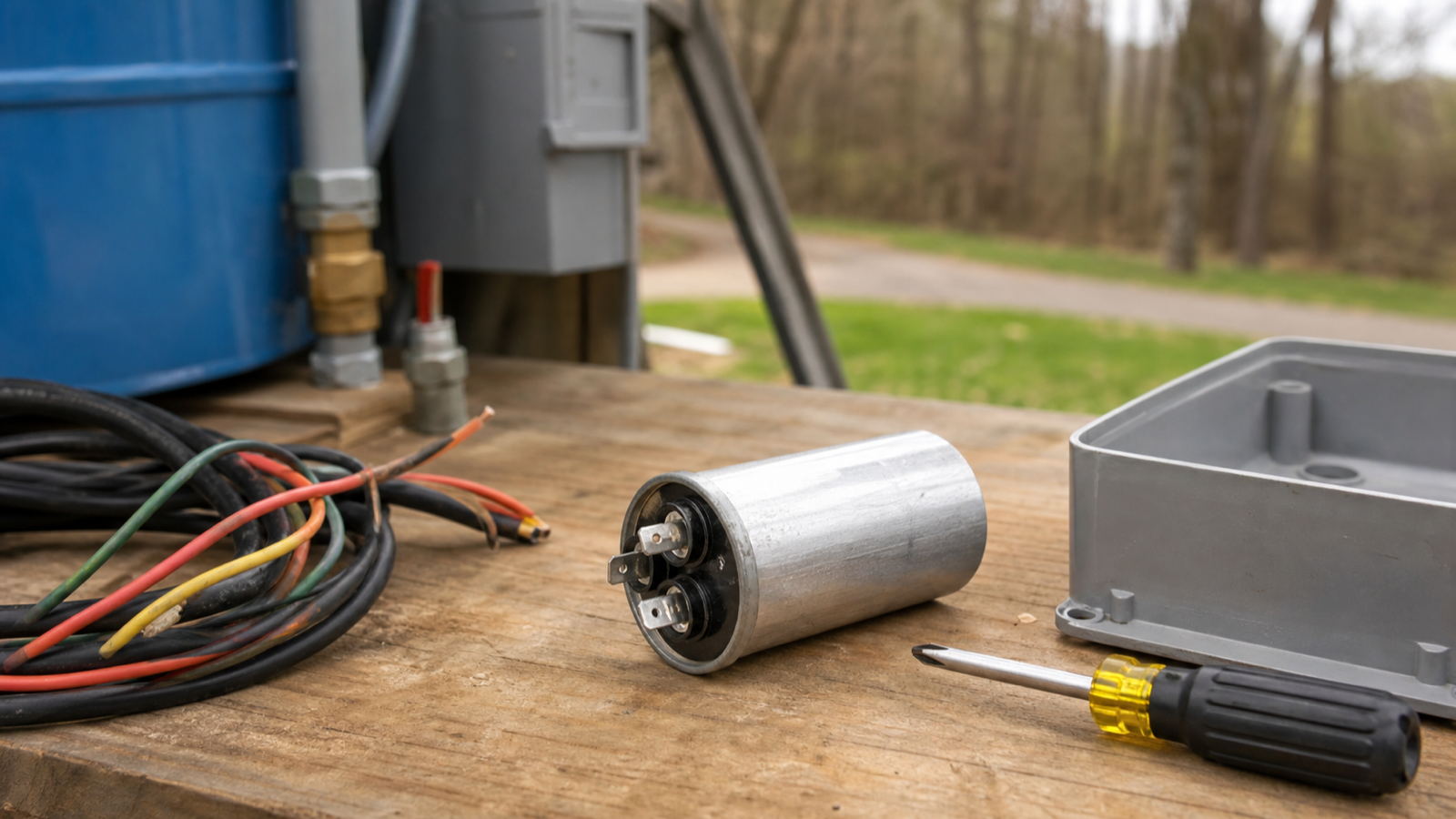
A capacitor is a small electrical component that stores energy and releases it in a quick burst. In a well system, it gives the pump motor the extra push it needs to start turning and, in some designs, helps it run efficiently. It is easy to overlook, yet a failed capacitor is a common reason a pump will not start.
Capacitors are found inside control boxes for many submersible pumps and inside the housings of jet pumps. Because they store an electrical charge, they can shock anyone who handles them without the right training, which is why they belong to a licensed provider.
How a capacitor helps the motor
Electric motors need a strong burst of energy to overcome inertia and begin spinning. A start capacitor stores electrical energy and then releases it at the moment of startup, effectively giving the motor a shove so it can get moving under load. Once the motor reaches speed, the start capacitor's job is largely done.
Some motors also use a run capacitor, which stays in the circuit while the motor operates and helps it run more smoothly and efficiently. Together, these capacitors help the pump start reliably and run without straining, which supports the life of the motor.
Think of the start capacitor as a coiled spring that releases all at once to break the motor free from a standstill. Without that stored energy at the right instant, even a healthy motor can sit and hum, drawing current but never turning, because it cannot overcome the initial load on its own.
Where capacitors live in a well system
In a three-wire submersible system, the start capacitor is housed in the above-ground control box along with the starting relay. This keeps the sensitive component accessible to a provider rather than sealed inside the well. In a two-wire submersible pump, by contrast, the starting components are built into the motor down in the well.
Jet pumps typically have their capacitor mounted on or inside the motor housing above ground. Regardless of location, the capacitor is a sealed electrical part that is not designed to be opened or serviced by a homeowner.
Signs a capacitor may have failed
- The pump hums or buzzes but does not actually start turning, a classic symptom of a start capacitor that can no longer deliver its burst of energy.
- The pump starts intermittently, working sometimes and failing others, which can reflect a capacitor that is weakening rather than fully dead.
- The breaker trips when the pump tries to start, since a struggling motor can draw excessive current when its starting help is gone.
- A visibly bulging, leaking, or discolored capacitor, which is a clear sign of failure that a provider should confirm and replace.
- A burning or overheated smell near the pump controls, which warrants shutting things down and calling a provider rather than investigating further.
Why capacitors are strictly provider territory
A capacitor can hold a stored electrical charge long after the power is turned off. Touching its terminals without safely discharging it first can cause a serious shock. Discharging and testing a capacitor requires specific tools and knowledge, so it is never a do-it-yourself task.
A licensed provider can safely test whether a capacitor is the cause of a pump that will not start and replace it correctly. If your pump hums, starts unreliably, or trips the breaker, request service and let a qualified provider handle the electrical components.
Related Well Pump Services
Upper Cumberland Well Pump is an independent referral service that helps connect property owners with local water-well and pump-service providers. Upper Cumberland Well Pump does not directly perform regulated well drilling, pump installation, pump repair or water-treatment work unless expressly stated. Provider licensing, qualifications, insurance, availability, pricing, scheduling and service terms must be confirmed directly with the provider.
Well Pump System Components — Questions
Can a bad capacitor stop my pump from starting?
Yes. A failed start capacitor is a common reason a motor hums but will not turn over, because it can no longer supply the burst of energy needed to start. A provider can test the capacitor to confirm it is the cause.
Is it safe to replace a capacitor myself?
No. Capacitors store an electrical charge even when the power is off and can deliver a dangerous shock. Discharging, testing, and replacing one should always be done by a licensed provider with the proper tools.
How long do well pump capacitors last?
Their lifespan varies with heat, usage, and electrical conditions, so there is no fixed number. Because a weak capacitor can strain the motor, having the electrical components checked during a well inspection can catch problems early.
Need Help With a Well Pump Problem?
Send the property location, a description of the problem, any recent changes in pressure or water flow, the location of the well head and several clear photographs of the visible system components for an initial service review.