Upper Cumberland Private Well Guide
What Well-System Records Should Transfer With a Property?
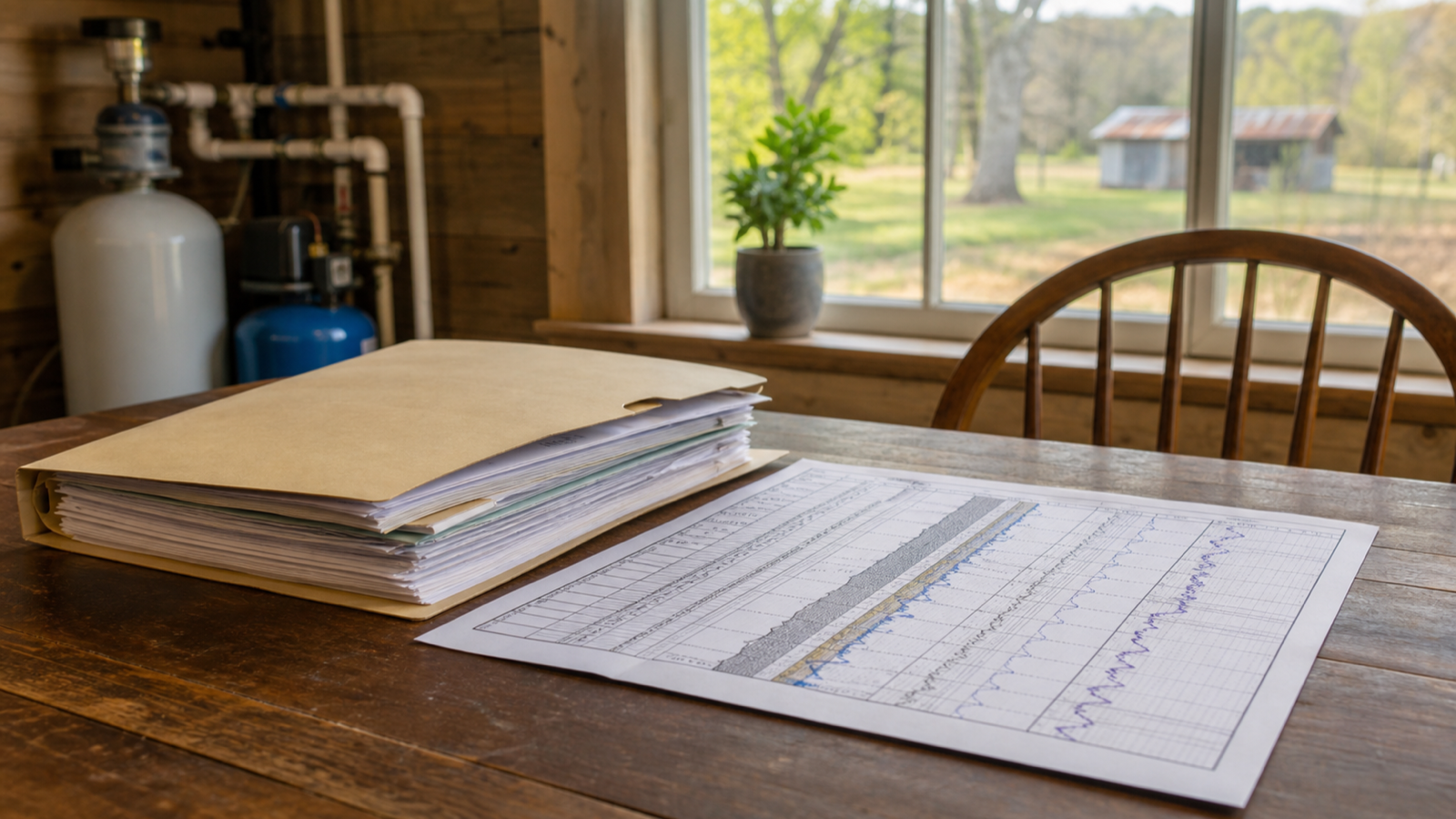
When rural property changes hands in the Upper Cumberland, the paperwork for the well is easy to overlook, yet it can be genuinely valuable to the next owner. Good records shorten the learning curve on a new well, guide future service, and help a provider work efficiently. Knowing what to gather, or to ask for, is worthwhile whether you are buying or selling.
This guide describes the well-system records that ideally transfer with a property and why each one matters. It is general guidance to help you organize information, not legal or transactional advice; a real estate professional can address disclosure requirements specific to your sale.
The foundational records
The most fundamental document is the well log or well completion report, which typically records when the well was drilled, how deep it is, and details of its construction. In Tennessee, drilled wells often have such a record, and it gives the next owner a baseline understanding of the well they are inheriting. Without it, much about the well remains guesswork.
Alongside the log, any documentation of the pump and pressure tank matters: the type, size, age, and installation date if known. These components have finite lifespans, so records of when they went in help the next owner anticipate service rather than being caught off guard.
Service history and water testing
A record of past service, from pump replacements to pressure switch and tank work, tells the next owner what has been done and whether any problem has recurred. A well that has had steady, documented maintenance is easier to trust than one with a blank history. Receipts and invoices from providers are useful even in informal form.
Water test results are equally important, especially in the Upper Cumberland's karst geology where quality can vary and shift after storms. Past results give the new owner a reference point and flag any issues that were being managed. Passing these along saves the next owner from starting entirely from scratch.
Records worth gathering and passing on
- The well log or completion report showing depth, drilling date, and construction details.
- Documentation of the pump and pressure tank, including type, size, age, and installation date where known.
- Service and repair history, including invoices and notes on any recurring problems and how they were resolved.
- Water testing results over time, which are especially valuable given the region's variable karst water quality.
- The locations of the well head, pressure tank, and main shutoff, plus notes on access, so the next owner is not left searching.
Organizing records for the next owner
If you are selling, gathering these documents into a single folder is a genuine courtesy to the buyer and can reflect well on how the property has been cared for. If you are buying, requesting them early lets you spot gaps and arrange a professional inspection where the record is thin. Either way, complete information reduces surprises.
Where records are missing, a licensed provider can help reconstruct some of the picture through an inspection. You can learn more on our well inspection page or connect with a provider through our request service page. Our guides on evaluating a well before buying and on questions to ask cover the surrounding steps.
Related Well Pump Services
Upper Cumberland Well Pump is an independent referral service that helps connect property owners with local water-well and pump-service providers. Upper Cumberland Well Pump does not directly perform regulated well drilling, pump installation, pump repair or water-treatment work unless expressly stated. Provider licensing, qualifications, insurance, availability, pricing, scheduling and service terms must be confirmed directly with the provider.
Upper Cumberland Private Well Guide — Questions
What is the most important well record to have?
The well log or completion report is the foundational document, since it records the well's depth, drilling date, and construction. It gives the next owner a baseline understanding that is hard to recover otherwise. Pump and tank documentation and water test results follow closely behind.
What if there is no well log for the property?
A missing well log is not unusual, but it removes an important part of the well's history, leaving depth and construction uncertain. In that case, a professional well inspection can help reconstruct some of the picture. Buyers should treat missing records as a reason for extra due diligence rather than an obstacle.
Should past water test results be passed to a buyer?
Yes. Past results give the new owner a reference point and reveal any water quality issues that were being managed, which is especially valuable in the Upper Cumberland's karst geology where quality can vary and shift after storms. Passing these along saves the buyer from starting with no history. New testing is still worthwhile at purchase.
Does service history really matter to a buyer?
It does, because a documented record of pump, tank, and switch work shows what has been done and whether any problem has recurred, making the system easier to trust. Even informal invoices and notes help. A well with a blank service history invites a closer professional inspection before the buyer relies on it.
Need Help With a Well Pump Problem?
Send the property location, a description of the problem, any recent changes in pressure or water flow, the location of the well head and several clear photographs of the visible system components for an initial service review.