Upper Cumberland Private Well Guide
Well-System Considerations for Cabins and Seasonal Homes
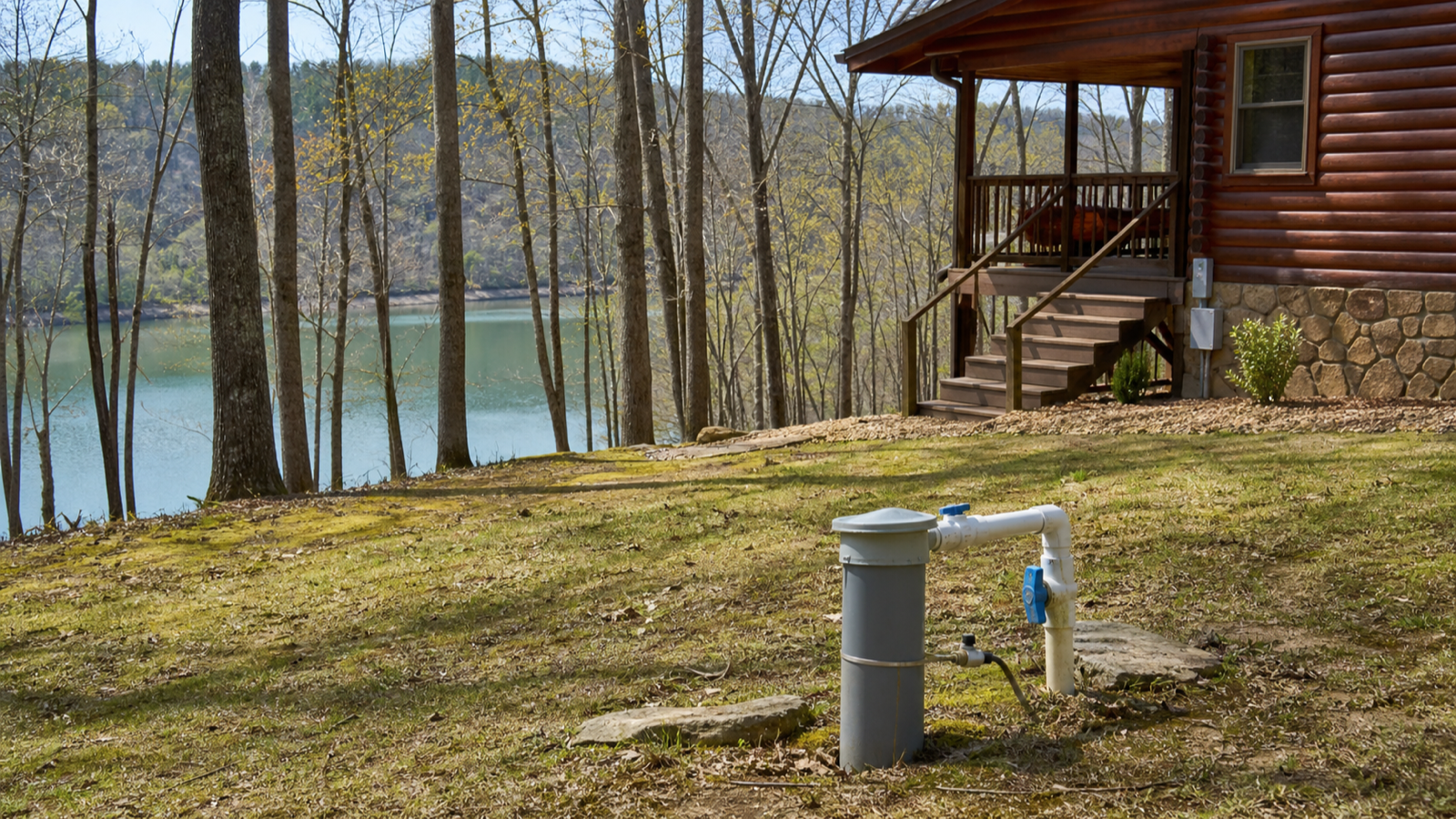
The Upper Cumberland is full of cabins and seasonal homes, many of them near Dale Hollow, Center Hill, and Cordell Hull lakes. These properties often rely on private wells, and a well that sits idle for weeks or months at a time faces different challenges than one in a full-time home. Planning for those differences keeps a seasonal system reliable.
This guide covers the main considerations for wells at cabins and part-time residences, from winter freeze risk to the effects of long idle periods. As a referral service, we do not perform the work; our goal is to help you plan and know when to bring in a licensed provider.
The challenge of a system that sits idle
A well system is generally happiest with regular, moderate use. When a cabin sits empty for long stretches, water sits in the pressure tank and plumbing, and small problems can develop unnoticed because no one is there to hear a cycling pump or spot a leak. A minor drip that would be caught quickly in a full-time home can run for weeks at a seasonal property.
Long idle periods can also allow water to become stale in the lines. Many seasonal owners run the taps for a while when they arrive to flush the system before use. Knowing your property's rhythm helps you decide how much attention the well needs between visits.
Winter and freeze protection
Because Upper Cumberland winters bring hard freezes and ice storms, a seasonal home closed for the cold months carries real freeze risk. Exposed pipes, pressure tanks in unheated spaces, and well houses can freeze and crack with no one present to notice until the thaw. For a property that will be empty in winter, having a provider properly winterize the system is often the safest choice.
If you visit occasionally through winter, keep any well house weathertight and consider provider-approved freeze protection. Never improvise a heat source near electrical or pressurized components. Our guide on preparing a rural well for freezing weather covers this in more detail.
Planning steps for seasonal owners
- Decide whether the property will be winterized or kept minimally heated, and arrange the appropriate approach with a licensed provider before cold weather arrives.
- Flush the system by running taps when you arrive after a long absence, so stale water clears before you use it for drinking or cooking.
- Have someone check on the property periodically, since a leak or pump problem can otherwise go unnoticed for a long time.
- Keep water quality in mind, as testing is worthwhile for any private well and especially after long idle periods in karst terrain.
- Schedule a periodic professional inspection so the system is checked even though it sees only light use.
Lake properties and access
Cabins near Dale Hollow, Center Hill, and Cordell Hull are often on steep, wooded lots with long or shared driveways, which can make service more involved. Planning ahead matters even more when a property is remote and only occupied part of the year, because arranging service on short notice can be harder.
A relationship with a local provider before you need one is valuable for a seasonal property. You can start on our request service page or review the towns we cover on our service area page. For access planning, our guides on steep property and rural access provide additional detail.
Related Well Pump Services
Upper Cumberland Well Pump is an independent referral service that helps connect property owners with local water-well and pump-service providers. Upper Cumberland Well Pump does not directly perform regulated well drilling, pump installation, pump repair or water-treatment work unless expressly stated. Provider licensing, qualifications, insurance, availability, pricing, scheduling and service terms must be confirmed directly with the provider.
Upper Cumberland Private Well Guide — Questions
Do wells work fine if a cabin sits empty for months?
Wells generally do best with regular, moderate use, and long idle periods can let small problems develop unnoticed since no one is present to catch a leak or a cycling pump. Flushing the system on arrival and having someone check the property periodically both help. A periodic professional inspection is also worthwhile for a lightly used system.
Should I winterize a seasonal home's well?
If the property will be empty through the Upper Cumberland's cold months, having a provider properly winterize the system is usually the safest choice, because exposed plumbing can freeze and crack with no one there to notice. If you visit occasionally, keep any well house weathertight and use only provider-approved freeze protection. Never improvise heat near electrical or pressurized parts.
Why should I run the taps when I arrive at my cabin?
After a long absence, water can sit stale in the pressure tank and plumbing, so running the taps for a while flushes the lines before you use the water for drinking or cooking. It also gives you a chance to confirm the system is working normally. If anything seems off, note it and contact a provider.
Is service harder for a remote lake cabin?
It can be, since lake cabins near Dale Hollow, Center Hill, and Cordell Hull are often on steep, wooded lots with long or shared driveways, and arranging service on short notice for a part-time property is harder. Building a relationship with a local provider before you need one helps. Planning access ahead of time makes any visit smoother.
Need Help With a Well Pump Problem?
Send the property location, a description of the problem, any recent changes in pressure or water flow, the location of the well head and several clear photographs of the visible system components for an initial service review.