Upper Cumberland Private Well Guide
Well Pump Service on Steep or Hard-to-Access Property
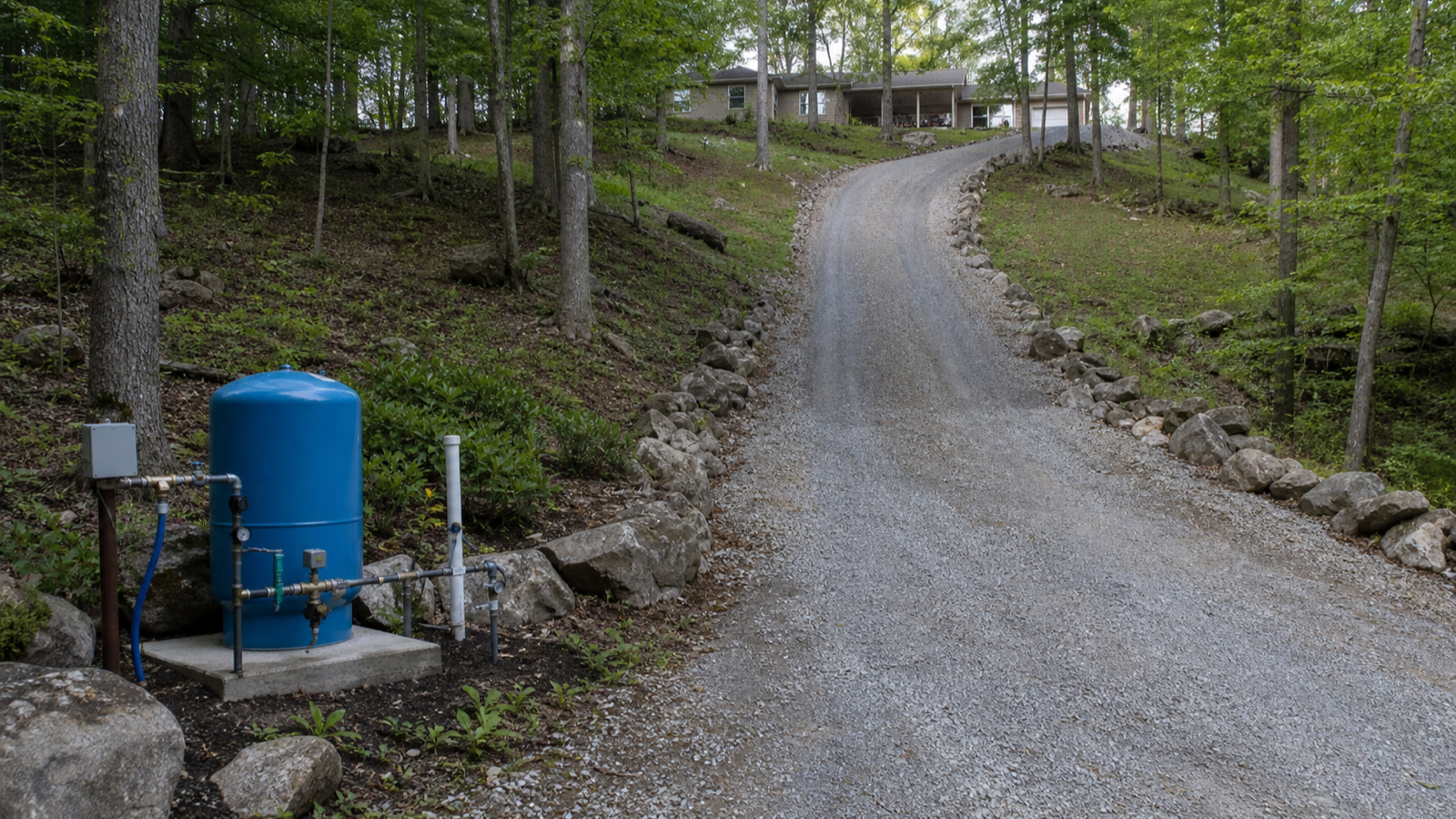
Much of the Upper Cumberland is steep and wooded. Homes perched on plateau ridges or tucked down hollows often sit at the end of long, narrow gravel driveways, and the well itself may be well away from the house on uneven ground. That terrain shapes how well pump service actually happens.
This guide explains why access matters for well work, what an owner can do to make service smoother, and how to think about these challenges when planning a repair. The physical work belongs to a licensed provider; your role is to understand and prepare the site.
Why access matters for well work
Servicing a submersible pump in a deep plateau well can require pulling a long string of pipe and equipment out of the borehole. That often means a service truck with a hoist needs to get close to the well head. On steep or heavily wooded lots common around Crossville and the plateau, simply positioning that equipment can be the hardest part of the job.
Long gravel driveways add their own considerations. Soft spots after rain, tight switchbacks, low tree limbs, and steep grades can all affect whether heavy equipment can reach the well safely. The more a provider knows about these conditions in advance, the better they can plan the right approach and equipment.
What you can do to prepare the site
- Clear a path to the well head by trimming low branches and moving vehicles, equipment, or stored items that could block a service truck.
- Note the driveway's condition, width, grade, and any soft or washed-out sections, and mention them when you request service so the provider brings suitable equipment.
- Mark the well head location clearly if it is hard to spot, especially if it sits away from the house or is partly hidden by brush.
- Point out any obstacles such as septic components, buried lines, retaining walls, or landscaping that a provider should avoid.
- Consider recent weather, since a driveway that is passable when dry may be too soft for heavy equipment after a plateau downpour.
Talking through access with a provider
When you request service for a hard-to-reach property, a clear description helps the provider decide what to bring and how much time to allow. Details like the distance from the driveway to the well head, whether a truck can turn around, and how steep the approach is all matter. Photos can be especially useful for conveying the terrain.
In some cases a provider may need alternative equipment or additional planning to reach a difficult well. Sharing the challenges honestly up front avoids surprises on the day of service and helps ensure the visit is productive rather than a scouting trip.
Planning for difficult sites
If your property is genuinely hard to access, it is worth planning maintenance rather than waiting for a failure. A pump problem in the middle of an ice storm, when your driveway is slick and equipment cannot climb the grade, is far harder to handle than a scheduled visit in good weather.
Periodic inspections during favorable conditions give a provider a chance to assess your system and your access before an emergency forces the issue. You can begin on our request service page, and owners near the service hubs may find our well pump repair pages for Crossville and Livingston useful starting points.
Related Well Pump Services
Upper Cumberland Well Pump is an independent referral service that helps connect property owners with local water-well and pump-service providers. Upper Cumberland Well Pump does not directly perform regulated well drilling, pump installation, pump repair or water-treatment work unless expressly stated. Provider licensing, qualifications, insurance, availability, pricing, scheduling and service terms must be confirmed directly with the provider.
Upper Cumberland Private Well Guide — Questions
Why does my steep, wooded lot make well service harder?
Servicing a deep well often requires a truck with a hoist to get close to the well head to pull the pump and pipe. Steep grades, narrow gravel driveways, soft ground, and overhanging limbs can all make positioning that equipment difficult. Describing these conditions in advance lets a provider plan the right approach.
What can I do to make service easier on a hard-to-access property?
You can clear a path to the well head, trim low branches, move vehicles and stored items, mark the well location, and point out obstacles like septic components or buried lines. Describing your driveway's grade and condition when you request service also helps. These steps let a provider arrive prepared rather than surprised.
Should I mention my driveway condition when requesting service?
Yes. Width, grade, sharp turns, low limbs, and soft or washed-out sections all affect whether heavy equipment can reach your well. Mentioning recent weather matters too, since a plateau downpour can leave a passable driveway too soft for a truck. The more detail you share, the more productive the visit.
Is it better to schedule service before a problem on a remote property?
For hard-to-access properties, planned maintenance in good weather is usually far easier than an emergency during an ice storm or after heavy rain. A scheduled inspection lets a provider assess both your system and your access ahead of time. That planning can prevent a difficult repair under the worst possible conditions.
Need Help With a Well Pump Problem?
Send the property location, a description of the problem, any recent changes in pressure or water flow, the location of the well head and several clear photographs of the visible system components for an initial service review.