Rural Well and Pump Projects
Well Houses: Access, Ventilation and Freeze Protection
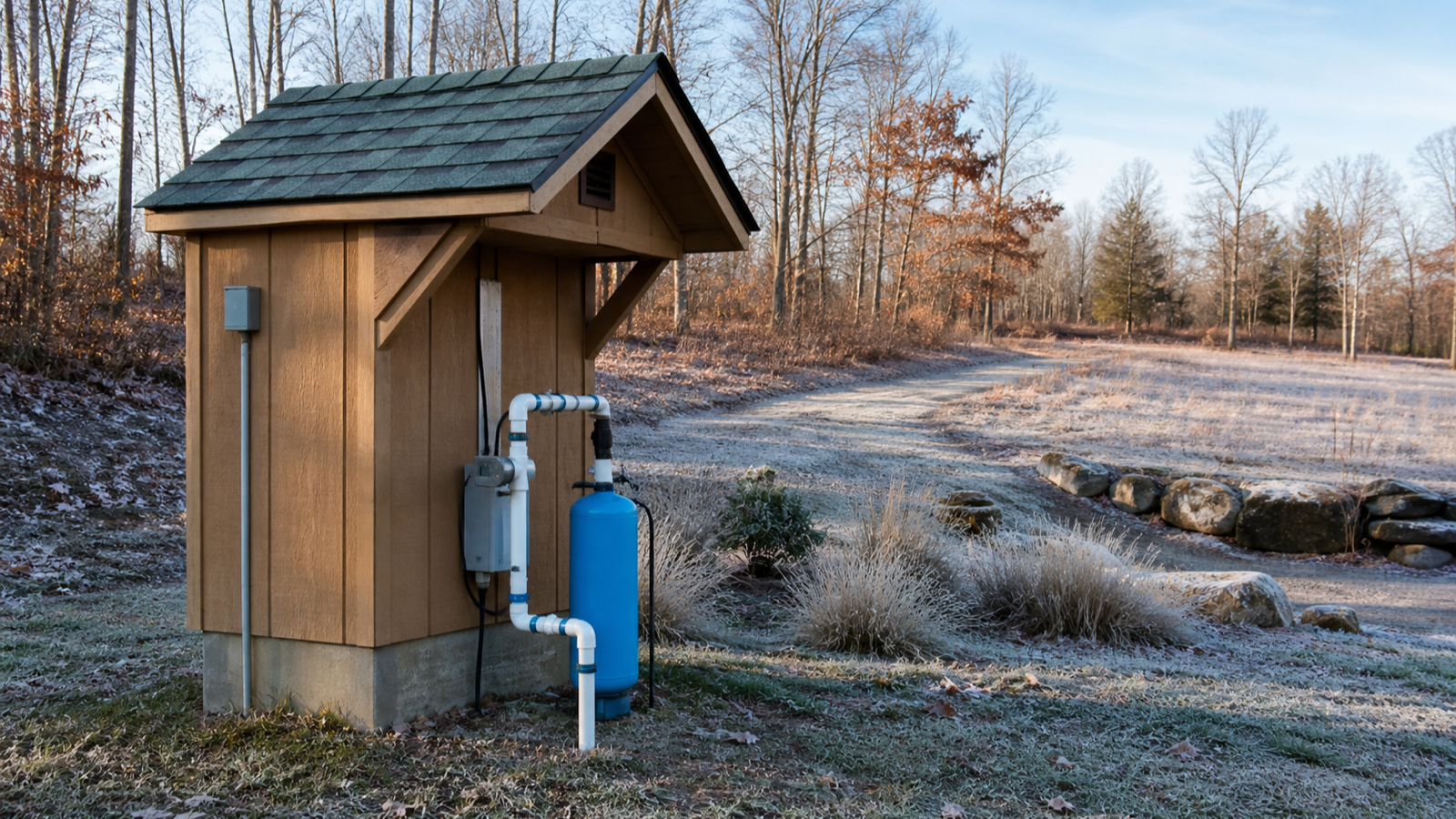
A well house is a small structure built over or around the wellhead and pressure equipment, common on rural Upper Cumberland properties where hard winters make freeze protection essential. Done well, it shelters the pressure tank and exposed components from the cold, keeps them accessible for service, and gives the equipment a dry, organized home. Done poorly, it can trap moisture or still allow freezing.
This guide covers the three things a good well house has to balance: access, ventilation and freeze protection, and how to plan for each.
What a Well House Is For
The primary job of a well house is protecting vulnerable equipment, above all from freezing. The pressure tank, exposed piping and controls are all susceptible to hard freezes, and a well house creates a sheltered space where these can be kept above freezing more easily than out in the open. In a region with reliably cold winters, that protection is genuinely valuable.
A well house also keeps equipment dry, organized and out of the weather, which tends to extend its service life. But it only delivers these benefits if it is designed with the equipment's needs in mind rather than thrown up as an afterthought.
Balancing Freeze Protection and Ventilation
Freeze protection and ventilation can seem to pull in opposite directions, and balancing them is the heart of a good well house. Sealing the structure tightly keeps cold out, but too little airflow can trap humidity, encouraging condensation, rust and even mold around the equipment. Some controlled ventilation is needed to manage moisture without letting the space freeze.
In the coldest weather, supplemental heat is sometimes used to keep a well house above freezing. Any heat source belongs in the hands of qualified professionals to plan safely, since heat, moisture and electrical equipment in a small space require care.
Planning a Functional Well House
- Enough interior room and a usable door so a provider can reach and service the pressure tank, controls and piping without dismantling the structure.
- Insulation appropriate to the region's hard freezes, protecting the pressure tank and exposed lines from the cold.
- Controlled ventilation that manages humidity and condensation without letting the interior drop below freezing.
- A safe means of supplemental heat where needed for the coldest spells, planned and installed by qualified professionals.
- A dry, well-drained floor and site so water does not collect around the equipment, since standing moisture shortens equipment life.
Access for Service Matters
It is easy to focus on protection and forget that the equipment inside will eventually need service. A well house so cramped that a provider cannot reach the pressure tank or controls, or so poorly placed that a rig cannot get near for pump work, undermines its own purpose. Planning generous access from the start saves difficulty later.
If you are building or improving a well house, or want an existing one and its equipment evaluated, a provider can advise on both the equipment and the structure's fit. You can arrange an assessment through /well-inspection/ or request service at /request-service/.
Related Well Pump Services
Upper Cumberland Well Pump is an independent referral service that helps connect property owners with local water-well and pump-service providers. Upper Cumberland Well Pump does not directly perform regulated well drilling, pump installation, pump repair or water-treatment work unless expressly stated. Provider licensing, qualifications, insurance, availability, pricing, scheduling and service terms must be confirmed directly with the provider.
Rural Well and Pump Projects — Questions
What is the main purpose of a well house?
Its primary purpose is protecting vulnerable equipment from freezing, since the pressure tank, exposed piping and controls are all susceptible to hard freezes. A well house creates a sheltered space that is easier to keep above freezing than the open air. It also keeps equipment dry and organized, which tends to extend its life.
Does a well house need ventilation if I want it to stay warm?
Yes, some controlled ventilation is important even in a structure built for warmth. Without airflow, humidity can build up and cause condensation, rust and mold around the equipment. The goal is to manage moisture while still keeping the interior above freezing, which is a balance worth planning deliberately.
Can I heat a well house to prevent freezing?
Supplemental heat is sometimes used for the coldest spells, but because it combines heat, moisture and electrical equipment in a small space, it should be planned and installed by qualified professionals rather than improvised. A provider can advise on a safe approach suited to your well house and equipment.
How much room should a well house have inside?
Enough for a provider to reach and service the pressure tank, controls and piping without dismantling the structure, and positioned so equipment like a rig can get near for pump work if needed. A cramped or poorly placed well house makes service difficult and undermines its own purpose. Planning generous access from the start avoids that.
Need Help With a Well Pump Problem?
Send the property location, a description of the problem, any recent changes in pressure or water flow, the location of the well head and several clear photographs of the visible system components for an initial service review.