Rural Well and Pump Projects
Well-Water Systems for Cabins and Seasonal Properties
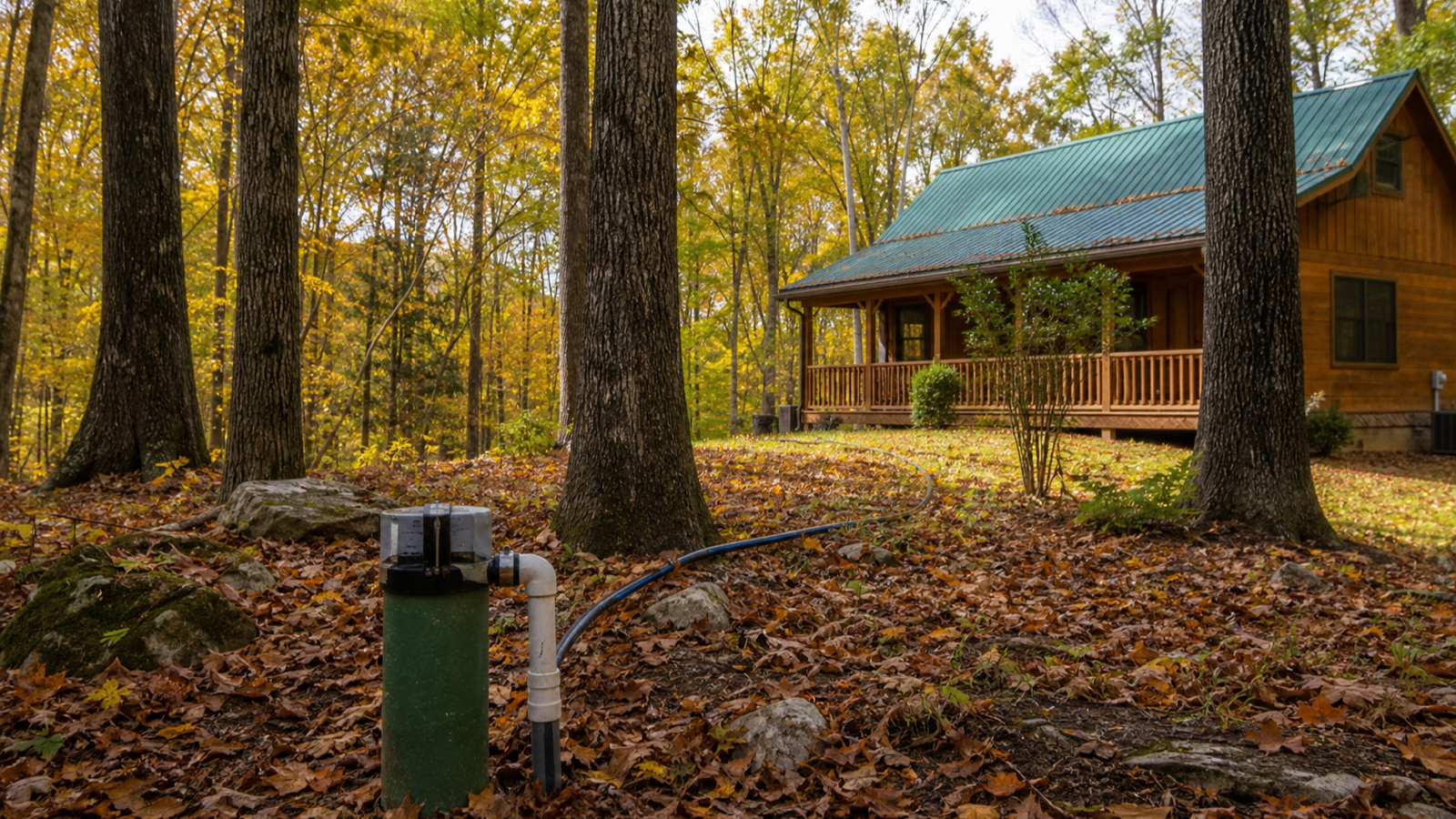
A well that serves a cabin or seasonal property faces a different set of demands than one running a full-time home. Long stretches of no use, followed by bursts of activity when you arrive, put unique stress on the system, and the cold winters common across the Cumberland Plateau add real freeze risk to anything left sitting.
This guide covers the planning considerations specific to intermittent-use properties, so your water is ready when you are and protected while you are away.
Intermittent Use Changes the Equation
When a property sits empty for weeks or months, water stands still in the pipes, the pressure tank and sometimes the well itself. Stagnant water can develop taste or quality issues, and components that rarely cycle can behave unpredictably at startup. Planning for periodic flushing and a straightforward startup routine helps keep water fresh and the system dependable.
Cabins also tend to have spiky demand. You may arrive with a group and run several fixtures at once after a long quiet period. A provider can help you plan a system that handles those peaks even though average use is low.
Freeze Protection Is Central
For seasonal properties, freeze protection is not an afterthought; it is often the single most important consideration. A cabin without heat during a hard Upper Cumberland winter leaves pipes, the pressure tank and exposed lines exposed to freezing, which can cause costly damage discovered only on your next visit.
Winterizing, which typically involves draining vulnerable lines and protecting components, is a common approach for cabins closed over winter. A qualified provider can set up your system so this process is manageable and advise which parts need attention.
Planning Points for Seasonal Wells
- A reliable, simple startup sequence so water and pressure return predictably after the property has been closed, without hands-on work on pressurized or electrical parts.
- Winterizing options that let vulnerable lines be drained or protected before hard freezes, matched to how the cabin is used through the cold months.
- A protected enclosure or insulation for the pressure tank and exposed piping, since these are among the most freeze-vulnerable components on a seasonal setup.
- Water-quality checks after long idle periods, because stagnant water can affect taste and clarity even when the source is sound.
- Clear access to the wellhead so a provider can reach the equipment when you schedule seasonal service or troubleshooting.
Keeping a Seasonal System Dependable
Because you are not on site to notice small problems as they develop, seasonal properties benefit from scheduled attention. A periodic inspection, ideally timed around opening or closing the cabin, can catch wear before it becomes a failure that greets you on arrival. You can learn more about evaluations at /well-inspection/.
If your cabin's system needs assessment or seasonal service, you can request help at /request-service/ to connect with a provider familiar with intermittent-use properties in the region.
Related Well Pump Services
Upper Cumberland Well Pump is an independent referral service that helps connect property owners with local water-well and pump-service providers. Upper Cumberland Well Pump does not directly perform regulated well drilling, pump installation, pump repair or water-treatment work unless expressly stated. Provider licensing, qualifications, insurance, availability, pricing, scheduling and service terms must be confirmed directly with the provider.
Rural Well and Pump Projects — Questions
How should I protect a cabin well over winter?
Freeze protection usually combines draining or insulating vulnerable lines, protecting the pressure tank, and shielding exposed components before hard freezes arrive. The right approach depends on whether the cabin keeps any heat and how it is used through winter. A qualified provider can set up a manageable winterizing routine and advise what needs attention each season.
Is the water safe after the cabin has sat empty for months?
Water that has stood still can develop taste, odor or clarity changes even when the well itself is sound. Flushing the system on arrival and testing water quality after long idle periods is a sensible habit. If you notice persistent issues, a provider can help identify the cause.
Do seasonal properties need a different kind of pump?
Not necessarily a different pump, but the system should account for spiky, occasional demand and easy winterizing rather than steady daily use. Discussing your usage pattern with a provider helps them plan a setup that starts reliably after downtime and tolerates the freeze-thaw cycles of the plateau.
Need Help With a Well Pump Problem?
Send the property location, a description of the problem, any recent changes in pressure or water flow, the location of the well head and several clear photographs of the visible system components for an initial service review.