Upper Cumberland Private Well Guide
Preparing a Well System for Increased Household Demand
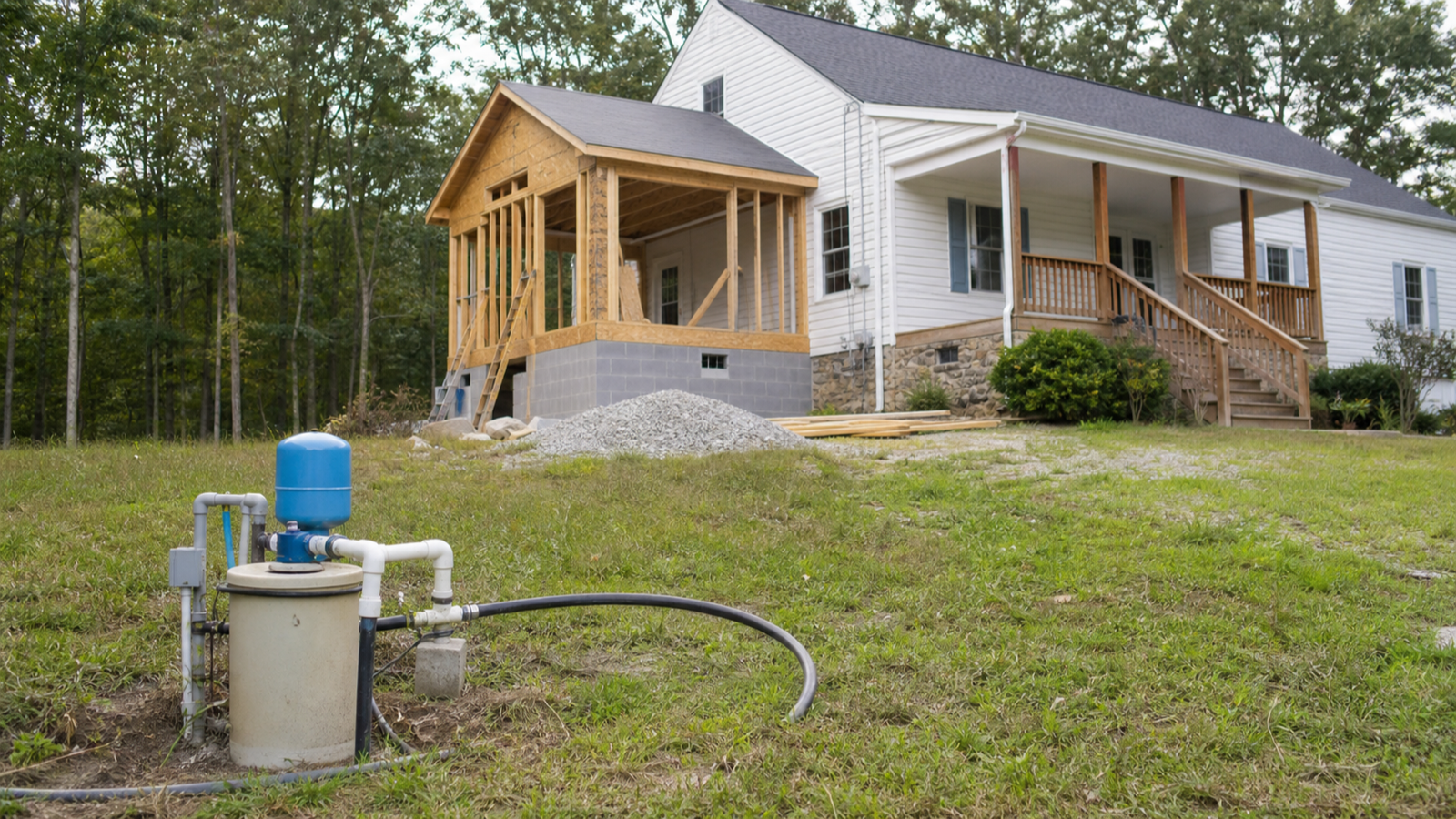
A well system that has served a household comfortably can feel strained when demand grows. Adding bathrooms, installing new appliances, welcoming a larger family, or building an outbuilding all increase how much water the system must deliver, sometimes all at once. Planning ahead helps a well keep pace with a changing household.
This guide covers what changes when demand rises and how Upper Cumberland owners can prepare. It focuses on planning and recognizing limits, not on modifying equipment yourself; sizing and system changes belong to a licensed provider.
How rising demand affects a well system
Every well has a yield, the rate at which it can supply water, and every pump and pressure tank has a capacity. When a household uses more water, especially several fixtures at once, it draws closer to those limits. You might notice pressure dropping when laundry, a shower, and a dishwasher run together, or the pump running much more often than it used to.
In the Upper Cumberland's karst geology, well yield varies widely from property to property, so two similar homes can have very different capacity to absorb added demand. A system that was comfortable for a couple may need evaluation before it serves a full house with more bathrooms and daily laundry.
Common triggers for higher demand
Several changes commonly push demand upward. Adding bathrooms or a laundry room, installing high-use appliances, converting a seasonal cabin to a full-time home, or adding irrigation and outdoor watering all raise the load. A growing family simply uses more water day to day, and guests during holidays or lake season can create short bursts of heavy demand.
Outbuildings and livestock add demand spread across the property as well. When several of these changes stack up, a system that once had comfortable margin can find itself working near its limits, which is when problems tend to surface.
Planning steps before demand grows
- Take stock of the changes you are planning, from added bathrooms and appliances to new outbuildings or irrigation, before the demand actually arrives.
- Note current symptoms such as pressure dropping under simultaneous use or the pump cycling more often, which can signal you are approaching the system's limits.
- Have a licensed provider evaluate whether your well yield, pump, and pressure tank suit the demand you expect rather than assuming the current setup will keep up.
- Consider whether water storage or system changes are warranted, and let a provider handle any sizing decisions.
- Factor in the region's variable karst yield, since a plan that works for one property may not fit another with different water availability.
Getting a professional evaluation
Because well yield, pump capacity, and pressure tank size all interact, added demand is best assessed as a whole rather than by swapping a single part. A licensed provider can determine whether your existing system can absorb the change or whether adjustments are warranted, and can size any changes appropriately for your well.
Planning before a renovation or a growing household stretches the system is far easier than reacting to pressure problems after the fact. You can begin on our request service page, and our guide on planning water service across large acreage covers the related question of serving multiple points across a property.
Related Well Pump Services
Upper Cumberland Well Pump is an independent referral service that helps connect property owners with local water-well and pump-service providers. Upper Cumberland Well Pump does not directly perform regulated well drilling, pump installation, pump repair or water-treatment work unless expressly stated. Provider licensing, qualifications, insurance, availability, pricing, scheduling and service terms must be confirmed directly with the provider.
Upper Cumberland Private Well Guide — Questions
How do I know if my well can handle more demand?
Watch for signs that you are near the system's limits, such as pressure dropping when several fixtures run at once or the pump cycling more often than it used to. Because karst well yield varies widely across the Upper Cumberland, a licensed provider is best placed to evaluate whether your well, pump, and tank suit your expected demand. It is worth assessing before demand actually grows.
Will adding a bathroom overload my well?
Adding a bathroom increases demand, particularly when multiple fixtures run at the same time, but whether it overloads the system depends on your well's yield and your pump and tank capacity. A provider can evaluate whether your setup has the margin to absorb the change. Planning before the renovation is easier than addressing pressure problems afterward.
Does converting a seasonal cabin to full-time use affect the well?
Yes. A well that comfortably served a weekend cabin faces much heavier daily demand as a full-time home with regular laundry, showers, and appliance use. That shift can push a modestly sized system near its limits. A licensed provider can evaluate whether the existing well and pump suit full-time occupancy before you rely on it.
Should I upgrade the pump myself to handle more water?
No. Sizing and installing pump or tank changes involves matching equipment to the well's yield and the home's demand, along with electrical and pressurized components, which is work for a licensed provider. Swapping a single part without evaluating the whole system can create new problems. Let a professional assess and size any changes.
Need Help With a Well Pump Problem?
Send the property location, a description of the problem, any recent changes in pressure or water flow, the location of the well head and several clear photographs of the visible system components for an initial service review.