Upper Cumberland Private Well Guide
Planning Water Service Across Large Rural Acreage
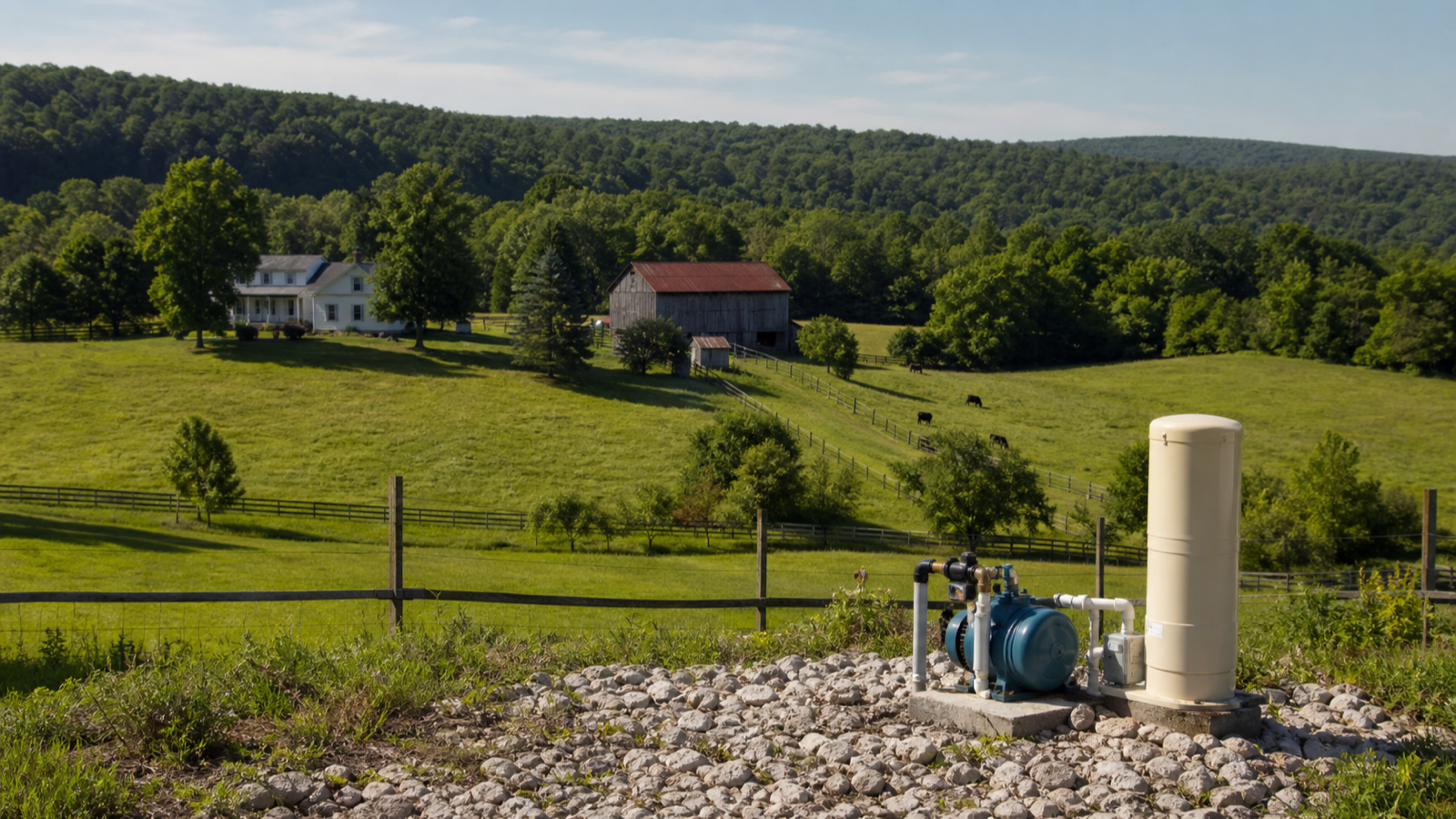
Large rural tracts are common across the Upper Cumberland, and moving well water across many acres to a house, barn, shop, or distant pasture involves more planning than a compact suburban lot. Distance, elevation change, and multiple points of use all shape how a system should be designed and maintained.
This guide covers the considerations that come with delivering water across substantial acreage in counties like Overton, White, and Clay. It is meant to help owners plan and ask informed questions; the design and installation work belongs to licensed providers.
Distance, elevation, and pressure
The farther water has to travel and the more it has to climb, the harder a system works to deliver usable pressure at the far end. On the rolling and sometimes steep terrain of the Highland Rim and plateau, a barn or cabin uphill from the well may see noticeably lower pressure than the main house unless the system is designed with that in mind.
Serving several points spread across acreage can also mean competing demands. Running livestock waterers, irrigation, and household fixtures at the same time draws more than a single-point system, and a well and pump sized only for a house may struggle when spread across many uses. A provider can help evaluate whether your system matches the demand.
Serving outbuildings and livestock
Barns, shops, greenhouses, and livestock watering points each add demand and distance. Freeze protection becomes a bigger concern too, because long runs of line to outbuildings and frost-free hydrants in pastures are exposed to the Upper Cumberland's hard winters. These lines need to be planned with both flow and freeze risk in mind.
Livestock in particular need a dependable supply, since animals require water daily regardless of weather or outages. Owners with livestock often think carefully about backup water and power so a pump problem does not leave animals without water during a storm.
Planning considerations for acreage
- Map where water is needed now and where you may want it later, so the system can be planned for future outbuildings or pasture points rather than patched repeatedly.
- Account for elevation changes across the property, since uphill points of use can lose pressure without proper system design.
- Consider total simultaneous demand across the house, barn, and any irrigation or livestock use rather than looking at the house alone.
- Plan freeze protection for long runs of line and any pasture hydrants, since these are exposed to hard plateau winters.
- Think about backup water storage and power, especially where livestock depend on a continuous supply during outages.
Working with a provider on a whole-property view
Because the pieces interact, it helps to look at the whole property rather than solving one point of use at a time. A licensed provider can assess whether your existing well and pump are suited to the demands you are placing on them and advise on how to serve additional points reliably.
If you are expanding use, adding a barn, or noticing pressure problems at distant points, a professional evaluation is a sound first step. You can begin on our request service page, and our guide on preparing a well system for increased household demand covers the closely related question of growing usage.
Related Well Pump Services
Upper Cumberland Well Pump is an independent referral service that helps connect property owners with local water-well and pump-service providers. Upper Cumberland Well Pump does not directly perform regulated well drilling, pump installation, pump repair or water-treatment work unless expressly stated. Provider licensing, qualifications, insurance, availability, pricing, scheduling and service terms must be confirmed directly with the provider.
Upper Cumberland Private Well Guide — Questions
Why is my barn's water pressure lower than the house?
Distance and elevation both reduce pressure at the far end of a system, so a barn that sits uphill or a long way from the well may see noticeably lower pressure than the main house. This can often be addressed through proper system design. A licensed provider can evaluate whether your setup suits the spread of uses across your acreage.
Can one well serve a house, barn, and livestock?
Many rural properties do serve multiple points from one well, but it depends on the well's yield and the pump's capacity relative to the total simultaneous demand. A system sized only for a house may struggle when spread across livestock, irrigation, and outbuildings. A provider can help determine whether your well matches your full set of uses.
How do I protect long water lines to outbuildings in winter?
Long runs of line to barns and pasture hydrants are exposed to the Upper Cumberland's hard freezes, so they need to be planned with freeze protection in mind, including properly installed frost-free hydrants. A licensed provider can advise on protection suited to your layout. Planning this in advance is far easier than repairing a burst line in winter.
Should I plan for future water needs on my acreage now?
Mapping where you may want water later, such as a future barn or pasture point, lets the system be planned once rather than patched repeatedly as needs grow. Accounting for elevation and total demand up front avoids pressure problems down the road. A provider can help design with future expansion in mind.
Need Help With a Well Pump Problem?
Send the property location, a description of the problem, any recent changes in pressure or water flow, the location of the well head and several clear photographs of the visible system components for an initial service review.