Rural Well and Pump Projects
Planning Well Water for a New Rural Home
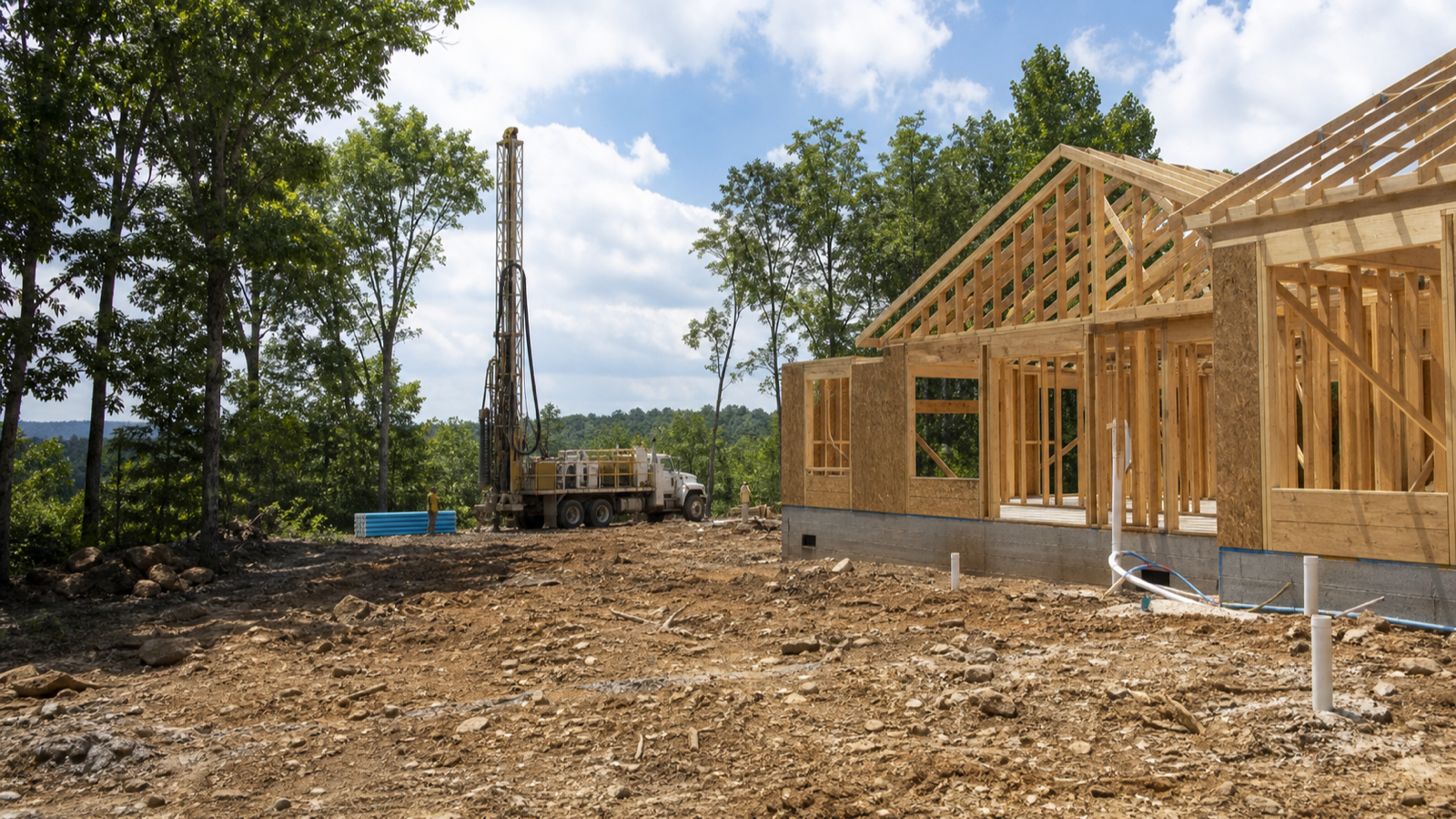
When you build on rural land, water is one of the first systems to plan and one you cannot take for granted. Unlike a lot with municipal service, a new rural home in the Upper Cumberland usually depends on a private well, and the decisions you make early about siting, drilling and sizing ripple through the entire project.
This guide helps you sequence the water side of a new build so the pieces come together in the right order, with the right providers, and without costly surprises.
Water Comes Early in the Sequence
It is tempting to focus on the house first, but water infrastructure benefits from early attention. You need to know a well can be drilled and will yield enough water before committing to a home design and location. Confirming a viable water source early protects the whole project, since a home is only as usable as its water supply.
On the Cumberland Plateau, wells are often deep, and yield can vary across a property. A licensed well driller can advise on siting and what to expect, which is information you want before finalizing where the house sits.
Siting the Well Thoughtfully
Where the well goes affects everything downstream. It should be accessible for the drilling rig and for future service, set a safe distance from septic and other contamination sources, and positioned to keep the run to the house reasonable. A well placed far from the home, or at a big elevation difference, adds cost and complexity to the pump and piping.
Coordinating well siting with your septic plan, driveway and home footprint early avoids conflicts that are expensive to fix later. These decisions are best made with input from the professionals handling each system.
Planning Steps for a New Build
- Confirm a viable water source through a licensed well driller before finalizing the home's location and design, since yield can vary across a property.
- Site the well for rig access, future service access and safe separation from septic and other contamination sources.
- Plan the pump, pressure tank and any storage together so the components are compatible and sized for your household's expected demand.
- Coordinate trenching for water lines and electrical to the wellhead with the broader site work to avoid rework.
- Build in freeze protection from the start, given the hard winters in the region, rather than retrofitting it later.
Coordinating the Providers
A new rural water system involves distinct phases: drilling the well, then selecting and installing the pump and pressure system, then tying it into the home's plumbing. Water well drilling is handled by a licensed driller, and you can read about that phase at /water-well-drilling/. Pump selection and installation follow, and are covered at /well-pump-installation/.
Sequencing these with your general timeline keeps the project moving. When you are ready to plan the water side of your build, you can request service at /request-service/ to connect with providers who work on new rural properties.
Related Well Pump Services
Upper Cumberland Well Pump is an independent referral service that helps connect property owners with local water-well and pump-service providers. Upper Cumberland Well Pump does not directly perform regulated well drilling, pump installation, pump repair or water-treatment work unless expressly stated. Provider licensing, qualifications, insurance, availability, pricing, scheduling and service terms must be confirmed directly with the provider.
Rural Well and Pump Projects — Questions
What should I plan first, the house or the well?
Confirm a viable water source early, ideally before finalizing the home's location and design. Because well yield can vary across a property and plateau wells are often deep, knowing water is available protects the whole project. A licensed well driller can advise on siting and expected yield before you commit.
Where should the well go on my new property?
The well should be accessible for the drilling rig and future service, set a safe distance from septic and other contamination sources, and positioned to keep the run to the house reasonable. Coordinating its placement with your septic, driveway and home footprint early avoids expensive conflicts. Professionals handling each system can help you align these decisions.
Can I plan the pump before the well is drilled?
You can plan in general terms, but final pump selection depends on the well's actual depth, water level and yield, which are known only after drilling. It is wise to discuss expectations with providers early while leaving the specifics until the well is in. This keeps the pump properly matched to the water source.
How do the different providers fit together on a new build?
A new water system usually moves through drilling, then pump and pressure-system installation, then connection to the home's plumbing. A licensed well driller handles the well, while pump specialists handle the equipment. Coordinating these phases with your build timeline keeps the project on track.
Need Help With a Well Pump Problem?
Send the property location, a description of the problem, any recent changes in pressure or water flow, the location of the well head and several clear photographs of the visible system components for an initial service review.