Rural Well and Pump Projects
Well Pump Planning for a Rural Home
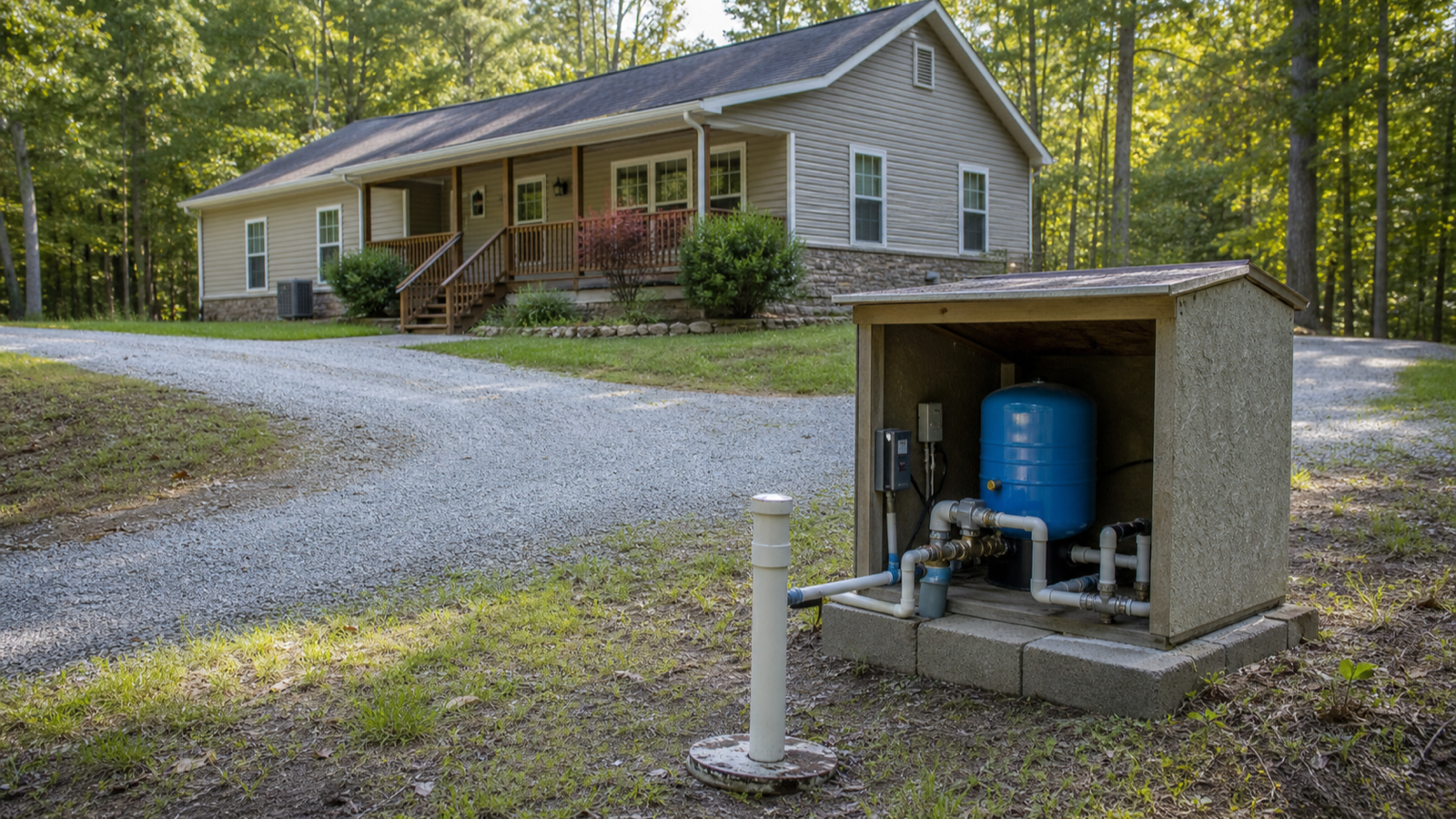
Planning a well pump for a rural home involves more than picking equipment off a shelf. On acreage across the Upper Cumberland, the depth of your well, the layout of your property and the way your household uses water all shape which system will serve you reliably for years. Thinking through these factors early tends to prevent the frustration of an undersized or mismatched setup.
This guide walks through the planning considerations that matter most for a rural residence, so you can have an informed conversation with a licensed provider before any work begins.
Start With How Your Household Uses Water
The first question in any pump plan is demand. A home with several bathrooms, a laundry, a dishwasher and outdoor spigots places different demands on a system than a small household. Peak demand, meaning the moments when multiple fixtures run at once, often matters more than total daily use, because a pump has to keep up when everyone is drawing water in the morning.
It also helps to think ahead. If you may add a bathroom, irrigate a garden or fill a stock tank later, mentioning that to your provider lets them plan for headroom rather than sizing tightly to today's needs.
Well Depth and Terrain Shape the System
Deep wells are common across the Cumberland Plateau, and depth directly affects the type and capacity of pump that can lift water reliably to the surface and through the home. A submersible pump set deep in the casing behaves very differently from a shallow-well setup, and the vertical distance from the pump to your fixtures influences the pressure you will experience.
Terrain matters too. If your home sits uphill from the well, or fixtures are spread across a sloping lot, the elevation change adds to what the pump must overcome. A qualified well-service provider can measure these factors rather than estimate them.
Key Factors to Discuss Before Work Begins
- Static and pumping water levels in your well, which help determine the pump capacity and setting depth appropriate for your property.
- The distance and elevation between the well, the pressure tank and the home, since long or uphill runs affect both sizing and pressure delivery.
- Whether a conventional pressure tank or a constant-pressure system better suits your comfort expectations and daily water patterns.
- Electrical supply at the wellhead, including the condition and capacity of existing wiring, which a licensed provider should evaluate rather than a homeowner.
- Freeze protection for exposed lines and the pressure tank, which is essential given the hard winters common in the region.
Coordinating the Project
A rural well project often involves several moving parts: the well itself, the pump and controls, the pressure tank, and the plumbing that carries water into the home. Coordinating these through experienced professionals keeps the pieces compatible. If you are drilling a new well, a licensed well driller handles that phase, while pump selection and installation follow.
When you are ready, you can request well pump service at /request-service/ to connect with a provider who can assess your property and recommend a system suited to your home and land.
Related Well Pump Services
Upper Cumberland Well Pump is an independent referral service that helps connect property owners with local water-well and pump-service providers. Upper Cumberland Well Pump does not directly perform regulated well drilling, pump installation, pump repair or water-treatment work unless expressly stated. Provider licensing, qualifications, insurance, availability, pricing, scheduling and service terms must be confirmed directly with the provider.
Rural Well and Pump Projects — Questions
How do I know what size pump my rural home needs?
Pump sizing depends on your well's depth and water level, the elevation and distance to your home, and your household's peak water demand. Rather than guessing, a licensed provider can measure these factors and match a pump to them. Sharing any future plans, such as adding fixtures or irrigation, helps size the system with room to grow.
Is a constant-pressure system worth considering for a rural home?
Constant-pressure systems can smooth out the pressure swings that some households notice with conventional setups, which many owners appreciate when multiple fixtures run at once. Whether it fits your situation depends on your water use and preferences. You can learn more at /constant-pressure-well-pump-systems/.
Should I plan for freeze protection?
Yes. Winters in the Upper Cumberland bring hard freezes, and exposed lines, pressure tanks and wellhead components can be vulnerable. Planning insulation, heat measures or a protected enclosure early is far easier than reacting after a freeze. A qualified provider can advise on suitable measures for your layout.
Need Help With a Well Pump Problem?
Send the property location, a description of the problem, any recent changes in pressure or water flow, the location of the well head and several clear photographs of the visible system components for an initial service review.