Well Pump Problems and Troubleshooting
Common Pressure-Switch Problems
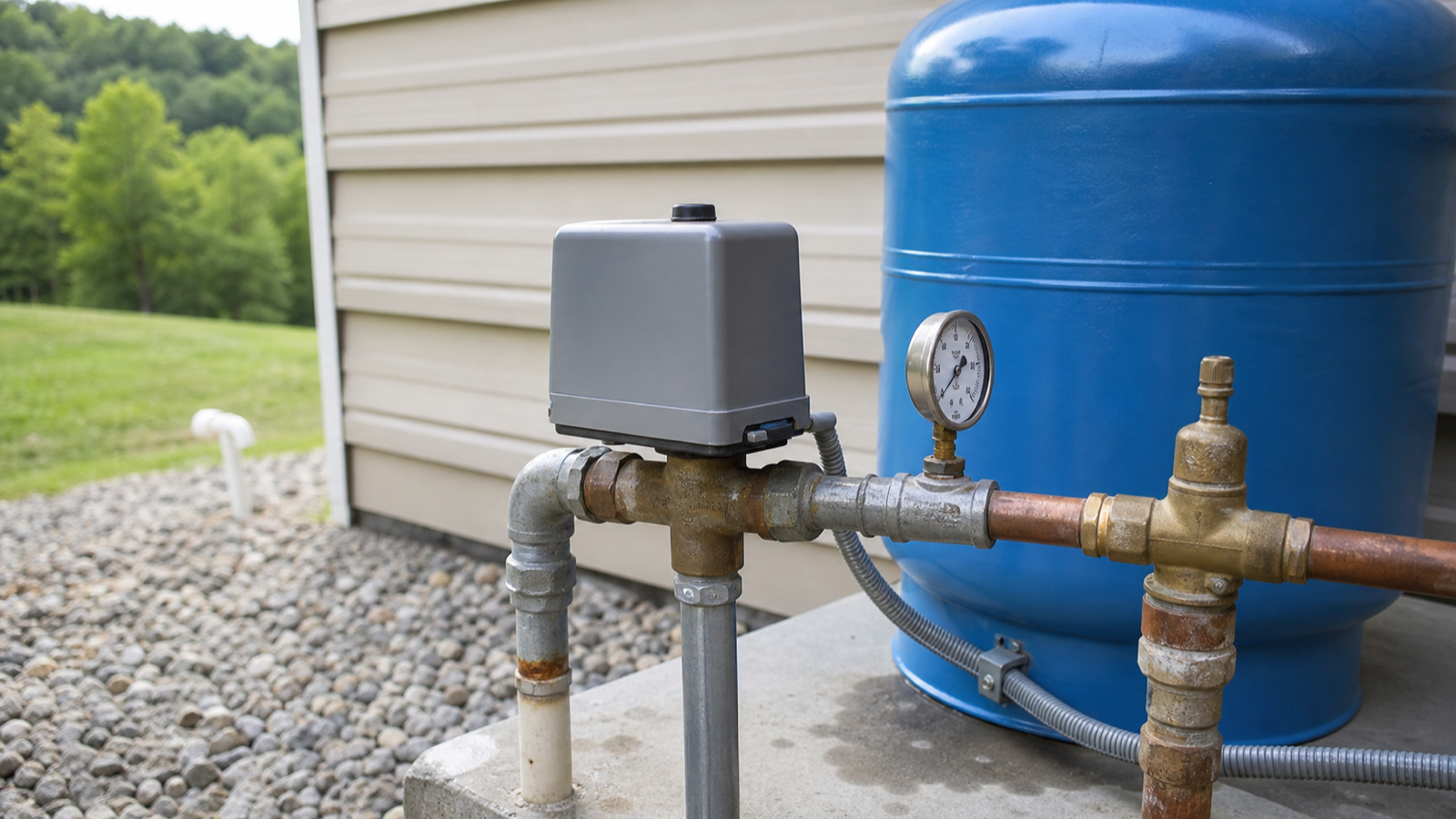
The pressure switch is a small component with an outsized job: it tells the well pump when to turn on and off based on system pressure. When it acts up, it can produce symptoms that look like bigger, scarier problems — which is good news, because a switch issue is often more accessible than a pump failure. This guide covers common pressure-switch problems and their symptoms.
Understanding roughly what the switch does — even without ever touching it — helps you make sense of otherwise baffling pump behavior and describe it accurately when you request service. A switch problem and a pump problem can look identical from the tap, so the value is in knowing that the small, inexpensive control is one of the things a good diagnosis will consider first.
What the Pressure Switch Does
The pressure switch senses the water pressure in the system and closes to start the pump when pressure drops to a set point, then opens to stop it when pressure reaches the upper set point. That cut-in/cut-out cycle is what keeps your household pressure in a comfortable range. Because it's the control deciding when the pump runs, a faulty switch can make the pump behave in confusing ways.
Several things can go wrong inside that small device over time. The electrical contacts can pit, corrode, or stick from the constant making and breaking of the circuit; the sensing element can lose accuracy; and in some cases a small tube or port that lets the switch feel water pressure can clog and blind it to what the system is actually doing. Each of these produces its own version of misbehavior, which is why the switch is worth testing rather than guessing about.
Symptoms a Bad Switch Can Cause
- The pump won't turn on — a switch that isn't closing means no start signal.
- The pump won't turn off — a switch that isn't opening can leave the pump running.
- Rapid or erratic cycling — a faulty switch can mimic short cycling.
- Pressure that's too low or too high for comfort — set points off or the switch failing.
- No water despite power — the switch not signaling the pump.
Why It Mimics Bigger Problems
Notice that these symptoms — no water, constant running, cycling — are the same ones a failing pump or bad tank can cause. That overlap is why the switch is worth checking early in a diagnosis: it's a comparatively accessible, often less costly component, and ruling it in or out can save chasing the wrong culprit. A good provider considers the switch alongside the tank and pump rather than assuming the worst.
The switch also rarely works in isolation, which adds to the confusion. It reads pressure that the tank helps store and stabilize, so a failing tank can make a healthy switch look faulty, and a failing switch can look like a tank problem. This is one reason a provider generally evaluates the switch, tank, and gauge together as a set rather than replacing any one part on a hunch — the pieces are too interdependent to judge alone.
A Job for a Professional
A pressure switch carries electrical contacts and sits in a pressurized system, so it should not be opened, adjusted, or replaced by owners — it's genuinely hazardous and, in Tennessee, part of regulated well work. Owner observation stops at noticing the pump's behavior. If you suspect a switch problem, note the symptoms and request service; a licensed provider can safely test the switch, its set points, and the components around it. Our guide on how a pressure switch works explains the component in more depth.
Related Well Pump Services
Upper Cumberland Well Pump is an independent referral service that helps connect property owners with local water-well and pump-service providers. Upper Cumberland Well Pump does not directly perform regulated well drilling, pump installation, pump repair or water-treatment work unless expressly stated. Provider licensing, qualifications, insurance, availability, pricing, scheduling and service terms must be confirmed directly with the provider.
Well Pump Problems and Troubleshooting — Questions
What does a well pressure switch do?
It senses system water pressure and tells the pump when to start (when pressure drops to the cut-in point) and stop (when it reaches the cut-out point). That cycle keeps household pressure in a comfortable range. A faulty switch can make the pump start, stop, or cycle incorrectly.
What are signs of a bad pressure switch?
The pump not turning on or not turning off, rapid or erratic cycling, pressure that's too low or high, or no water despite the pump having power. These overlap with pump and tank problems, which is why a provider checks the switch as part of the diagnosis.
Can I adjust or replace the pressure switch myself?
No — it has electrical contacts and sits in a pressurized system, making it hazardous to open or adjust, and it's part of regulated well work in Tennessee. Owner observation stops at noticing the pump's behavior; a licensed provider tests and replaces the switch safely.
Is a switch problem cheaper than a pump problem?
Often, because the switch is a comparatively accessible surface component, whereas a pump problem may require pulling the pump. That's why ruling the switch in or out early is valuable — it can prevent chasing (and paying for) the wrong culprit. A diagnosis confirms which it is.
Need Help With a Well Pump Problem?
Send the property location, a description of the problem, any recent changes in pressure or water flow, the location of the well head and several clear photographs of the visible system components for an initial service review.