Rural Well and Pump Projects
Supplying Water to a Detached Garage or Workshop
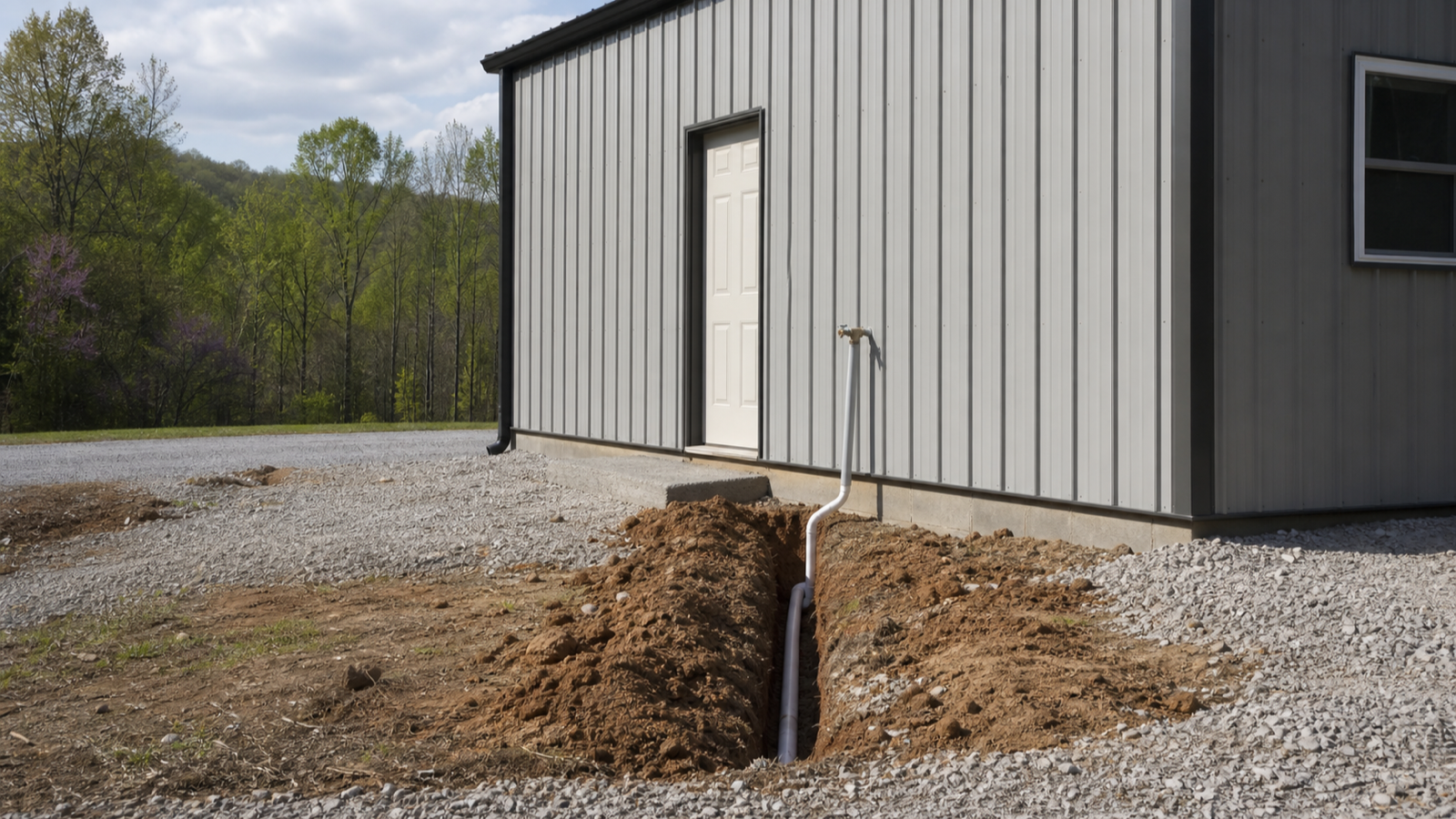
Adding water to a detached garage, workshop or outbuilding is a common rural project, whether for a utility sink, wash station, or simply an outdoor spigot near the shop. On acreage, though, these buildings often sit some distance from the well and home, which turns a seemingly simple task into a small water-system extension worth planning carefully.
This guide covers what to think through before extending your well water to a separate structure, so the result is reliable and holds up through Upper Cumberland winters.
Consider the Load on Your Existing System
Before running a new line, it is worth asking whether your current pump and pressure system can comfortably handle the added draw. A modest utility sink adds little, but a wash-down station, multiple fixtures or heavy shop use can push a system that was sized only for the house. If demand climbs, the existing pump may struggle to maintain pressure everywhere at once.
A qualified provider can assess whether your system has headroom or whether the extension warrants an upgrade. Knowing this before trenching avoids the disappointment of weak pressure at the shop or in the house.
Distance, Pressure and Line Sizing
Detached buildings are often a good distance from the water source, and long runs cause pressure to drop along the way through friction. If the shop also sits uphill, elevation adds to the loss. Proper line sizing helps counter this; an undersized line to a distant building can leave you with a thin trickle even when the house has good pressure.
The right pipe size and routing depend on the distance, elevation and how much water the building will use. These are worth calculating rather than guessing, since correcting an undersized buried line later means digging it up.
Planning the Extension
- Whether your existing pump and pressure system has capacity for the added demand, or whether an upgrade should accompany the extension.
- The distance and elevation between the water source and the outbuilding, since both reduce pressure over a long run.
- Line sizing appropriate to the run and the building's expected water use, so pressure remains usable at the far end.
- Burial depth below the frost line and freeze protection for any exposed sections, which is critical given hard regional winters.
- A shutoff serving the outbuilding so its water can be isolated for winterizing or repairs without affecting the house.
Freeze Protection Matters for Outbuildings
Detached structures are often unheated or only occasionally heated, which makes them especially vulnerable to freezing. Buried lines should sit below the frost line, and any exposed piping or fixtures inside an unheated shop needs protection or the ability to be drained for winter. A frost-free spigot and an isolating shutoff make seasonal care much easier.
A licensed provider can plan the extension with these realities in mind. When you are ready to add water to an outbuilding, you can request service at /request-service/ to connect with someone who can evaluate your system and the run.
Related Well Pump Services
Upper Cumberland Well Pump is an independent referral service that helps connect property owners with local water-well and pump-service providers. Upper Cumberland Well Pump does not directly perform regulated well drilling, pump installation, pump repair or water-treatment work unless expressly stated. Provider licensing, qualifications, insurance, availability, pricing, scheduling and service terms must be confirmed directly with the provider.
Rural Well and Pump Projects — Questions
Will adding water to my shop hurt pressure in the house?
It can, if the added demand exceeds what your pump and pressure system were sized for. A light-use utility sink adds little, but heavy shop use can strain the system and reduce pressure everywhere. A provider can assess whether your setup has headroom or whether an upgrade should go with the extension.
Why does my detached building get weaker pressure than the house?
Long line runs lose pressure to friction, and if the building sits uphill, elevation adds to the loss. An undersized line to a distant structure makes this worse. Proper line sizing for the distance and elevation is the main way to keep pressure usable at the far end.
How deep should the water line to an outbuilding be buried?
Buried lines should sit below the local frost line so they do not freeze in winter, which is especially important given the hard freezes common in the Upper Cumberland. Any sections that must be exposed need separate protection. A provider can advise the appropriate depth and routing for your property.
Need Help With a Well Pump Problem?
Send the property location, a description of the problem, any recent changes in pressure or water flow, the location of the well head and several clear photographs of the visible system components for an initial service review.