Upper Cumberland Private Well Guide
Private Well and Pump Guide for Upper Cumberland Property Owners
If you own property around Cookeville, Crossville, Livingston, or anywhere across the Upper Cumberland, there is a good chance your water comes from a private well rather than a municipal line. Understanding how that system works helps you spot small problems early, plan for weather, and know when to bring in a licensed provider.
This guide walks through the core parts of a private well system, how the region's plateau and Highland Rim geology shapes what you can expect, and where an owner's role ends and a professional's begins. As an independent referral service, we do not perform the work ourselves; our aim here is simply to help you understand your system so conversations with a qualified local well-service provider go smoothly.
How a private well system works
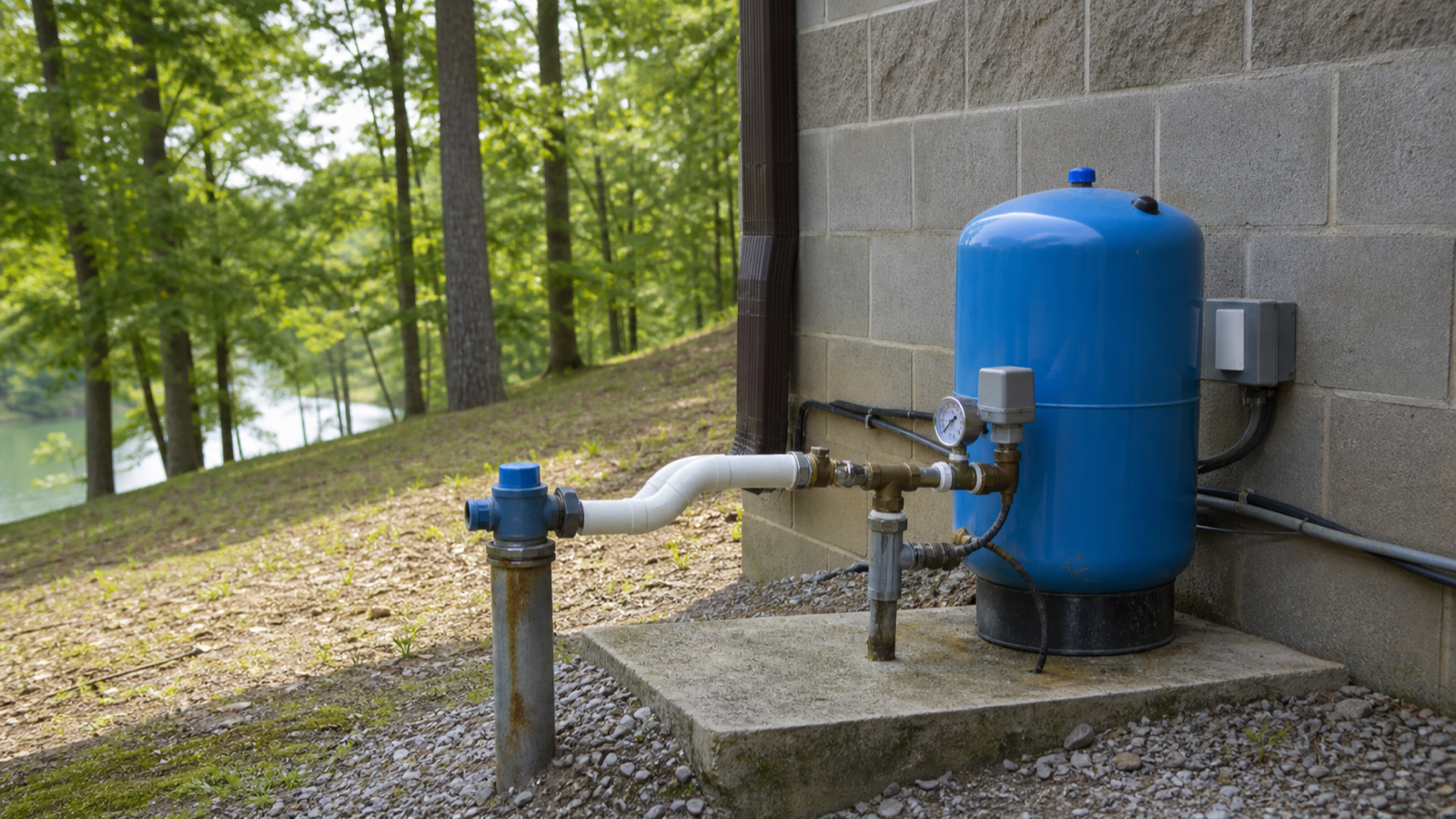
Most homes in the Upper Cumberland draw from a drilled well, where a submersible pump sits deep in the borehole and pushes water up to the house. The pump feeds a pressure tank, which stores a cushion of pressurized water so the pump does not have to run every time you open a tap. A pressure switch tells the pump when to turn on and off, and the whole system is protected by dedicated electrical wiring.
On the plateau, wells are often drilled quite deep to reach reliable water in the limestone and sandstone layers. That depth affects the type and size of pump a home needs, how much electricity the pump draws, and how the system responds to heavy use. When any single part begins to wear, you may notice it as pressure changes, longer recovery times, or a pump that cycles more than it used to.
What the local geology and terrain mean for owners
The Upper Cumberland sits on rocky, limestone-rich (karst) ground across counties including Putnam, Cumberland, Overton, White, and Fentress. Karst terrain can include fractures and voids that influence how water moves underground, which is one reason water quality and yield can vary noticeably from one property to the next, even between neighbors.
Terrain also matters above ground. Steep, wooded lots and long gravel driveways are common, and they can affect where a well sits relative to the house, how far water has to travel, and how easily a service truck can reach the well head. Knowing these details about your own property in advance makes any future service visit more predictable.
An owner's role versus a provider's role
- You can safely observe and record how your system normally behaves, including typical water pressure, any changes in taste or color, and unusual pump noises or cycling patterns.
- You can keep the area around the well head and pressure tank clear, dry, and free of stored chemicals so a provider has safe, unobstructed access.
- You can note the location of your well, pressure tank, and main electrical shutoff so you can describe them accurately when requesting service.
- You should leave anything involving the well cap, pressure tank internals, control box, or electrical panel to a licensed provider, since these involve pressurized water and live electrical components.
- You can schedule periodic professional inspections rather than waiting for a failure, which often gives you more time to plan.
When to reach out for help
Some situations call for professional attention sooner rather than later: a sudden loss of water, air spitting from faucets, rapidly cycling pumps, discolored water, or a noticeable drop in pressure that does not recover. Because these symptoms can share overlapping causes, a qualified provider can diagnose the actual source rather than guessing.
If you are unsure where to start, you can review the towns we cover on our Upper Cumberland service area page, or use our request service page to be connected with a local provider. For homes near the larger hubs, we also maintain pages for well pump repair in Cookeville, Crossville, and Livingston.
Related Well Pump Services
Upper Cumberland Well Pump is an independent referral service that helps connect property owners with local water-well and pump-service providers. Upper Cumberland Well Pump does not directly perform regulated well drilling, pump installation, pump repair or water-treatment work unless expressly stated. Provider licensing, qualifications, insurance, availability, pricing, scheduling and service terms must be confirmed directly with the provider.
Upper Cumberland Private Well Guide — Questions
How do I know if my Upper Cumberland home is on a private well?
If you do not receive a monthly water bill from a city or utility district and you have a well head, pressure tank, and dedicated pump wiring on your property, you are almost certainly on a private well. Many rural properties across Putnam, Cumberland, and Overton counties rely on drilled wells. A licensed provider can confirm your setup during an inspection.
Are Upper Cumberland wells usually deep?
On the Cumberland Plateau, drilled wells are often quite deep to reach dependable water through the limestone and sandstone layers, though actual depth varies widely by location. Depth influences the pump size and the way the system behaves. Your well records, if available, should list the drilled depth.
What routine attention does a private well need?
Owners typically benefit from periodic professional inspections, keeping the well area clear and protected, and watching for changes in pressure, taste, or pump behavior. Hands-on servicing of the pump, tank, or electrical components should be left to a qualified provider. Regular check-ins often catch small issues before they become emergencies.
Need Help With a Well Pump Problem?
Send the property location, a description of the problem, any recent changes in pressure or water flow, the location of the well head and several clear photographs of the visible system components for an initial service review.