Maintenance and Service Planning
How to Locate the Well Head on Your Property
If you have a private well, knowing exactly where the well head sits is one of the most basic and useful things you can learn about your property. It matters for maintenance, for guiding a service provider to the right spot, and for making sure nothing gets built or stored on top of it. Many homeowners, especially those who recently moved in, are not sure where it is.
The good news is that finding a well head is usually straightforward and requires nothing more than observation, a few records, and a walk around the property.
What a Well Head Looks Like
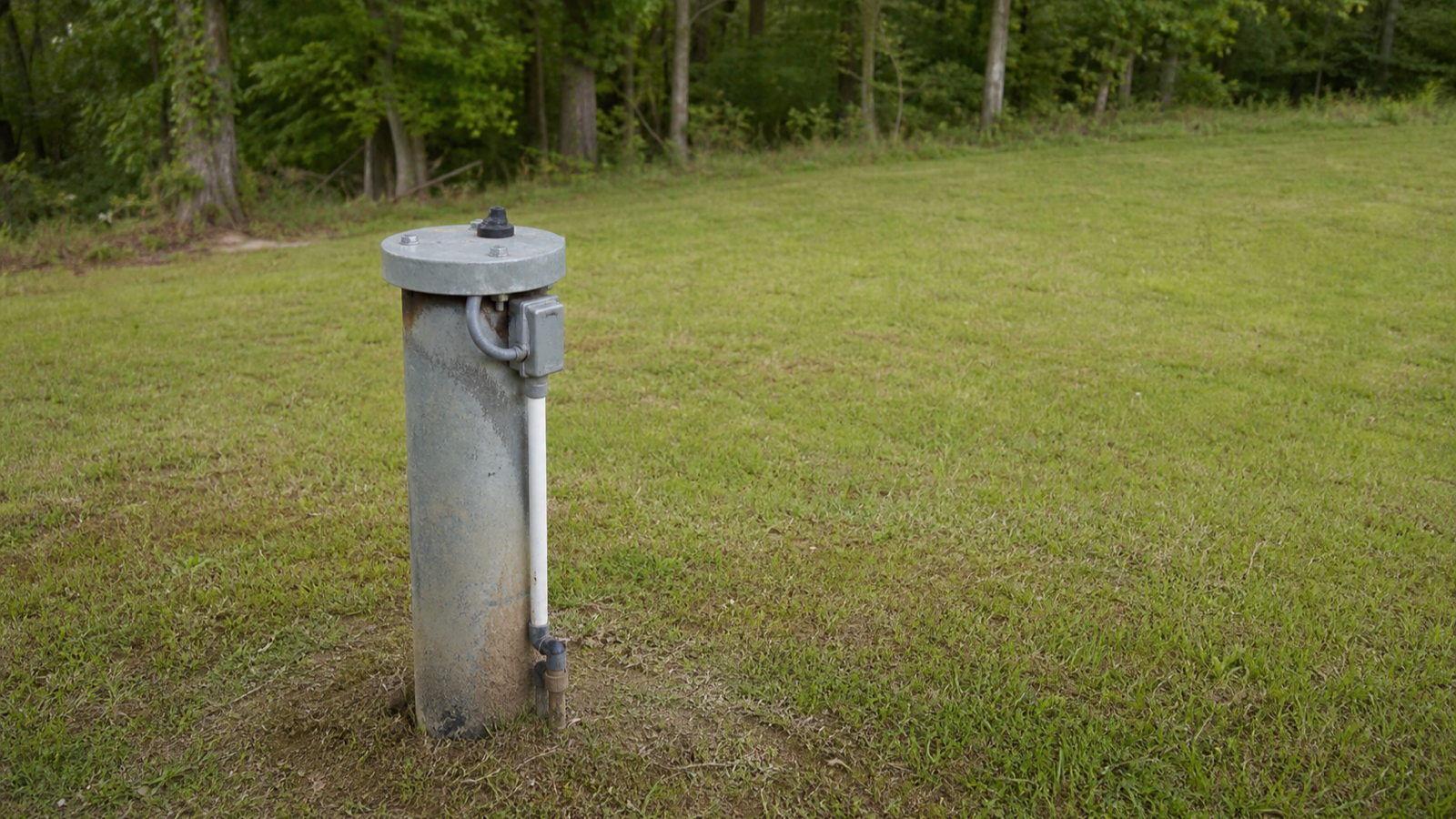
A modern well head is typically a steel or plastic casing pipe, often four to six inches across, rising several inches to a foot or more above the ground with a sealed cap on top. The cap may have a small vent and one or more electrical or wiring connections entering it. In some cases the well head sits inside a small well house or pit, or is nearly flush with the ground.
Older properties sometimes have buried or hard-to-spot well heads, which is one reason records and clues matter so much. Once you know the general look, spotting one in the yard becomes much easier.
Clues to Look For
- Start with any property records, well logs, or drilling reports, which often list the well's approximate location relative to the house.
- Follow the water line logic by looking near where the supply line likely enters the home, such as a basement or crawlspace wall.
- Walk the yard and scan for a short pipe with a cap, a small concrete or metal cover, or a low structure that could be a well house.
- Look for a spot where the grass grows differently or the ground was clearly disturbed, which can mark an older or buried well head.
- Check utility maps or any inspection paperwork from your home purchase, which sometimes note the well location.
- Ask neighbors with similar homes where their well heads sit, since builders often placed them in comparable spots across a subdivision.
Safe Observation Only
Once you find the well head, you can note its location, clear tall grass around it, and photograph the closed cap. Do not remove the cap, loosen fittings, or dig around the casing. The sealed cap keeps contaminants out of your drinking water, and opening it is a job for a licensed provider.
If you suspect a buried or damaged well head, avoid probing aggressively or excavating. A qualified provider can locate and safely expose it without risking damage to the casing or the water supply.
Why It Helps to Know
Knowing the well head location lets you keep it accessible, protect it from vehicles and structures, and guide a service truck directly to it. It also helps during a well inspection or any future service, saving time and confusion.
Record the location in your property notes, perhaps with a simple sketch or a photo, so anyone who needs it later can find the well quickly.
Related Well Pump Services
Upper Cumberland Well Pump is an independent referral service that helps connect property owners with local water-well and pump-service providers. Upper Cumberland Well Pump does not directly perform regulated well drilling, pump installation, pump repair or water-treatment work unless expressly stated. Provider licensing, qualifications, insurance, availability, pricing, scheduling and service terms must be confirmed directly with the provider.
Maintenance and Service Planning — Questions
Can a well head be completely buried?
Yes, especially on older properties or where a previous owner mowed over it or landscaped around it. Records and ground clues help, but if you cannot find it, a licensed provider can locate it safely without damaging the casing.
Is it safe to remove the cap once I find it?
No. The sealed cap protects your water from contamination and often houses wiring. Leave it closed and note the location. Any work involving the cap should be done by a qualified provider.
Why does the well head location matter for service?
It lets a provider bring equipment directly to the right spot and plan truck access. Knowing the location also helps you keep the area clear and protect the well head from damage over time.
Need Help With a Well Pump Problem?
Send the property location, a description of the problem, any recent changes in pressure or water flow, the location of the well head and several clear photographs of the visible system components for an initial service review.